
#83 Classic episode - Jennifer Doleac on preventing crime without police and prisons

#83 Classic episode - Jennifer Doleac on preventing crime without police and prisons

Rebroadcast: this episode was originally released in July 2020.

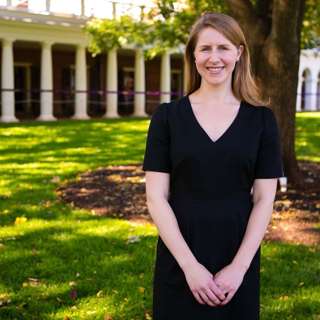
Today’s guest, Jennifer Doleac — Associate Professor of Economics at Texas A&M University, and Director of the Justice Tech Lab — is an expert on empirical research into policing, law and incarceration. In this extensive interview, she highlights three ways to effectively prevent crime that don't require police or prisons and the human toll they bring with them: better street lighting, cognitive behavioral therapy, and lead reduction.

One of Jennifer’s papers used switches into and out of daylight saving time as a 'natural experiment' to measure the effect of light levels on crime. One day the sun sets at 5pm; the next day it sets at 6pm. When that evening hour is dark instead of light, robberies during it roughly double.

Links to sources for the claims in these show notes, other resources to learn more, the full blog post, and a full transcript.

The idea here is that if you try to rob someone in broad daylight, they might see you coming, and witnesses might later be able to identify you. You're just more likely to get caught.

You might think: "Well, people will just commit crime in the morning instead". But it looks like criminals aren’t early risers, and that doesn’t happen.

On her unusually rigorous podcast Probable Causation, Jennifer spoke to one of the authors of a related study, in which very bright streetlights were randomly added to some public housing complexes but not others. They found the lights reduced outdoor night-time crime by 36%, at little cost.

The next best thing to sun-light is human-light, so just installing more streetlights might be one of the easiest ways to cut crime, without having to hassle or punish anyone.

The second approach is cognitive behavioral therapy (CBT), in which you're taught to slow down your decision-making, and think through your assumptions before acting.

There was a randomised controlled trial done in schools, as well as juvenile detention facilities in Chicago, where the kids assigned to get CBT were followed over time and compared with those who were not assigned to receive CBT. They found the CBT course reduced rearrest rates by a third, and lowered the likelihood of a child returning to a juvenile detention facility by 20%.

Jennifer says that the program isn’t that expensive, and the benefits are massive. Everyone would probably benefit from being able to talk through their problems but the gains are especially large for people who've grown up with the trauma of violence in their lives.

Finally, Jennifer thinks that reducing lead levels might be the best buy of all in crime prevention. There is really compelling evidence that lead not only increases crime, but also dramatically reduces educational outcomes.

In today’s conversation, Rob and Jennifer also cover, among many other things:

• Misconduct, hiring practices and accountability among US police
• Procedural justice training
• Overrated policy ideas
• Policies to try to reduce racial discrimination
• The effects of DNA databases
• Diversity in economics
• The quality of social science research

Get this episode by subscribing: type 80,000 Hours into your podcasting app.

Producer: Keiran Harris.
Audio mastering: Ben Cordell.
Transcript for this episode: Zakee Ulhaq.

Episoder(318)

#179 Classic episode – Randy Nesse on why evolution left us so vulnerable to depression and anxiety

#179 Classic episode – Randy Nesse on why evolution left us so vulnerable to depression and anxiety

Mental health problems like depression and anxiety affect enormous numbers of people and severely interfere with their lives. By contrast, we don’t see similar levels of physical ill health in young p...

3 Feb 2h 51min

Why 'Aligned AI' Would Still Kill Democracy | David Duvenaud, ex-Anthropic team lead

Why 'Aligned AI' Would Still Kill Democracy | David Duvenaud, ex-Anthropic team lead

Democracy might be a brief historical blip. That’s the unsettling thesis of a recent paper, which argues AI that can do all the work a human can do inevitably leads to the “gradual disempowerment” of ...

27 Jan 2h 31min

#145 Classic episode – Christopher Brown on why slavery abolition wasn't inevitable

#145 Classic episode – Christopher Brown on why slavery abolition wasn't inevitable

In many ways, humanity seems to have become more humane and inclusive over time. While there’s still a lot of progress to be made, campaigns to give people of different genders, races, sexualities, et...

20 Jan 2h 56min

#233 – James Smith on how to prevent a mirror life catastrophe

#233 – James Smith on how to prevent a mirror life catastrophe

When James Smith first heard about mirror bacteria, he was sceptical. But within two weeks, he’d dropped everything to work on it full time, considering it the worst biothreat that he’d seen described...

13 Jan 2h 9min

#144 Classic episode – Athena Aktipis on why cancer is a fundamental universal phenomena

#144 Classic episode – Athena Aktipis on why cancer is a fundamental universal phenomena

What’s the opposite of cancer? If you answered “cure,” “antidote,” or “antivenom” — you’ve obviously been reading the antonym section at www.merriam-webster.com/thesaurus/cancer.But today’s guest Athe...

9 Jan 3h 30min

#142 Classic episode – John McWhorter on why the optimal number of languages might be one, and other provocative claims about language

#142 Classic episode – John McWhorter on why the optimal number of languages might be one, and other provocative claims about language

John McWhorter is a linguistics professor at Columbia University specialising in research on creole languages. He's also a content-producing machine, never afraid to give his frank opinion on anything...

6 Jan 1h 35min

2025 Highlight-o-thon: Oops! All Bests

2025 Highlight-o-thon: Oops! All Bests

It’s that magical time of year once again — highlightapalooza! Stick around for one top bit from each episode we recorded this year, including:Kyle Fish explaining how Anthropic’s AI Claude descends i...

29 Des 20251h 40min

#232 – Andreas Mogensen on what we owe 'philosophical Vulcans' and unconscious beings

#232 – Andreas Mogensen on what we owe 'philosophical Vulcans' and unconscious beings

Most debates about the moral status of AI systems circle the same question: is there something that it feels like to be them? But what if that’s the wrong question to ask? Andreas Mogensen — a senior ...

19 Des 20252h 37min

Populært innen Fakta

fastlegen
dine-penger-pengeradet
relasjonspodden-med-dora-thorhallsdottir-kjersti-idem
treningspodden
foreldreradet
jakt-og-fiskepodden
merry-quizmas
dopet
podme-bio-3
rss-strid-de-norske-borgerkrigene
sovnlos
rss-kull
sinnsyn
gravid-uke-for-uke
rss-var-forste-kaffe
hverdagspsyken
fryktlos
rss-kunsten-a-leve
dypdykk
rss-impressions-2