#182 – Bob Fischer on comparing the welfare of humans, chickens, pigs, octopuses, bees, and more

#182 – Bob Fischer on comparing the welfare of humans, chickens, pigs, octopuses, bees, and more

"[One] thing is just to spend time thinking about the kinds of things animals can do and what their lives are like. Just how hard a chicken will work to get to a nest box before she lays an egg, the amount of labour she’s willing to go through to do that, to think about how important that is to her. And to realise that we can quantify that, and see how much they care, or to see that they get stressed out when fellow chickens are threatened and that they seem to have some sympathy for conspecifics.

"Those kinds of things make me say there is something in there that is recognisable to me as another individual, with desires and preferences and a vantage point on the world, who wants things to go a certain way and is frustrated and upset when they don’t. And recognising the individuality, the perspective of nonhuman animals, for me, really challenges my tendency to not take them as seriously as I think I ought to, all things considered." — Bob Fischer

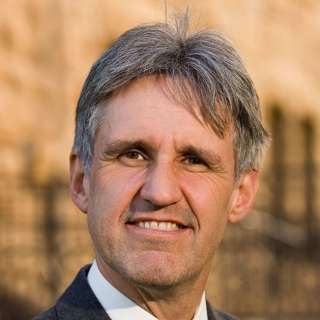
In today’s episode, host Luisa Rodriguez speaks to Bob Fischer — senior research manager at Rethink Priorities and the director of the Society for the Study of Ethics and Animals — about Rethink Priorities’s Moral Weight Project.

Links to learn more, summary, and full transcript.

They cover:

  • The methods used to assess the welfare ranges and capacities for pleasure and pain of chickens, pigs, octopuses, bees, and other animals — and the limitations of that approach.
  • Concrete examples of how someone might use the estimated moral weights to compare the benefits of animal vs human interventions.
  • The results that most surprised Bob.
  • Why the team used a hedonic theory of welfare to inform the project, and what non-hedonic theories of welfare might bring to the table.
  • Thought experiments like Tortured Tim that test different philosophical assumptions about welfare.
  • Confronting our own biases when estimating animal mental capacities and moral worth.
  • The limitations of using neuron counts as a proxy for moral weights.
  • How different types of risk aversion, like avoiding worst-case scenarios, could impact cause prioritisation.
  • And plenty more.

Chapters:

  • Welfare ranges (00:10:19)
  • Historical assessments (00:16:47)
  • Method (00:24:02)
  • The present / absent approach (00:27:39)
  • Results (00:31:42)
  • Chickens (00:32:42)
  • Bees (00:50:00)
  • Salmon and limits of methodology (00:56:18)
  • Octopuses (01:00:31)
  • Pigs (01:27:50)
  • Surprises about the project (01:30:19)
  • Objections to the project (01:34:25)
  • Alternative decision theories and risk aversion (01:39:14)
  • Hedonism assumption (02:00:54)

Producer and editor: Keiran Harris
Audio Engineering Lead: Ben Cordell
Technical editing: Simon Monsour and Milo McGuire
Additional content editing: Katy Moore and Luisa Rodriguez
Transcriptions: Katy Moore

Episoder(332)

#134 Classic episode – Ian Morris on what big-picture history teaches us

#134 Classic episode – Ian Morris on what big-picture history teaches us

Wind back 1,000 years and the moral landscape looks very different to today. Most farming societies thought slavery was natural and unobjectionable, premarital sex was an abomination, women should obe...

15 Jan 20253h 40min

#140 Classic episode – Bear Braumoeller on the case that war isn’t in decline

#140 Classic episode – Bear Braumoeller on the case that war isn’t in decline

Is war in long-term decline? Steven Pinker's The Better Angels of Our Nature brought this previously obscure academic question to the centre of public debate, and pointed to rates of death in war to a...

8 Jan 20252h 48min

2024 Highlightapalooza! (The best of The 80,000 Hours Podcast this year)

2024 Highlightapalooza! (The best of The 80,000 Hours Podcast this year)

"A shameless recycling of existing content to drive additional audience engagement on the cheap… or the single best, most valuable, and most insight-dense episode we put out in the entire year, depend...

27 Des 20242h 50min

#211 – Sam Bowman on why housing still isn't fixed and what would actually work

#211 – Sam Bowman on why housing still isn't fixed and what would actually work

Rich countries seem to find it harder and harder to do anything that creates some losers. People who don’t want houses, offices, power stations, trains, subway stations (or whatever) built in their ar...

19 Des 20243h 25min

#210 – Cameron Meyer Shorb on dismantling the myth that we can’t do anything to help wild animals

#210 – Cameron Meyer Shorb on dismantling the myth that we can’t do anything to help wild animals

"I really don’t want to give the impression that I think it is easy to make predictable, controlled, safe interventions in wild systems where there are many species interacting. I don’t think it’s eas...

29 Nov 20243h 21min

#209 – Rose Chan Loui on OpenAI’s gambit to ditch its nonprofit

#209 – Rose Chan Loui on OpenAI’s gambit to ditch its nonprofit

One OpenAI critic calls it “the theft of at least the millennium and quite possibly all of human history.” Are they right?Back in 2015 OpenAI was but a humble nonprofit. That nonprofit started a for-p...

27 Nov 20241h 22min

#208 – Elizabeth Cox on the case that TV shows, movies, and novels can improve the world

#208 – Elizabeth Cox on the case that TV shows, movies, and novels can improve the world

"I think stories are the way we shift the Overton window — so widen the range of things that are acceptable for policy and palatable to the public. Almost by definition, a lot of things that are going...

21 Nov 20242h 22min
#207 – Sarah Eustis-Guthrie on why she shut down her charity, and why more founders should follow her lead

#207 – Sarah Eustis-Guthrie on why she shut down her charity, and why more founders should follow her lead

"I think one of the reasons I took [shutting down my charity] so hard is because entrepreneurship is all about this bets-based mindset. So you say, “I’m going to take a bunch of bets. I’m going to tak...

14 Nov 20242h 58min

Populært innen Fakta

fastlegen
dine-penger-pengeradet
relasjonspodden-med-dora-thorhallsdottir-kjersti-idem
mikkels-paskenotter
foreldreradet
rss-strid-de-norske-borgerkrigene
treningspodden
rss-bisarr-historie
jakt-og-fiskepodden
rss-sunn-okonomi
sinnsyn
takk-og-lov-med-anine-kierulf
ukast
hverdagspsyken
rss-bak-luftfarten
gravid-uke-for-uke
lederskap-nhhs-podkast-om-ledelse
fryktlos
level-up-med-anniken-binz
tomprat-med-gunnar-tjomlid