
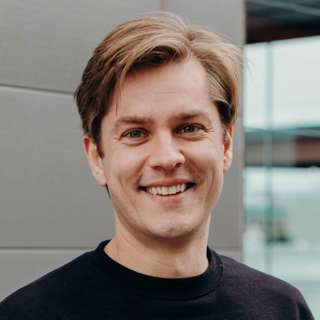
#194 – Vitalik Buterin on defensive acceleration and how to regulate AI when you fear government

#194 – Vitalik Buterin on defensive acceleration and how to regulate AI when you fear government

"If you’re a power that is an island and that goes by sea, then you’re more likely to do things like valuing freedom, being democratic, being pro-foreigner, being open-minded, being interested in trade. If you are on the Mongolian steppes, then your entire mindset is kill or be killed, conquer or be conquered … the breeding ground for basically everything that all of us consider to be dystopian governance. If you want more utopian governance and less dystopian governance, then find ways to basically change the landscape, to try to make the world look more like mountains and rivers and less like the Mongolian steppes." —Vitalik Buterin

Can ‘effective accelerationists’ and AI ‘doomers’ agree on a common philosophy of technology? Common sense says no. But programmer and Ethereum cofounder Vitalik Buterin showed otherwise with his essay “My techno-optimism,” which both camps agreed was basically reasonable.

Links to learn more, highlights, video, and full transcript.

Seeing his social circle divided and fighting, Vitalik hoped to write a careful synthesis of the best ideas from both the optimists and the apprehensive.

Accelerationists are right: most technologies leave us better off, the human cost of delaying further advances can be dreadful, and centralising control in government hands often ends disastrously.

But the fearful are also right: some technologies are important exceptions, AGI has an unusually high chance of being one of those, and there are options to advance AI in safer directions.

The upshot? Defensive acceleration: humanity should run boldly but also intelligently into the future — speeding up technology to get its benefits, but preferentially developing ‘defensive’ technologies that lower systemic risks, permit safe decentralisation of power, and help both individuals and countries defend themselves against aggression and domination.

Entrepreneur First is running a defensive acceleration incubation programme with $250,000 of investment. If these ideas resonate with you, learn about the programme and apply by August 2, 2024. You don’t need a business idea yet — just the hustle to start a technology company.

In addition to all of that, host Rob Wiblin and Vitalik discuss:

  • AI regulation disagreements being less about AI in particular, and more whether you’re typically more scared of anarchy or totalitarianism.
  • Vitalik’s updated p(doom).
  • Whether the social impact of blockchain and crypto has been a disappointment.
  • Whether humans can merge with AI, and if that’s even desirable.
  • The most valuable defensive technologies to accelerate.
  • How to trustlessly identify what everyone will agree is misinformation
  • Whether AGI is offence-dominant or defence-dominant.
  • Vitalik’s updated take on effective altruism.
  • Plenty more.

Chapters:

  • Cold open (00:00:00)
  • Rob’s intro (00:00:56)
  • The interview begins (00:04:47)
  • Three different views on technology (00:05:46)
  • Vitalik’s updated probability of doom (00:09:25)
  • Technology is amazing, and AI is fundamentally different from other tech (00:15:55)
  • Fear of totalitarianism and finding middle ground (00:22:44)
  • Should AI be more centralised or more decentralised? (00:42:20)
  • Humans merging with AIs to remain relevant (01:06:59)
  • Vitalik’s “d/acc” alternative (01:18:48)
  • Biodefence (01:24:01)
  • Pushback on Vitalik’s vision (01:37:09)
  • How much do people actually disagree? (01:42:14)
  • Cybersecurity (01:47:28)
  • Information defence (02:01:44)
  • Is AI more offence-dominant or defence-dominant? (02:21:00)
  • How Vitalik communicates among different camps (02:25:44)
  • Blockchain applications with social impact (02:34:37)
  • Rob’s outro (03:01:00)

Producer and editor: Keiran Harris
Audio engineering team: Ben Cordell, Simon Monsour, Milo McGuire, and Dominic Armstrong
Transcriptions: Katy Moore

Episoder(324)

#176 – Nathan Labenz on the final push for AGI, understanding OpenAI's leadership drama, and red-teaming frontier models

#176 – Nathan Labenz on the final push for AGI, understanding OpenAI's leadership drama, and red-teaming frontier models

OpenAI says its mission is to build AGI — an AI system that is better than human beings at everything. Should the world trust them to do that safely?That’s the central theme of today’s episode with Na...

22 Des 20233h 46min

#175 – Lucia Coulter on preventing lead poisoning for $1.66 per child

#175 – Lucia Coulter on preventing lead poisoning for $1.66 per child

Lead is one of the most poisonous things going. A single sugar sachet of lead, spread over a park the size of an American football field, is enough to give a child that regularly plays there lead pois...

14 Des 20232h 14min

#174 – Nita Farahany on the neurotechnology already being used to convict criminals and manipulate workers

#174 – Nita Farahany on the neurotechnology already being used to convict criminals and manipulate workers

"It will change everything: it will change our workplaces, it will change our interactions with the government, it will change our interactions with each other. It will make all of us unwitting neurom...

7 Des 20232h

#173 – Jeff Sebo on digital minds, and how to avoid sleepwalking into a major moral catastrophe

#173 – Jeff Sebo on digital minds, and how to avoid sleepwalking into a major moral catastrophe

"We do have a tendency to anthropomorphise nonhumans — which means attributing human characteristics to them, even when they lack those characteristics. But we also have a tendency towards anthropoden...

22 Nov 20232h 38min
#172 – Bryan Caplan on why you should stop reading the news

#172 – Bryan Caplan on why you should stop reading the news

Is following important political and international news a civic duty — or is it our civic duty to avoid it?It's common to think that 'staying informed' and checking the headlines every day is just wha...

17 Nov 20232h 23min

#171 – Alison Young on how top labs have jeopardised public health with repeated biosafety failures

#171 – Alison Young on how top labs have jeopardised public health with repeated biosafety failures

"Rare events can still cause catastrophic accidents. The concern that has been raised by experts going back over time, is that really, the more of these experiments, the more labs, the more opportunit...

9 Nov 20231h 46min

#170 – Santosh Harish on how air pollution is responsible for ~12% of global deaths — and how to get that number down

#170 – Santosh Harish on how air pollution is responsible for ~12% of global deaths — and how to get that number down

"One [outrageous example of air pollution] is municipal waste burning that happens in many cities in the Global South. Basically, this is waste that gets collected from people's homes, and instead of ...

1 Nov 20232h 57min
#169 – Paul Niehaus on whether cash transfers cause economic growth, and keeping theft to acceptable levels

#169 – Paul Niehaus on whether cash transfers cause economic growth, and keeping theft to acceptable levels

"One of our earliest supporters and a dear friend of mine, Mark Lampert, once said to me, “The way I think about it is, imagine that this money were already in the hands of people living in poverty. I...

26 Okt 20231h 47min

Populært innen Fakta

fastlegen
dine-penger-pengeradet
relasjonspodden-med-dora-thorhallsdottir-kjersti-idem
treningspodden
rss-strid-de-norske-borgerkrigene
foreldreradet
jakt-og-fiskepodden
hverdagspsyken
rss-sunn-okonomi
merry-quizmas
sinnsyn
gravid-uke-for-uke
tomprat-med-gunnar-tjomlid
rss-kunsten-a-leve
smart-forklart
fryktlos
rss-mann-i-krise-med-sagen
hagespiren-podcast
rss-impressions-2
dopet