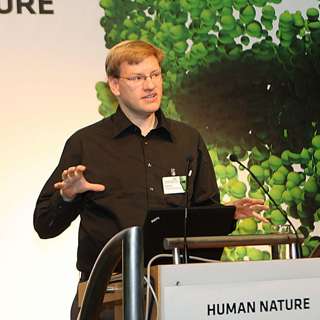

#194 – Vitalik Buterin on defensive acceleration and how to regulate AI when you fear government

#194 – Vitalik Buterin on defensive acceleration and how to regulate AI when you fear government

"If you’re a power that is an island and that goes by sea, then you’re more likely to do things like valuing freedom, being democratic, being pro-foreigner, being open-minded, being interested in trade. If you are on the Mongolian steppes, then your entire mindset is kill or be killed, conquer or be conquered … the breeding ground for basically everything that all of us consider to be dystopian governance. If you want more utopian governance and less dystopian governance, then find ways to basically change the landscape, to try to make the world look more like mountains and rivers and less like the Mongolian steppes." —Vitalik Buterin

Can ‘effective accelerationists’ and AI ‘doomers’ agree on a common philosophy of technology? Common sense says no. But programmer and Ethereum cofounder Vitalik Buterin showed otherwise with his essay “My techno-optimism,” which both camps agreed was basically reasonable.

Links to learn more, highlights, video, and full transcript.

Seeing his social circle divided and fighting, Vitalik hoped to write a careful synthesis of the best ideas from both the optimists and the apprehensive.

Accelerationists are right: most technologies leave us better off, the human cost of delaying further advances can be dreadful, and centralising control in government hands often ends disastrously.

But the fearful are also right: some technologies are important exceptions, AGI has an unusually high chance of being one of those, and there are options to advance AI in safer directions.

The upshot? Defensive acceleration: humanity should run boldly but also intelligently into the future — speeding up technology to get its benefits, but preferentially developing ‘defensive’ technologies that lower systemic risks, permit safe decentralisation of power, and help both individuals and countries defend themselves against aggression and domination.

Entrepreneur First is running a defensive acceleration incubation programme with $250,000 of investment. If these ideas resonate with you, learn about the programme and apply by August 2, 2024. You don’t need a business idea yet — just the hustle to start a technology company.

In addition to all of that, host Rob Wiblin and Vitalik discuss:

  • AI regulation disagreements being less about AI in particular, and more whether you’re typically more scared of anarchy or totalitarianism.
  • Vitalik’s updated p(doom).
  • Whether the social impact of blockchain and crypto has been a disappointment.
  • Whether humans can merge with AI, and if that’s even desirable.
  • The most valuable defensive technologies to accelerate.
  • How to trustlessly identify what everyone will agree is misinformation
  • Whether AGI is offence-dominant or defence-dominant.
  • Vitalik’s updated take on effective altruism.
  • Plenty more.

Chapters:

  • Cold open (00:00:00)
  • Rob’s intro (00:00:56)
  • The interview begins (00:04:47)
  • Three different views on technology (00:05:46)
  • Vitalik’s updated probability of doom (00:09:25)
  • Technology is amazing, and AI is fundamentally different from other tech (00:15:55)
  • Fear of totalitarianism and finding middle ground (00:22:44)
  • Should AI be more centralised or more decentralised? (00:42:20)
  • Humans merging with AIs to remain relevant (01:06:59)
  • Vitalik’s “d/acc” alternative (01:18:48)
  • Biodefence (01:24:01)
  • Pushback on Vitalik’s vision (01:37:09)
  • How much do people actually disagree? (01:42:14)
  • Cybersecurity (01:47:28)
  • Information defence (02:01:44)
  • Is AI more offence-dominant or defence-dominant? (02:21:00)
  • How Vitalik communicates among different camps (02:25:44)
  • Blockchain applications with social impact (02:34:37)
  • Rob’s outro (03:01:00)

Producer and editor: Keiran Harris
Audio engineering team: Ben Cordell, Simon Monsour, Milo McGuire, and Dominic Armstrong
Transcriptions: Katy Moore

Episoder(320)

#60 - Phil Tetlock on why accurate forecasting matters for everything, and how you can do it better

#60 - Phil Tetlock on why accurate forecasting matters for everything, and how you can do it better

Have you ever been infuriated by a doctor's unwillingness to give you an honest, probabilistic estimate about what to expect? Or a lawyer who won't tell you the chances you'll win your case? Their beh...

28 Jun 20192h 11min

#59 – Cass Sunstein on how change happens, and why it's so often abrupt & unpredictable

#59 – Cass Sunstein on how change happens, and why it's so often abrupt & unpredictable

It can often feel hopeless to be an activist seeking social change on an obscure issue where most people seem opposed or at best indifferent to you. But according to a new book by Professor Cass Sunst...

17 Jun 20191h 43min

#58 – Pushmeet Kohli of DeepMind on designing robust & reliable AI systems and how to succeed in AI

#58 – Pushmeet Kohli of DeepMind on designing robust & reliable AI systems and how to succeed in AI

When you're building a bridge, responsibility for making sure it won't fall over isn't handed over to a few 'bridge not falling down engineers'. Making sure a bridge is safe to use and remains standin...

3 Jun 20191h 30min

Rob Wiblin on human nature, new technology, and living a happy, healthy & ethical life

Rob Wiblin on human nature, new technology, and living a happy, healthy & ethical life

This is a cross-post of some interviews Rob did recently on two other podcasts — Mission Daily (from 2m) and The Good Life (from 1h13m). Some of the content will be familiar to regular listeners — bu...

13 Mai 20192h 18min

#57 – Tom Kalil on how to do the most good in government

#57 – Tom Kalil on how to do the most good in government

You’re 29 years old, and you’ve just been given a job in the White House. How do you quickly figure out how the US Executive Branch behemoth actually works, so that you can have as much impact as poss...

23 Apr 20192h 50min

#56 - Persis Eskander on wild animal welfare and what, if anything, to do about it

#56 - Persis Eskander on wild animal welfare and what, if anything, to do about it

Elephants in chains at travelling circuses; pregnant pigs trapped in coffin sized crates at factory farms; deers living in the wild. We should welcome the last as a pleasant break from the horror, rig...

15 Apr 20192h 57min

#55 – Lutter & Winter on founding charter cities with outstanding governance to end poverty

#55 – Lutter & Winter on founding charter cities with outstanding governance to end poverty

Governance matters. Policy change quickly took China from famine to fortune; Singapore from swamps to skyscrapers; and Hong Kong from fishing village to financial centre. Unfortunately, many governmen...

31 Mar 20192h 31min

#54 – OpenAI on publication norms, malicious uses of AI, and general-purpose learning algorithms

#54 – OpenAI on publication norms, malicious uses of AI, and general-purpose learning algorithms

OpenAI’s Dactyl is an AI system that can manipulate objects with a human-like robot hand. OpenAI Five is an AI system that can defeat humans at the video game Dota 2. The strange thing is they were bo...

19 Mar 20192h 53min

Populært innen Fakta

fastlegen
dine-penger-pengeradet
relasjonspodden-med-dora-thorhallsdottir-kjersti-idem
treningspodden
rss-strid-de-norske-borgerkrigene
foreldreradet
jakt-og-fiskepodden
rss-sunn-okonomi
merry-quizmas
gravid-uke-for-uke
fryktlos
sinnsyn
hverdagspsyken
rss-mann-i-krise-med-sagen
smart-forklart
generasjonspodden
rss-kunsten-a-leve
dopet
sovnlos
hr-podden-2