014: The Five Secrets of Effective Communication (Part 1)

014: The Five Secrets of Effective Communication (Part 1)

Practically all of us have a friend, colleague, client, customer or family member we aren't getting along with very well. Perhaps the difficult person in your life is excessively critical of you, complains constantly, won't express his or her feelings, always has to be right, or never listens to you. Does anyone come to mind?

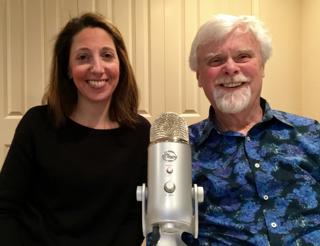
In this podcast, David and Fabrice discuss five communication secrets that can rapidly transform conflict and misunderstanding into intimacy and trust. David describes an experience that suddenly changed the direction of his life and career when he was working with an insecure medical student from England early in his career. The Five Secrets of Effective Communication can be remembered using the acronym, EAR:

E = Empathy

  • The Disarming Technique: You find truth in what the other person is saying, even if it seems illogical, self-serving, distorted, or just plain "wrong."
  • Thought and Feeling Empathy: You summarize what the other person just said (Thought Empathy) and acknowledge how he or she is probably feeling, given what he or she just said (Feeling Empathy)
  • Inquiry: You as gentle, probing questions to learn more about what the other person is thinking and feeling.

A = Assertiveness

  • "I Feel" Statements: You express your own feelings and ideas openly according to the formula, "I'm feeling X, Y, and Z right now," where are X, Y and Z refer to any of a wide variety of feeling words, such as anxious, attacked, hurt, or sad.

R = Respect

  • Affirmation (formerly called Stroking): You convey warmth, caring and respect, even in the heat of battle

David and Fabrice also describe the Five Secrets of Effective Communication and emphasize the incredible power of the Law of Opposites, with a vignette about a severely depressed patient who told David that he was "too young to be my doctor."

Episoder(511)

030: Live Session (Mark) — Empathy Phase (Part 2)

030: Live Session (Mark) — Empathy Phase (Part 2)

After reviewing Mark's scores on the Brief Mood Survey, the Empathy phase of the session unfolds. During this phase of the session, David and Jill will not try to help, rescue, or save Mark. They will...

3 Apr 201747min

029: Live Session (Mark) — Introduction & Testing Phase (Part 1)

029: Live Session (Mark) — Introduction & Testing Phase (Part 1)

This is the first in a series of podcasts that will feature live therapy. As you listen, you'll have the opportunity to peak behind closed doors to see how TEAM-CBT actually works in a real-world sett...

27 Mar 201730min
028: Scared Stiff — The Motivational Model (Part 6)

028: Scared Stiff — The Motivational Model (Part 6)

The key is bringing the patient's subconscious resistance to conscious awareness, and melting it away with paradoxical techniques. This is absolutely critical if you are hoping to see a complete elimi...

20 Mar 201746min

027: Scared Stiff — The Hidden Emotion Model (Part 5)

027: Scared Stiff — The Hidden Emotion Model (Part 5)

David reminds us about the differences between healthy fear and unhealthy, neurotic anxiety, or an anxiety "disorder" like a phobia, or OCD, and so forth. He explains that negative thoughts, and not e...

13 Mar 201726min

026: Scared Stiff — The Exposure Model (Part 4)

026: Scared Stiff — The Exposure Model (Part 4)

We begin by describing the three different deaths of the ego that are required for recovery from depression, anxiety, or a relationship conflict, respectively. For depression recovery often results fr...

6 Mar 201744min

025: Ask David — How do you handle a patient you don't like (or who bores you)?

025: Ask David — How do you handle a patient you don't like (or who bores you)?

David answers these questions: How do you deal with a patient (or friend) who is boring? How do you deal with a patient (or friend) you don't like? How do you get patients to do their psychotherapy ho...

27 Feb 201737min

024: Scared Stiff — The Cognitive Model (Part 3)

024: Scared Stiff — The Cognitive Model (Part 3)

The cognitive model of anxiety is based on three powerful ideas: Anxiety always results from negative thought (NTs) that involve the prediction of danger. For example, if you have public speaking anx...

20 Feb 201751min

023: Scared Stiff — What Causes Anxiety? What's the Cure? (Part 2)

023: Scared Stiff — What Causes Anxiety? What's the Cure? (Part 2)

There are 4 powerful treatment models for anxiety, including The Cognitive Model The Exposure Model The Motivational Model The Hidden Emotion Model Each approach has a completely different theory ab...

13 Feb 201723min

Populært innen Fakta

fastlegen
dine-penger-pengeradet
relasjonspodden-med-dora-thorhallsdottir-kjersti-idem
treningspodden
jakt-og-fiskepodden
foreldreradet
rss-strid-de-norske-borgerkrigene
rss-sunn-okonomi
hverdagspsyken
merry-quizmas
sinnsyn
rss-kunsten-a-leve
gravid-uke-for-uke
tomprat-med-gunnar-tjomlid
fryktlos
rss-impressions-2
rss-mann-i-krise-med-sagen
rss-kull
hagespiren-podcast
level-up-med-anniken-binz