
Podcast 582:  Gadolinium - The Contrast of MRI

Podcast 582: Gadolinium - The Contrast of MRI

Contributor: Michael Hunt, MD

Educational Pearls:

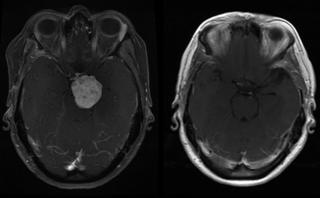
  • Contrast agents are commonly used for X-rays and CT's to better characterize disease, but contrast doesn't work with MRI. That's where the element Gadolinium comes into play.
  • Gadolinium, element 64, is ferromagnetic (attracted to iron) below 68 degrees and above that temperature it's paramagnetic which makes it useful in MRI (Magnetic Resonance Imaging).
  • Gadolinium is toxic alone, but when paired with chelators it can be used in humans and allows for better characterization of tumors or abnormal tissue on MRI.
  • It helps identify this abnormal tissue because when MRI causes polarization of our body's cells, the gadolinium, which has the maximum number of unpaired electrons in its orbital shells, alters the rate of decay in abnormal tissue highlighting abnormalities on imaging.
  • Gadolinium can also be used in the treatment of cancers because it collects in the cells of abnormal tissue, allowing for more targeted therapies.
  • In people exposed to gadolinium, the anaphylaxis rate is low, below 1/1000, and in rare cases there are reports of kidney injury and nephrogenic systemic fibrosis which is why it's not recommended in renal failure patients.

References

1)Ibrahim MA, Hazhirkarzar B, Dublin AB. Magnetic Resonance Imaging (MRI) Gadolinium. [Updated 2020 Mar 9]. In: StatPearls [Internet]. Treasure Island (FL): StatPearls Publishing; 2020 Jan-. Available from: https://www.ncbi.nlm.nih.gov/books/NBK482487/

2)Pasquini L, Napolitano A, Visconti E, et al. Gadolinium-Based Contrast Agent-Related Toxicities [published correction appears in CNS Drugs. 2018 May 15;:]. CNS Drugs. 2018;32(3):229-240. doi:10.1007/s40263-018-0500-1

Summarized by Jackson Roos, MS4 | Edited by Erik Verzemnieks, MD

Episoder(1145)

Podcast 849: Large Vessel Occlusions

Podcast 849: Large Vessel Occlusions

Contributor: Travis Barlock MD Educational Pearls:  Large Vessel Occlusion (LVO) is a condition where a clot blocks one of the major blood vessels in the brain, leading to a stroke. What are the vesse...

1 Mai 20233min
Podcast 848: Non-Traditional RSI

Podcast 848: Non-Traditional RSI

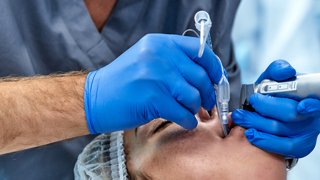
Contributor: Meghan Hurley, MD Educational Pearls: Two main reasons to choose non-traditional RSI Anatomically challenging airway Physiologically difficult patients: hypoxia, metabolic acidosi...

24 Apr 20235min
Podcast 847: ECMO CPR

Podcast 847: ECMO CPR

Contributor: Aaron Lessen, MD Educational Pearls: Extracorporeal Membrane Oxygenation (ECMO) has been attempted as an adjunct to CPR during cardiac arrest but few studies on outcomes exist One prior...

6 Feb 20233min
Podcast 846: Early Repolarization vs. Anterior STEMI

Podcast 846: Early Repolarization vs. Anterior STEMI

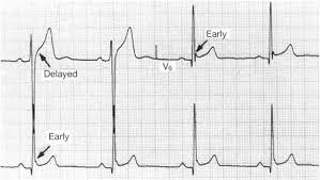
Contributor: Travis Barlock, MD Educational Pearls: Early repolarization a benign EKG pattern that can mimic an anterior STEMI Can be seen in the anterior leads typically in young male patients Can d...

30 Jan 20232min
Podcast 845: Hyperkalemic Cardiac Arrest

Podcast 845: Hyperkalemic Cardiac Arrest

Contributor: Aaron Lessen, MD Educational Pearls: Hyperkalemia may cause cardiac arrest Treatment of suspected hyperkalemic cardiac arrest begins with typical management of cardiac arrest including ...

16 Jan 20234min
Podcast 844: Dental Infections

Podcast 844: Dental Infections

Contributor: Meghan Hurley, MD Educational Pearls: Educational Pearls: Dental infections can be categorized into two main groups Infections of the gums Pericoronitis Tooth eruption leading to infl...

10 Jan 20234min

Podcast 843: Commotio Cordis

Podcast 843: Commotio Cordis

Contributor: Jared Scott, MD Educational Pearls: Commotio cordis is sudden ventricular fibrillation precipitated by direct impact to the chest A national registry, US Commotio Cordis Registry, repor...

9 Jan 20234min
Podcast 842: "History of Wound Care"

Podcast 842: "History of Wound Care"

Contributor: Chris Holmes, MD Educational Pearls: Through world history, there have been various interesting approaches to wound care Ancient Egyptians applied honey, lint, and grease which provided ...

4 Jan 20234min

Populært innen Vitenskap

fastlegen
tingenes-tilstand
rekommandert
jss
rss-nysgjerrige-norge
vett-og-vitenskap-med-gaute-einevoll
rss-rekommandert
sinnsyn
forskningno
villmarksliv
nordnorsk-historie
fjellsportpodden
smart-forklart
rss-paradigmepodden
aldring-og-helse-podden
diagnose
pod-britannia
rss-overskuddsliv
abid-nadia-skyld-og-skam
tomprat-med-gunnar-tjomlid