
Episode 894: DKA and HHS

Episode 894: DKA and HHS

Contributor: Ricky Dhaliwal, MD

Educational Pearls:

What are DKA and HHS?

  • DKA (Diabetic Ketoacidosis) and HHS (Hyperosmolar Hyperglycemic State) are both acute hyperglycemic states.

DKA

  • More common in type 1 diabetes.

  • Triggered by decreased circulating insulin.

    • The body needs energy but cannot use glucose because it can't get it into the cells.

    • This leads to increased metabolism of free fatty acids and the increased production of ketones.

    • The buildup of ketones causes acidosis.

    • The kidneys attempt to compensate for the acidosis by increasing diuresis.

  • These patients present as dry and altered, with sweet-smelling breath and Kussmaul (fast and deep) respirations.

HSS

  • More common in type 2 diabetes.

  • In this condition there is still enough circulating insulin to avoid the breakdown of fats for energy but not enough insulin to prevent hyperglycemia.

  • Serum glucose levels are very high – around 600 to 1200 mg/dl.

  • Also presents similarly to DKA with the patient being dry and altered.

Important labs to monitor

  • Serum glucose

  • Potassium

  • Phosphorus

  • Magnesium

  • Anion gap (Na - Cl - HCO3)

  • Renal function (Creatinine and BUN)

  • ABG/VBG for pH

  • Urinalysis and urine ketones by dipstick

Treatment

  • Identify the cause, i.e. Has the patient stopped taking their insulin?

  • Aggressive hydration with isotonic fluids.

    • Normal Saline (NS) vs Lactated Ringers (LR)?

      • LR might resolve the DKA/HHS faster with less risk of hypernatremia.

  • Should you bolus with insulin?

  • No, just start a drip.

    • 0.1-0.14 units per kg of insulin.

  • Make sure you have your potassium back before starting insulin as the insulin can shift the potassium into the cells and lead to dangerous hypokalemia.

  • Should you treat hyponatremia?

    • Make sure to correct for hyperglycemia before treating. This artificially depresses the sodium.

  • Should you give bicarb?

    • Replace if the pH < 6.9. Otherwise, it won't do anything to help.

  • Don't intubate, if the patient is breathing fast it is because they are compensating for their acidosis.

References

  1. Andrade-Castellanos, C. A., Colunga-Lozano, L. E., Delgado-Figueroa, N., & Gonzalez-Padilla, D. A. (2016). Subcutaneous rapid-acting insulin analogues for diabetic ketoacidosis. The Cochrane database of systematic reviews, 2016(1), CD011281. https://doi.org/10.1002/14651858.CD011281.pub2

  2. Chaithongdi, N., Subauste, J. S., Koch, C. A., & Geraci, S. A. (2011). Diagnosis and management of hyperglycemic emergencies. Hormones (Athens, Greece), 10(4), 250–260. https://doi.org/10.14310/horm.2002.1316

  3. Dhatariya, K. K., Glaser, N. S., Codner, E., & Umpierrez, G. E. (2020). Diabetic ketoacidosis. Nature reviews. Disease primers, 6(1), 40. https://doi.org/10.1038/s41572-020-0165-1

  4. Duhon, B., Attridge, R. L., Franco-Martinez, A. C., Maxwell, P. R., & Hughes, D. W. (2013). Intravenous sodium bicarbonate therapy in severely acidotic diabetic ketoacidosis. The Annals of pharmacotherapy, 47(7-8), 970–975. https://doi.org/10.1345/aph.1S014

  5. Modi, A., Agrawal, A., & Morgan, F. (2017). Euglycemic Diabetic Ketoacidosis: A Review. Current diabetes reviews, 13(3), 315–321. https://doi.org/10.2174/1573399812666160421121307

  6. Self, W. H., Evans, C. S., Jenkins, C. A., Brown, R. M., Casey, J. D., Collins, S. P., Coston, T. D., Felbinger, M., Flemmons, L. N., Hellervik, S. M., Lindsell, C. J., Liu, D., McCoin, N. S., Niswender, K. D., Slovis, C. M., Stollings, J. L., Wang, L., Rice, T. W., Semler, M. W., & Pragmatic Critical Care Research Group (2020). Clinical Effects of Balanced Crystalloids vs Saline in Adults With Diabetic Ketoacidosis: A Subgroup Analysis of Cluster Randomized Clinical Trials. JAMA network open, 3(11), e2024596. https://doi.org/10.1001/jamanetworkopen.2020.24596

Summarized by Jeffrey Olson MS2 | Edited by Meg Joyce & Jorge Chalit, OMSII

Episoder(1145)

Podcast 686: Vaginal Self Swabs

Podcast 686: Vaginal Self Swabs

Contributor: Jared Scott, MD Educational Pearls: Recent study evaluated vaginal self swab testing for STIs to determine if they are equally sensitive to provider-obtained swab 515 patients consented ...

29 Jun 20213min

Podcast 685: Cultural Sensitivity with LGBTIQ+ Patients

Podcast 685: Cultural Sensitivity with LGBTIQ+ Patients

Contributor: Dr. Nick Gorton, MD Educational Pearls: Use transgender people's correct names and pronouns, the Russell study found a 56% reduction in suicide behavior with chosen name usage ⅕ to ½ of ...

28 Jun 202110min
Podcast 684: Acidosis

Podcast 684: Acidosis

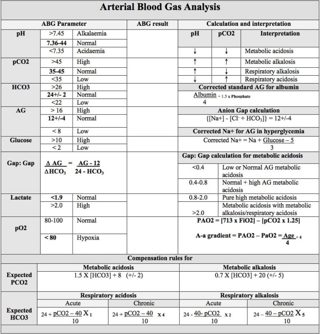
Contributor:  Nick Tsipis, MD Educational Pearls: pH 7.45=alkalemia If pH low and pCO2 high, indicates a respiratory acidosis If pH low and pCO2 low, indicates metabolic acidosis After determining ty...

23 Jun 20216min
Podcast 683: Zofran vs. Haldol for Cannabinoid Hyperemesis Syndrome

Podcast 683: Zofran vs. Haldol for Cannabinoid Hyperemesis Syndrome

Contributor: Jared Scott, MD Educational Pearls: Around 30 patients with cannabinoid hyperemesis syndrome (CHS) randomized treatment in three arms with 8mg Zofran, Haldol 0.05 mg/kg, and Haldol 0.1 ...

22 Jun 20215min

Podcast 682: Snake Bites

Podcast 682: Snake Bites

Contributor: Gretchen Hinson, MD Educational Pearls: Pit vipers include cottonmouths, rattlesnakes, and copperheads All have folding long fangs, triangular face, and elliptical pupils About 5,00...

21 Jun 20216min
Podcast 681: Internal Hernias

Podcast 681: Internal Hernias

Contributor: Adam Barkin, MD Educational Pearls: Internal hernias, when bowel herniates through iatrogenic or congenital defect in mesentery, represent 1-6% of all small bowel obstructions Mortality...

16 Jun 20215min

Podcast 680: Coronary Artery Dissection

Podcast 680: Coronary Artery Dissection

Contributor: Adam Barkin, MD Educational Pearls: Spontaneous coronary artery dissection (SCAD) is the most common cause of acute MI in women under 50 years old Risk factors include fibromuscular dys...

15 Jun 20214min
Podcast 679: Antibiotics for CAP

Podcast 679: Antibiotics for CAP

Contributor: Peter Bakes, MD Educational Pearls: Community-acquired pneumonia (CAP) is normally stratified into outpatient-candidates vs. inpatient candidates for treatment For outpatient treatment,...

9 Jun 20217min

Populært innen Vitenskap

fastlegen
tingenes-tilstand
rekommandert
jss
vett-og-vitenskap-med-gaute-einevoll
smart-forklart
rss-nysgjerrige-norge
rss-rekommandert
forskningno
sinnsyn
fjellsportpodden
rss-paradigmepodden
villmarksliv
pod-britannia
nordnorsk-historie
aldring-og-helse-podden
diagnose
tidlose-historier
rss-overskuddsliv
tomprat-med-gunnar-tjomlid

















