
201:  Accessing the subconscious, Depression from illness, Brain maturity

201: Accessing the subconscious, Depression from illness, Brain maturity

Today's questions: 1. Is it true that there are parts of the mind that we don't have access to, like a "subconscious?" Put another way, is there any information in our mind that we cannot reach down and consider with our conscious thinking? Some neuroscientists talk about thoughts as if they are served up to our awareness. But it seems like we can "direct" our thoughts. But can we "access" all the information and ideas that are in the darker corners of our brain's file cabinets? 2. You mentioned in episode 2 that people can also get depressed about their personal survival, like in the case of discovering they have cancer, but you didn't elaborate on what purpose that might serve evolutionarily. People in the Stone age wouldn't have known they had terminal cancer, but they might have a good sense that a disease or wound was almost certainly going to fester and kill them... What are the genes telling this person to do and why? As a follow up, once a person can accept their impending death with certainty, should the depressive feelings decrease or end? Do people who embrace their mortality find relief and the ability to enjoy their remaining time relatively stress-free? 3. Why do human brains take so long to mature to competence? Yes we are born relatively early to accommodate the size of the head, but it's not a matter of a few more months. No other animal is so helpless for so many years. Are human brains slow to mature because they are so adaptable, so they hold off on forming synapses right away? Or is it because they simply have so many neurons to wire up in more complex ways compared to other animals, it truly takes that long? If the former, what is it about human intelligence that is so much slower to wire up if it's all hard-coded by the DNA anyway, and what advantage is there in postponing the ability to walk etc for so long?

Denne episoden er hentet fra en åpen RSS-feed og er ikke publisert av Podme. Den kan derfor inneholde annonser.

Episoder(402)

386: How to Handle Bad Advice Without a Fight

386: How to Handle Bad Advice Without a Fight

What do you say when a friend or family member recommends horse-assisted coaching, family constellations therapy, or the latest protein fix for your problems? Evolutionary psychologist Dr. Doug Lisle ...

10 Jul 45min
385: It's Not the Men. It's Who You Keep Choosing.

385: It's Not the Men. It's Who You Keep Choosing.

A listener who knows evolutionary psychology well asks Dr. Doug Lisle a painful question. If men seem satisfied once they have food and sex, and never care about her inner life, is she fighting a losi...

26 Jun 1h 12min
384: What Looks Like a Flaw Is Actually a Strategy

384: What Looks Like a Flaw Is Actually a Strategy

Why do some people freeze when they try to speak up in a group, while others jump in without a second thought? Dr. Doug Lisle says it is not shyness or a confidence problem you can train away. It is y...

10 Jun 1h 5min
Why Your Bad Moods Are Never Random

Why Your Bad Moods Are Never Random

A listener noticed their kid gets dissatisfied after too much screen time and asked Dr. Lisle a deeper question: when your mood feels off, is it always worth analyzing, or are some bad moods just rand...

3 Jun 1h 9min

Perfect on Paper, But Not for Me - Mate Value, Attraction, and the Disagreeable Personality

Perfect on Paper, But Not for Me - Mate Value, Attraction, and the Disagreeable Personality

Most people assume mate value is a fixed, rankable number and that attraction follows logically from it. Dr. Lisle says that is the wrong model entirely. Mate value has deep objectivity across a popul...

13 Mai 1h
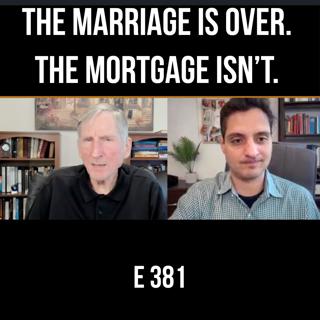
When the Marriage Is Over, but the Mortgage Isn't

When the Marriage Is Over, but the Mortgage Isn't

Most people think a marriage in trouble can be downgraded into a business arrangement to protect the house. Dr. Lisle says that is the previous investment trap talking, not your judgment. The four wal...

29 Apr 50min

380: You're Not Overreacting About Your Partner (Here's why)

380: You're Not Overreacting About Your Partner (Here's why)

Your partner's habits are driving you crazy and asking nicely isn't working. The common advice is to be more patient, communicate better, or just accept your partner as they are. Dr. Lisle says that's...

15 Apr 1h 7min

379: Why Your Partner Stopped Trying (It's Not What You Think)

379: Why Your Partner Stopped Trying (It's Not What You Think)

Most people assume that whoever cares less in a relationship holds the power. In this episode, Dr. Doug Lisle explains why that framing gets it completely backwards. What people call the "care gap" is...

2 Apr 1h

Populært innen Helse

fastlegen
hvordan-har-du-det-mann
rss-gukild-johaug
psykodrama
leger-om-livet
lydartikler-fra-aftenposten
relasjonspodden-med-dora-thorhallsdottir-kjersti-idem
foreldreradet
bak-fasaden-en-reise-i-livet-med-sykepleier-ine
morten-ramm-lar-kakla-ga-til-du-sovner
hjernesterk
rss-garne-damer
g-punktet
rss-kunsten-a-leve
klimaks
treningsprat
rss-skravla-gar
helsetipspodden
kjed-deg-i-sovn-verdens-kjedeligste-podcast
sinnsyn