Graham Harman, "Skirmishes: With Friends, Enemies, and Neutrals" (Punctum Books, 2020)

Graham Harman, "Skirmishes: With Friends, Enemies, and Neutrals" (Punctum Books, 2020)

One of the fifty most influential living philosophers, a “self-promoting charlatan” (Brian Leiter), and the orchestrator of an “online orgy of stupidity” (Ray Brassier). In Skirmishes: With Friends, Enemies, and Neutrals (Punctum Books, 2020), Graham Harman responds with flair and wit to some of his best-known critics and fellow travelers. Pulling no punches, Harman gives a masterclass in philosophical argumentation by dissecting, analyzing, and countering their criticism, be it from the Husserlian, Heideggerian, or Derridean corner. At the same time, Skirmishes provides an excellent introduction to the hottest debates in Speculative Realism and Object-Oriented Ontology, a speculative style of philosophy long foreclosed by the biases of mainstream continental thought, but which has turned in recent years into one of the most encompassing philosophies of our time, with a major impact on the arts, humanities, and architecture. Part One considers four prominent books on speculative realism. In dialogue with Tom Sparrow’s The End of Phenomenology, Harman expresses agreement with Sparrow’s critique while taking issue with Lee Braver’s “transgressive realism” as not realist enough. Turning to Steven Shaviro’s The Universe of Things, Harman defends his own object-oriented model against Shaviro’s brand of process philosophy, while also engaging in side-debate with Levi R. Bryant’s distinction between virtual proper being and local manifestations. In the third chapter, on Peter Gratton’s Speculative Realism: Problems and Prospects, Harman opposes the author’s attempt to use Derridean notions of time and difference against Speculative Realism, in what amounts to his most extensive engagement with Derrida to date. Chapter Four gives us Harman’s response to Peter Wolfendale’s massive polemic in Object-Oriented Philosophy, which he shows is based on a failed criticism of Harman’s reading of Heidegger and a grumpy commitment to rationalist kitsch. Part Two responds to a series of briefer criticisms of object-oriented ontology. When Alberto Toscano accuses Harman and Bruno Latour of “neo-monadological” and anti-scientific thinking, Harman responds that the philosophical factors pushing Leibniz into monadology are still valid today. When Christopher Norris mocks Harman for seeing merit in the occasionalist school, he shows why Norris’s middle-of-the-road scientific realism misses the point. In response to Dan Zahavi’s contention that phenomenology has little to learn from speculative realism, Harman exposes the holes in Zahavi’s reasoning. In a final response, Harman gives a point-by-point answer to Stephen Mulhall’s critical foray in the London Review of Books. Amidst these lively debates, Harman sheds new light on what he regards as the central bias of philosophical modernism, which he terms the taxonomical standpoint. It is a book sure to provoke lively controversy among both friends and foes of object-oriented thought. Adam Bobeck is a PhD candidate in Cultural Anthropology at the University of Leipzig. His PhD is entitled “Object-Oriented Azadari: Shi’i Muslim Rituals and Ontology”. For more about his work, see www.adambobeck.com. Learn more about your ad choices. Visit megaphone.fm/adchoices Support our show by becoming a premium member! https://newbooksnetwork.supportingcast.fm/critical-theory

Episoder(2227)

The Criminal Record Complex: Risk, Race, and the Struggle for Work in America

The Criminal Record Complex: Risk, Race, and the Struggle for Work in America

Most employers in the United States routinely conduct criminal background checks on job applicants, weeding out those with criminal convictions—and thus denying opportunities to those who need them m...

26 Mar 54min

Hsuan L Hsu, "Olfactory Worldmaking" (U Minnesota Press, 2026)

Hsuan L Hsu, "Olfactory Worldmaking" (U Minnesota Press, 2026)

Smell is a vital, if underappreciated, medium through which we inhabit and imagine the world. In Olfactory Worldmaking (University of Minnesota Press, 2026), Dr. Hsuan L. Hsu traces how olfactory expe...

24 Mar 26min
Prolepsis

Prolepsis

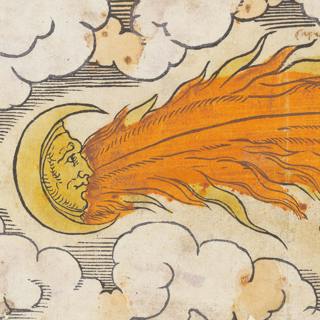
In this episode of High Theory, Gloria Fisk talks to Kim about Prolepsis. Defined by Gerard Genette in the 1970s, prolepsis is a flash forward, the opposite of analepsis, a flash back. Initially the p...

23 Mar 16min

David Bather Woods, "Arthur Schopenhauer: The Life and Thought of Philosophy's Greatest Pessimist" (U Chicago Press, 2025)

David Bather Woods, "Arthur Schopenhauer: The Life and Thought of Philosophy's Greatest Pessimist" (U Chicago Press, 2025)

Arthur Schopenhauer: The Life and Thought of Philosophy’s Greatest Pessimist by David Bather Woods An engaging biography of one of the most influential Western philosophers and a thought-provoking ex...

23 Mar 1h 16min

Philip C. Almond, "Noah and the Flood in Western Thought" (Cambridge UP, 2025)

Philip C. Almond, "Noah and the Flood in Western Thought" (Cambridge UP, 2025)

In a world beset by climatic emergencies, the continuing resonance of the flood story is perhaps easy to understand. Whether in the tortured alpha male intensity of Russell Crowe’s Noah, in Darren Aro...

21 Mar 50min

Becca Voelcker, "Land Cinema in an Age of Extraction" (U California Press, 2025)

Becca Voelcker, "Land Cinema in an Age of Extraction" (U California Press, 2025)

Land Cinema in an Age of Extraction considers nonfiction filmmakers and film collectives whose work advances an understanding of land as a locus of social and environmental responsibility. Diving into...

21 Mar 1h 10min

Piergiorgio Di Giminiani et al. eds., "The Futures of Reparations in Latin America: Imagination, Translation, and Belonging" (Rutgers UP, 2026)

Piergiorgio Di Giminiani et al. eds., "The Futures of Reparations in Latin America: Imagination, Translation, and Belonging" (Rutgers UP, 2026)

Over the last thirty years, Latin America has undergone an unprecedented wave of reparations targeting victims of political violence during military regimes, Indigenous and Afro-Latin groups affected ...

20 Mar 1h 13min

Paul Kohlbry, "Plots and Deeds: Agrarian Annihilation and the Fight for Land Justice in Palestine" (Stanford UP, 2026)

Paul Kohlbry, "Plots and Deeds: Agrarian Annihilation and the Fight for Land Justice in Palestine" (Stanford UP, 2026)

The emancipatory potential and limits of land justice, when land is at once home, property, territory, and homeland. Peasant farming was once an integral part of Palestine's agrarian fabric. But afte...

20 Mar 1h 10min

Populært innen Vitenskap

fastlegen
tingenes-tilstand
jss
rekommandert
forskningno
sinnsyn
tomprat-med-gunnar-tjomlid
villmarksliv
rss-paradigmepodden
rss-nysgjerrige-norge
liberal-halvtime
nevropodden
fjellsportpodden
kvinnehelsepodden
diagnose
tidlose-historier
rss-inn-til-kjernen-med-sunniva-rose
psykopoden
nordnorsk-historie
rss-hoyt-lavt-med-ida-tonseth