#204 – Nate Silver on making sense of SBF, and his biggest critiques of effective altruism

#204 – Nate Silver on making sense of SBF, and his biggest critiques of effective altruism

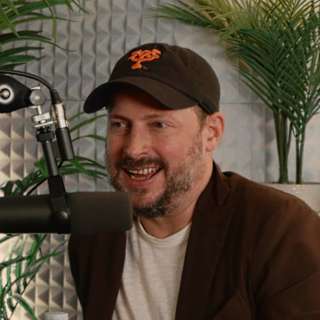
Rob Wiblin speaks with FiveThirtyEight election forecaster and author Nate Silver about his new book: On the Edge: The Art of Risking Everything.

Links to learn more, highlights, video, and full transcript.

On the Edge explores a cultural grouping Nate dubs “the River” — made up of people who are analytical, competitive, quantitatively minded, risk-taking, and willing to be contrarian. It’s a tendency he considers himself a part of, and the River has been doing well for itself in recent decades — gaining cultural influence through success in finance, technology, gambling, philanthropy, and politics, among other pursuits.

But on Nate’s telling, it’s a group particularly vulnerable to oversimplification and hubris. Where Riverians’ ability to calculate the “expected value” of actions isn’t as good as they believe, their poorly calculated bets can leave a trail of destruction — aptly demonstrated by Nate’s discussion of the extended time he spent with FTX CEO Sam Bankman-Fried before and after his downfall.

Given this show’s focus on the world’s most pressing problems and how to solve them, we narrow in on Nate’s discussion of effective altruism (EA), which has been little covered elsewhere. Nate met many leaders and members of the EA community in researching the book and has watched its evolution online for many years.

Effective altruism is the River style of doing good, because of its willingness to buck both fashion and common sense — making its giving decisions based on mathematical calculations and analytical arguments with the goal of maximising an outcome.

Nate sees a lot to admire in this, but the book paints a mixed picture in which effective altruism is arguably too trusting, too utilitarian, too selfless, and too reckless at some times, while too image-conscious at others.

But while everything has arguable weaknesses, could Nate actually do any better in practice? We ask him:

  • How would Nate spend $10 billion differently than today’s philanthropists influenced by EA?
  • Is anyone else competitive with EA in terms of impact per dollar?
  • Does he have any big disagreements with 80,000 Hours’ advice on how to have impact?
  • Is EA too big a tent to function?
  • What global problems could EA be ignoring?
  • Should EA be more willing to court controversy?
  • Does EA’s niceness leave it vulnerable to exploitation?
  • What moral philosophy would he have modelled EA on?

Rob and Nate also talk about:

  • Nate’s theory of Sam Bankman-Fried’s psychology.
  • Whether we had to “raise or fold” on COVID.
  • Whether Sam Altman and Sam Bankman-Fried are structurally similar cases or not.
  • “Winners’ tilt.”
  • Whether it’s selfish to slow down AI progress.
  • The ridiculous 13 Keys to the White House.
  • Whether prediction markets are now overrated.
  • Whether venture capitalists talk a big talk about risk while pushing all the risk off onto the entrepreneurs they fund.
  • And plenty more.

Chapters:

  • Cold open (00:00:00)
  • Rob's intro (00:01:03)
  • The interview begins (00:03:08)
  • Sam Bankman-Fried and trust in the effective altruism community (00:04:09)
  • Expected value (00:19:06)
  • Similarities and differences between Sam Altman and SBF (00:24:45)
  • How would Nate do EA differently? (00:31:54)
  • Reservations about utilitarianism (00:44:37)
  • Game theory equilibrium (00:48:51)
  • Differences between EA culture and rationalist culture (00:52:55)
  • What would Nate do with $10 billion to donate? (00:57:07)
  • COVID strategies and tradeoffs (01:06:52)
  • Is it selfish to slow down AI progress? (01:10:02)
  • Democratic legitimacy of AI progress (01:18:33)
  • Dubious election forecasting (01:22:40)
  • Assessing how reliable election forecasting models are (01:29:58)
  • Are prediction markets overrated? (01:41:01)
  • Venture capitalists and risk (01:48:48)

Producer and editor: Keiran Harris
Audio engineering by Ben Cordell, Milo McGuire, Simon Monsour, and Dominic Armstrong
Video engineering: Simon Monsour
Transcriptions: Katy Moore

Episoder(332)

#131 – Lewis Dartnell on getting humanity to bounce back faster in a post-apocalyptic world

#131 – Lewis Dartnell on getting humanity to bounce back faster in a post-apocalyptic world

“We’re leaving these 16 contestants on an island with nothing but what they can scavenge from an abandoned factory and apartment block. Over the next 365 days, they’ll try to rebuild as much of civili...

3 Jun 20221h 5min

#130 – Will MacAskill on balancing frugality with ambition, whether you need longtermism, & mental health under pressure

#130 – Will MacAskill on balancing frugality with ambition, whether you need longtermism, & mental health under pressure

Imagine you lead a nonprofit that operates on a shoestring budget. Staff are paid minimum wage, lunch is bread and hummus, and you're all bunched up on a few tables in a basement office. But over a fe...

23 Mai 20222h 16min

#129 – James Tibenderana on the state of the art in malaria control and elimination

#129 – James Tibenderana on the state of the art in malaria control and elimination

The good news is deaths from malaria have been cut by a third since 2005. The bad news is it still causes 250 million cases and 600,000 deaths a year, mostly among young children in sub-Saharan Africa...

9 Mai 20223h 19min

#128 – Chris Blattman on the five reasons wars happen

#128 – Chris Blattman on the five reasons wars happen

In nature, animals roar and bare their teeth to intimidate adversaries — but one side usually backs down, and real fights are rare. The wisdom of evolution is that the risk of violence is just too gre...

28 Apr 20222h 46min
#127 – Sam Bankman-Fried on taking a high-risk approach to crypto and doing good

#127 – Sam Bankman-Fried on taking a high-risk approach to crypto and doing good

On this episode of the show, host Rob Wiblin interviews Sam Bankman-Fried. This interview was recorded in February 2022, and released in April 2022. But on November 11 2022, Sam Bankman-Fried's co...

14 Apr 20223h 20min

#126 – Bryan Caplan on whether lazy parenting is OK, what really helps workers, and betting on beliefs

#126 – Bryan Caplan on whether lazy parenting is OK, what really helps workers, and betting on beliefs

Everybody knows that good parenting has a big impact on how kids turn out. Except that maybe they don't, because it doesn't.Incredible though it might seem, according to today's guest — economist Brya...

5 Apr 20222h 15min
#125 – Joan Rohlfing on how to avoid catastrophic nuclear blunders

#125 – Joan Rohlfing on how to avoid catastrophic nuclear blunders

Since the Soviet Union split into different countries in 1991, the pervasive fear of catastrophe that people lived with for decades has gradually faded from memory, and nuclear warhead stockpiles have...

29 Mar 20222h 13min

#124 – Karen Levy on fads and misaligned incentives in global development, and scaling deworming to reach hundreds of millions

#124 – Karen Levy on fads and misaligned incentives in global development, and scaling deworming to reach hundreds of millions

If someone said a global health and development programme was sustainable, participatory, and holistic, you'd have to guess that they were saying something positive. But according to today's guest Kar...

21 Mar 20223h 9min

Populært innen Fakta

fastlegen
dine-penger-pengeradet
relasjonspodden-med-dora-thorhallsdottir-kjersti-idem
mikkels-paskenotter
foreldreradet
rss-strid-de-norske-borgerkrigene
treningspodden
rss-bisarr-historie
jakt-og-fiskepodden
takk-og-lov-med-anine-kierulf
sinnsyn
rss-sunn-okonomi
hverdagspsyken
tomprat-med-gunnar-tjomlid
gravid-uke-for-uke
fryktlos
rss-bak-luftfarten
ukast
lederskap-nhhs-podkast-om-ledelse
level-up-med-anniken-binz