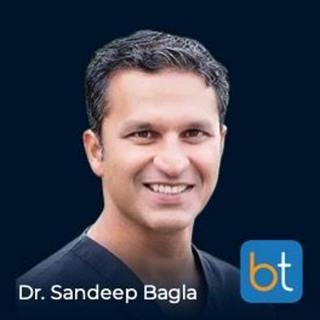
Ep. 301 New Technologies for Treatment of Cerebral Aneurysms with Dr. David Altschul and Dr. Omar Tanweer

Ep. 301 New Technologies for Treatment of Cerebral Aneurysms with Dr. David Altschul and Dr. Omar Tanweer

In this episode, host Dr. Sabeen Dhand speaks with neurosurgeons Drs. David Altschul and Omar Tanweer about updates on cerebral aneurysms, including device innovation, risk stratification, and the importance of the doctor-patient relationship in decision-making. --- CHECK OUT OUR SPONSOR MicroVention FRED X https://www.microvention.com/emea/product/fred-x --- SHOW NOTES Dr. Omar Tanweer is the director of cerebrovascular and endovascular neurosurgery at Baylor College of Medicine. He works in a multidisciplinary group of neurologists, radiologists, and neurosurgeons. He trained at NYU and has been at Baylor for 2 years, where he does 100% neurovascular work. Dr. David Altschul is also from New York and is the division chief of neurovascular surgery at Montefiore. He completed an endovascular fellowship in Manhattan and has now been back at Monteriore since 2014. Both physicians have an 80 to 20 endovascular to open case ratio. In the case of ruptured cerebral aneurysms, Dr. Altschul describes a rule of threes. Around one third of patients pass away before reaching a hospital, another third arrive with significant neurologic deficits, the final third simply endure a headache. The severity of symptoms on presentation is generally predictive of outcome. They use the Hunt and Hess score, as well as the Modified Fisher Scale in their workup. They will generally only put in a ventriculostomy if a patient is lethargic and has a Hunt and Hess grade of at least 3. Both physicians use viz.ai to review their aneurysm cases at their home institutions, as well as at all local referring hospitals, as they are all connected via the viz platform. For unruptured aneurysms, they implement the PHASES score and rely on patient preference. Some patients are comfortable monitoring the growth of very small aneurysms, while others prefer the risk of treating it over the risk of monitoring due to the fear of having a known aneurysm. The two agree that developing a good doctor-patient relationship is important in these cases, because getting to know your patient can help you decide which of these small aneurysms to treat. Finally, we discuss new technology in the treatment of cerebral aneurysms. Coils have improved by becoming smaller, containing biologic agents, and coming in different shapes. Dr. Tanweer discusses the difference between balloon and stent assisted techniques. Balloon assisted is great for wide neck aneurysms or patients who can’t be on dual anti-platelet therapy (DAPT) and are better in the case of re-rupture. Stent assisted, when tolerated, increases efficacy and reduces recurrence by keeping coils in place, as well as providing a scaffold for endothelial cells to heal across. The Flow Diverter, a vessel preservation device, is less porous and good for internal carotid and anterior circulation aneurysms. The downside is that it requires DAPT. There is also the Web device, an intrasaccular device that diverts flow across the metal in the aneurysm and at the base of the neck, but does not leave any metal in the normal part of the artery. These are mainly used for wide neck bifurcation aneurysms at the internal carotid, basilar, anterior communicating, and middle cerebral artery bifurcations. --- RESOURCES Twitter: @DavidAltschulMD @omar_tanweer Viz.aneurysm: https://www.viz.ai/aneurysm

Episoder(641)

Ep. 9 StoptheChop with Dr. Kumar Madassery and Dr. Sabeen Dhand

Ep. 9 StoptheChop with Dr. Kumar Madassery and Dr. Sabeen Dhand

There are numerous modalities available to characterize and treat peripheral arterial disease (PAD). Dr. Kumar Madassery and Dr. Sabeen Dhand highlight their preferred techniques - covering imaging, a...

16 Aug 201755min

Ep. 8 Dr. Abdulaziz AlHarbi discusses IR in Saudi Arabia

Ep. 8 Dr. Abdulaziz AlHarbi discusses IR in Saudi Arabia

Dr. Aaron Fritts talks with Dr. Abdulaziz AlHarbi about his IR practice in the Kingdom of Saudi Arabia.

13 Aug 201722min

Ep. 7 Lung Tumor Ablation with Dr. Stephen Hunt

Ep. 7 Lung Tumor Ablation with Dr. Stephen Hunt

In Episode 7 we discuss Lung tumor ablation therapies with Dr. Stephen Hunt, MD, PhD, including practice building and devices.

1 Aug 201748min

Ep. 6 Setting up a Vein Clinic with Dr. Aaron Shiloh

Ep. 6 Setting up a Vein Clinic with Dr. Aaron Shiloh

Episode 6 with Dr. Aaron Shiloh, MD FSIR discussing pearls and pitfalls of starting an outpatient vein clinic, including the importance of marketing.

19 Jul 201755min

Ep. 5 Closure Devices

Ep. 5 Closure Devices

In Episode 5 of the BackTable podcast: Aaron Fritts MD and Chris Beck MD discuss the Angioseal and Mynx closure devices.

6 Jul 201729min

Ep. 4 Amplatzer Plugs vs Coils in Splenic Trauma

Ep. 4 Amplatzer Plugs vs Coils in Splenic Trauma

Dr. Bryan Hartley and Dr. Aaron Fritts discuss the pros and cons of using coils and/or vascular plugs for splenic trauma.

6 Jul 201715min

Ep. 3 Tunneled Dialysis Catheters with Dr. Peter Bream and Dr. Aaron Brandis

Ep. 3 Tunneled Dialysis Catheters with Dr. Peter Bream and Dr. Aaron Brandis

Special guests Peter Bream MD and Aaron Brandis MD discuss the pros and cons of antegrade versus retrograde tunneled dialysis catheter placement.

24 Mai 201734min

Ep. 2 G-Tubes Two Ways with Bream and Brandis

Ep. 2 G-Tubes Two Ways with Bream and Brandis

Special guests Peter Bream MD and Aaron Brandis MD discuss the Balloon-Assisted (BAG) and Per-oral (POG) techniques for the gastrostomy procedure.

20 Mai 201735min

Populært innen Fakta

mikkels-paskenotter
fastlegen
dine-penger-pengeradet
relasjonspodden-med-dora-thorhallsdottir-kjersti-idem
foreldreradet
treningspodden
rss-strid-de-norske-borgerkrigene
jakt-og-fiskepodden
takk-og-lov-med-anine-kierulf
sinnsyn
hverdagspsyken
rss-bisarr-historie
rss-kunsten-a-leve
gravid-uke-for-uke
tomprat-med-gunnar-tjomlid
rss-kull
rss-sunn-okonomi
fryktlos
rss-var-forste-kaffe
lederskap-nhhs-podkast-om-ledelse