

Ep. 324 Embolization for Treatment of Hemorrhoids with Dr. Alex Pavidapha

Ep. 324 Embolization for Treatment of Hemorrhoids with Dr. Alex Pavidapha

In this episode, host Dr. Aaron Fritts and interventional radiologist Dr. Alex Pavidapha give a primer on the emerging field of hemorrhoidal artery embolization (HAE), including patient presentations and referrals, treatment algorithms, procedural steps, and follow up care. --- CHECK OUT OUR SPONSOR Boston Scientific Nextlab https://www.bostonscientific.com/en-US/nextlab.html?utm_source=oth_site&utm_medium=native&utm_campaign=pi-at-us-nextlab-hci&utm_content=n-backtable-n-backtable_site_nextlab_1_2023&cid=n10013202 --- SHOW NOTES To start. Dr. Pavidapha describes the typical patient presenting with hemorrhoids. This is a prevalent condition that peaks at the ages of 45-65 and in the pregnant population. There are a variety of treatment options ranging from banding, hemorrhoidectomy, and cryotherapy; however, many patients may experience recurrence after these treatments or they may not be suitable candidates for surgery. Next, we discuss the current landscape of HAE. This treatment is a good option for patients who have failed other treatment options. The majority of Dr. Pavidapha’s patients come from referrals by gastroenterologists, although some come based on their own research on the web. It is important that all patients have a colonoscopy before HAE, to rule out the possibility of colon cancer. Additionally, a full history and rectal exam should be performed, since the choice to treat can be guided by the patient’s symptom severity and the degree of internal hemorrhoid prolapse. It is also advisable to identify extremely painful external hemorrhoids, since these can be addressed with conservative measures. Dr. Pavidapha notes that patient counseling is extremely important, since hemorrhoids have a high risk of recurrence and bowel habits play a large part in this. In terms of procedural risks, he counsels patients about standard risks of bleeding and infection, recurrence, mild pain in the few days after the procedure, and although it is rare, non-target embolization of skin or other organs. During the procedure, Dr. Pavidapha prefers femoral access, since this is the easiest way to select the internal mesenteric artery. He does a base catheter run here to visualize the superior rectal arteries. These vessels are the most commonly involved in internal hemorrhoids, and if they are feeding the hemorrhoid, he will inject 500 micron beads and then follow with embolic coils. Next, he navigates through the internal iliac and pudendal arteries to arrive at the middle rectal arteries for another run. If they also supply the hemorrhoids, he will embolize them. The inferior rectal arteries are usually not involved in hemorrhoid formation, embolization of them carries a high risk of skin necrosis. Treatment of inferior rectal arteries is usually avoided. It is important to know typical anatomy very well so you can determine targets for embolization and recognize whether a patient has variant anatomy. Finally, Dr. Pavidapha sees his patients for follow-up at 1 month, 4 months, and 1 year to check for symptomatic improvement, primarily decreased bleeding. If bleeding has worsened, the patient most likely needs a repeat procedure to identify new blood vessels supplying the hemorrhoid. To IRs who are interested in starting an HAE service line, Dr. Pavidapha advises them to read the existing literature about hemorrhoids and HAE and be able to show clinical outcomes data to gastroenterologists. Overall, patients with recurrent hemorrhoids are typically an underserved population and have the potential to benefit from this novel procedure. --- RESOURCES Ep. 319 - How to Collaborate with GI on a New Outpatient Service Line: https://www.backtable.com/shows/vi/podcasts/319/how-to-collaborate-with-gi-on-a-new-outpatient-service-line Outcomes of Hemorrhoidal Artery Embolization from a Multidisciplinary Outpatient Interventional Center: https://pubmed.ncbi.nlm.nih.gov/36736822/ The STREAM Meeting: ​​https://www.thestreammeeting.com/

Episoder(625)

Ep. 565 Resorbable Embolics in MSK Embolizations with Dr. Keerthi Prasad

Ep. 565 Resorbable Embolics in MSK Embolizations with Dr. Keerthi Prasad

Resorbable embolics are gaining traction in musculoskeletal interventions, but what are the key technical considerations? Dr. Keerthi Prasad, interventional radiologist at the Centers for Pain Control...

19 Aug 202540min
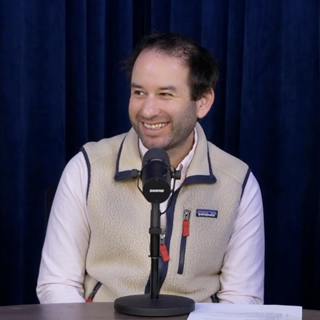
Ep. 564 Pressure-Enabled Drug Delivery in HCC & Metastatic Liver Lesions with Dr. Zach Berman

Ep. 564 Pressure-Enabled Drug Delivery in HCC & Metastatic Liver Lesions with Dr. Zach Berman

Can you manipulate blood flow in the tumor microenvironment to optimize drug delivery? In this episode of the BackTable Podcast, interventional oncologist Dr. Zachary Berman (UC San Diego) joins host ...

12 Aug 202558min

Ep. 563 Techniques for Effective Vessel Prep with Dr. Jay Mathews and Dr. Michael Siah

Ep. 563 Techniques for Effective Vessel Prep with Dr. Jay Mathews and Dr. Michael Siah

The toolbox for vessel preparation is rapidly expanding. Are you keeping up? In this episode, host Dr. Sabeen Dhand is joined by Dr. Jay Mathews, interventional cardiologist (Manatee Memorial Hospital...

5 Aug 202555min
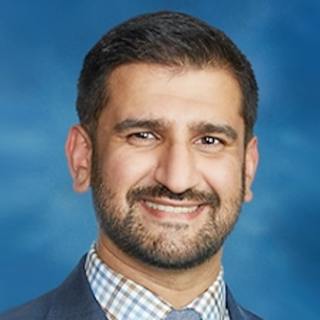
Ep. 562 IR as a Business Engine: Scaling High-Acuity Care in Private Practice with Dr. Harris Chengazi

Ep. 562 IR as a Business Engine: Scaling High-Acuity Care in Private Practice with Dr. Harris Chengazi

What are the key elements of a robust interventional radiology practice, and how can IRs effectively demonstrate their value to hospitals? Guest, Dr. Harris Chengazi, interventional radiologist at Gre...

1 Aug 202554min

Ep. 561 Dosimetry University VI: Challenging Case Review with Dr. Tyler Sandow and Dr. Zach Berman

Ep. 561 Dosimetry University VI: Challenging Case Review with Dr. Tyler Sandow and Dr. Zach Berman

When is Y90 the right treatment for metastatic disease? Join Drs. Tyler Sandow, Zach Berman and host Kavi Krishnasamy in the conclusion of Dosimetry University where they discuss the complexities of t...

29 Jul 202548min
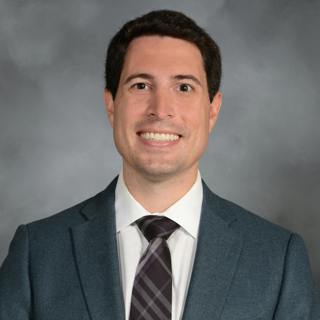
Ep. 560 Biliary Endoscopy Techniques for Gallstones with Dr. John Smirniotopoulos

Ep. 560 Biliary Endoscopy Techniques for Gallstones with Dr. John Smirniotopoulos

Symptomatic gallstones that can’t be treated with surgery? Interventional radiology can help. In this episode of BackTable, Dr. John Smirniotopoulos, IR at MedStar Health, joins Dr. Michael Barraza to...

25 Jul 202543min

Ep. 559 Dosimetry University V: Case Review on Dose Optimization Strategies with Dr. Tyler Sandow and Dr. Zach Berman

Ep. 559 Dosimetry University V: Case Review on Dose Optimization Strategies with Dr. Tyler Sandow and Dr. Zach Berman

The balance between targeting tumor and sparing healthy liver is delicate. How do the experts do it? In this case-based review, Drs. Zach Berman (UC San Diego) and Tyler Sandow (Ochsner Health) join h...

22 Jul 202538min

Ep. 558 Advancements in Stroke Thrombectomy: Techniques & Training with Dr. Blaise Baxter and Dr. James Milburn

Ep. 558 Advancements in Stroke Thrombectomy: Techniques & Training with Dr. Blaise Baxter and Dr. James Milburn

Are your current stroke interventions in line with the latest clinical data? Dr. Blaise Baxter, interventional radiologist at Sutter Health, and Dr. Jim Milburn, interventional neuroradiologist at the...

18 Jul 202558min

Populært innen Fakta

fastlegen
dine-penger-pengeradet
relasjonspodden-med-dora-thorhallsdottir-kjersti-idem
treningspodden
foreldreradet
dopet
merry-quizmas
jakt-og-fiskepodden
sovnlos
rss-strid-de-norske-borgerkrigene
sinnsyn
podme-bio-3
rss-kull
hverdagspsyken
gravid-uke-for-uke
tomprat-med-gunnar-tjomlid
rss-kunsten-a-leve
fryktlos
level-up-med-anniken-binz
rss-var-forste-kaffe