How much does a vote matter? (Article)

How much does a vote matter? (Article)

If you care about social impact, is voting important? In this piece, Rob investigates the two key things that determine the impact of your vote:

  1. The chances of your vote changing an election’s outcome.
  2. How much better some candidates are for the world as a whole, compared to others.

He then discusses a couple of the best arguments against voting in important elections, namely:

  1. If an election is competitive, that means other people disagree about which option is better, and you’re at some risk of voting for the worse candidate by mistake.
  2. While voting itself doesn’t take long, knowing enough to accurately pick which candidate is better for the world actually does take substantial effort — effort that could be better allocated elsewhere.

Finally, Rob covers the impact of donating to campaigns or working to "get out the vote," which can be effective ways to generate additional votes for your preferred candidate.

We last released this article in October 2020, but we think it largely still stands up today.

Chapters:

  • Rob's intro (00:00:00)
  • Introduction (00:01:12)
  • What's coming up (00:02:35)
  • The probability of one vote changing an election (00:03:58)
  • How much does it matter who wins? (00:09:29)
  • What if you’re wrong? (00:16:38)
  • Is deciding how to vote too much effort? (00:21:47)
  • How much does it cost to drive one extra vote? (00:25:13)
  • Overall, is it altruistic to vote? (00:29:38)
  • Rob's outro (00:31:19)

Producer: Keiran Harris

Episoder(332)

#145 Classic episode – Christopher Brown on why slavery abolition wasn't inevitable

#145 Classic episode – Christopher Brown on why slavery abolition wasn't inevitable

In many ways, humanity seems to have become more humane and inclusive over time. While there’s still a lot of progress to be made, campaigns to give people of different genders, races, sexualities, et...

20 Jan 2h 56min
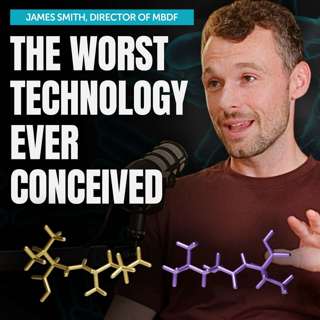
#233 – James Smith on how to prevent a mirror life catastrophe

#233 – James Smith on how to prevent a mirror life catastrophe

When James Smith first heard about mirror bacteria, he was sceptical. But within two weeks, he’d dropped everything to work on it full time, considering it the worst biothreat that he’d seen described...

13 Jan 2h 9min
#144 Classic episode – Athena Aktipis on why cancer is a fundamental universal phenomena

#144 Classic episode – Athena Aktipis on why cancer is a fundamental universal phenomena

What’s the opposite of cancer? If you answered “cure,” “antidote,” or “antivenom” — you’ve obviously been reading the antonym section at www.merriam-webster.com/thesaurus/cancer.But today’s guest Athe...

9 Jan 3h 30min
#142 Classic episode – John McWhorter on why the optimal number of languages might be one, and other provocative claims about language

#142 Classic episode – John McWhorter on why the optimal number of languages might be one, and other provocative claims about language

John McWhorter is a linguistics professor at Columbia University specialising in research on creole languages. He's also a content-producing machine, never afraid to give his frank opinion on anything...

6 Jan 1h 35min
2025 Highlight-o-thon: Oops! All Bests

2025 Highlight-o-thon: Oops! All Bests

It’s that magical time of year once again — highlightapalooza! Stick around for one top bit from each episode we recorded this year, including:Kyle Fish explaining how Anthropic’s AI Claude descends i...

29 Des 20251h 40min

#232 – Andreas Mogensen on what we owe 'philosophical Vulcans' and unconscious beings

#232 – Andreas Mogensen on what we owe 'philosophical Vulcans' and unconscious beings

Most debates about the moral status of AI systems circle the same question: is there something that it feels like to be them? But what if that’s the wrong question to ask? Andreas Mogensen — a senior ...

19 Des 20252h 37min
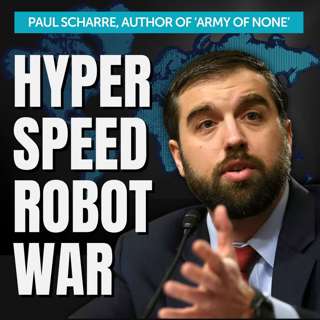
#231 – Paul Scharre on how AI-controlled robots will and won't change war

#231 – Paul Scharre on how AI-controlled robots will and won't change war

In 1983, Stanislav Petrov, a Soviet lieutenant colonel, sat in a bunker watching a red screen flash “MISSILE LAUNCH.” Protocol demanded he report it to superiors, which would very likely trigger a ret...

17 Des 20252h 45min
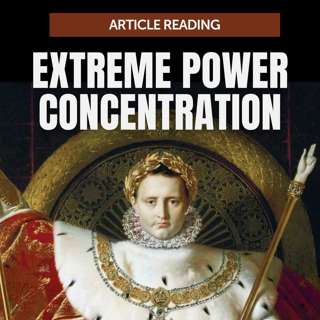
AI might let a few people control everything — permanently (article by Rose Hadshar)

AI might let a few people control everything — permanently (article by Rose Hadshar)

Power is already concentrated today: over 800 million people live on less than $3 a day, the three richest men in the world are worth over $1 trillion, and almost six billion people live in countries ...

12 Des 20251h

Populært innen Fakta

fastlegen
dine-penger-pengeradet
relasjonspodden-med-dora-thorhallsdottir-kjersti-idem
mikkels-paskenotter
foreldreradet
rss-strid-de-norske-borgerkrigene
treningspodden
rss-bisarr-historie
jakt-og-fiskepodden
takk-og-lov-med-anine-kierulf
sinnsyn
rss-sunn-okonomi
hverdagspsyken
tomprat-med-gunnar-tjomlid
gravid-uke-for-uke
fryktlos
hagespiren-podcast
level-up-med-anniken-binz
rss-kull
rss-bak-luftfarten