131: Breakthrough Fat Science for Dieters & Health Geeks - with Dr. Sylvia Tara

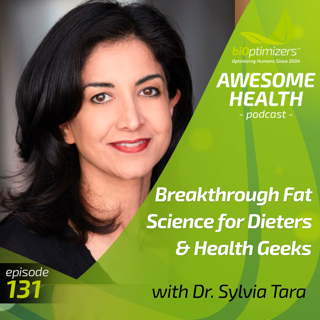
131: Breakthrough Fat Science for Dieters & Health Geeks - with Dr. Sylvia Tara

"You have an extraordinary resume!" - Wade T. Lightheart, after introducing Dr. Tara, listing her incredible achievements.

Yes, Dr. Sylvia Tara does indeed have an impressive and unique resume. Here's the thing: our guest on this episode holds a Ph.D. in biochemistry from UC-San Diego AND an MBA from the Wharton School of Business.

Why did a chemist want to study business?

"I like to think big." That is how Dr. Tara explains her impressive degrees.

"When I got my Ph.D. and did research on fat, every tiny atom of that fat, focusing on the intricacies of how that fat interacts with the human body - there's another part of me that likes to think big. What does this mean for people? What does this scientific information mean for the masses? What does it mean from a business sense and economic sense and a health sense? Putting biochemistry and business together helps me think. Thinking big helps me navigate in a big way."

Dr. Tara applied her natural curiosity to fat research years ago when she became frustrated with her weight loss struggles. She noticed how eating less and exercising more than her friends was not resulting in the weight loss she wanted. She saw how some friends could eat all day and stay skinny, while other friends had an easier time losing weight.

Dr. Tara soon discovered that fat loss is a highly individualized thing. No program or diet will work the same for everyone. That became apparent. So she set out to learn all she could about fat - how it works and what people can do to reduce fat from their bodies.

In this podcast, we cover:

  • How did Dr. Tara end up with both a Ph.D. in biochemistry and an MBA?
  • Why do women seem to gain more weight than men?
  • Did you know there are different types of body fat? Dr. Tara goes over each one and what each type of fat does
  • How body fat has a "voice" and talks to your body organs
  • Some little known facts about fat that are key to weight loss
  • Why Dr. Tara considers fat to be an "organ" like skin or your liver or heart
  • The relationship between your microbiome and fat
  • If you have struggled to lose weight, here is how to shed fat right away

What is "slow fat loss" or "fast fat loss?" What is a reasonable level to expect?

Dr. Tara: "That is so individual. I would love to lose a couple of pounds a week, which feels healthy - nothing terrible. But I personally cannot. So for me, a pound every couple of weeks, if I'm lucky. Other people can lose a few pounds a week. It depends on how much weight you have to lose.

If you're 300 pounds overweight, there's no problem with losing five pounds a week or so. You should be able to do that. It's all relative and on a scale.

Crash dieting, or fasting, is something many people do now with bone broth diets and things like that. As long as you're getting nutrients for your brain to keep ticking in your body and you feel okay with it, keep going.

However, you can't overcompensate by saying, 'I fasted for a week, and now I'm going to eat everything. You have to be careful on that ramp back up. That's what you have to watch. The body doesn't like change. It doesn't like to stop eating altogether and it doesn't want to start eating altogether. It wants to get to homeostasis where it knows what to expect from its environment. That makes our body happy.

That's why when you start losing weight, lowering your fat, your body's not happy. You took your body out of homeostatic comfort and threw it into uncertainty. Now, your body tries to maintain whatever it had - like more or less fat."

How does someone select the proper diet for them and avoid running in circles with fad diets?

Dr. Tara: "It has to work for you psychologically, socially, and biologically. If you find a very restrictive diet that requires eating only certain foods, you have to buy special foods, there's a lot of preparation, and you're a busy person - you're not going to stay on that diet. Or if you don't like a lot of rules, you're not going to keep on that diet. So, the diet has to work with your lifestyle.

Look at fasting - some people want to eat dinner with their family. So fasting after lunch or something like that isn't going to work. It would be best if you found a diet that works in all three dimensions and you have to be able to stay on it at least a year.

So find something you can pick for the long run. Your lifestyle and psychological preferences matter. Low-carb diets are successful. If you eat meat and high fat and minimal carbs, you will lose weight. But it has such a high recidivism rate. People come off of that diet and gain more weight than before.

Our bodies are so different individually. Keep a log of everything you're doing. That is what I've done. It's almost like self-directed dieting. Try a diet for a few weeks, and if you haven't lost any weight, the diet is not suitable for you."

Dr. Tara is a top expert in the subject of fat within the human body. Stop wasting time picking the wrong diet and living in a state of disappointment with your body fat. Once you understand the different types of fat, how fat works, and how fat loss works for good (not just temporarily), you can start your weight loss journey that will succeed long-term.

Dive into this episode - these breakthrough fat facts could change your life.

Episode Resources:

Dr. Tara's Book The Secret Life of Fat
Dr. Tara on Facebook
Dr. Tara on Instagram
Dr. Tara on Twitter

Denne episoden er hentet fra en åpen RSS-feed og er ikke publisert av Podme. Den kan derfor inneholde annonser.

Episoder(313)

313: Brain Biology to Stop Overeating - with Glenn Livingston

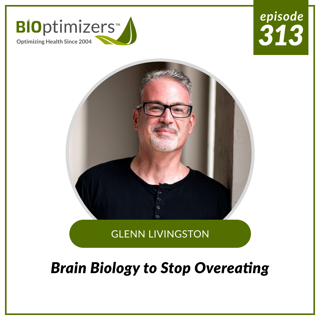
313: Brain Biology to Stop Overeating - with Glenn Livingston

Psychology often helps people understand why they eat, but it rarely stops the behavior itself. Glenn Livingston, a psychologist from a family of therapists, struggled with his weight for years despit...

27 Aug 1h 1min
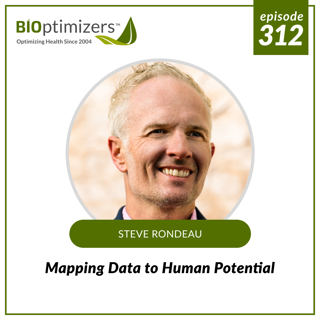
312: Mapping Data to Human Potential - with Steve Rondeau

312: Mapping Data to Human Potential - with Steve Rondeau

Psychiatry often operates without looking at the actual organ being treated. Dr. Steve Rondeau notes that this is unlike any other field in medicine. A cardiologist would never diagnose a heart proble...

13 Aug 1h 5min
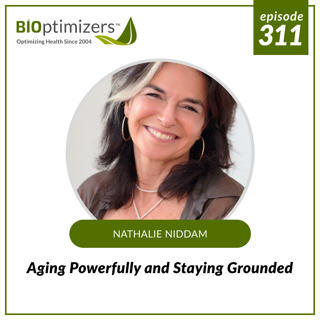
311: Aging Powerfully and Staying Grounded - with Nathalie Niddam

311: Aging Powerfully and Staying Grounded - with Nathalie Niddam

Redefining the Aging Process Nathalie Niddam shares that aging is an inevitable biological reality. Wealth and extensive testing cannot prevent the process entirely. The goal should be compressing dec...

30 Jul 1h 7min
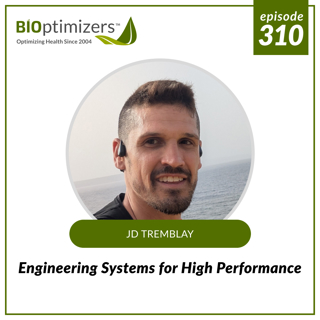
310: Engineering Systems for High Performance - with JD Tremblay

310: Engineering Systems for High Performance - with JD Tremblay

JD Tremblay is one of few people to complete the Epic Deca challenge. This feat involved ten consecutive Ironman distance triathlons across the islands of Hawaii. His journey proves that high performa...

16 Jul 56min
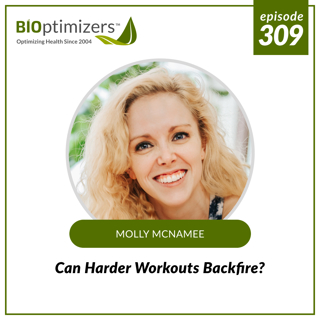
309: Can Harder Workouts Backfire? - with Molly McNamee

309: Can Harder Workouts Backfire? - with Molly McNamee

You eat clean and hit the gym twice a day. Yet, you feel bloated, tired, and the scale won't budge. You aren't doing anything wrong. Your body is simply reacting to chronic stress. When Effort Hurts Y...

25 Jun 41min
308: Your DNA Health Success Blueprint - with Sam Shay

308: Your DNA Health Success Blueprint - with Sam Shay

According to Dr. Sam Shay, functional genetics isn't genealogy or disease-gene testing. It's what Shay calls "terrain" genetics — identifying the upstream drivers of disease before they cascade into d...

11 Jun 1h 17min

307: Peak Cellular Healing Breakthroughs - with Caleb Granger

307: Peak Cellular Healing Breakthroughs - with Caleb Granger

Traditional medicine is transitioning from pharmaceuticals to advanced cellular signaling. Caleb Granger discovered that most stem cell treatments fail because the cells die almost immediately after b...

28 Mai 1h 10min
306: Protecting Your Digital Vision - with Pam Theriot

306: Protecting Your Digital Vision - with Pam Theriot

Most people look at screens day and night. We often think that the dry or tired feeling we have at night is just normal exhaustion. However, this is a clinical condition that can change your physical ...

21 Mai 23min

Populært innen Helse

fastlegen
rss-gukild-johaug
psykodrama
hvordan-har-du-det-mann
leger-om-livet
relasjonspodden-med-dora-thorhallsdottir-kjersti-idem
lydartikler-fra-aftenposten
rss-skravla-gar
bak-fasaden-en-reise-i-livet-med-sykepleier-ine
foreldreradet
morten-ramm-lar-kakla-ga-til-du-sovner
g-punktet
hjernesterk
rss-lopedrommen
klimaks
hormonelle-frida
rss-loping-for-nybegynnere
hverdagspsyken
sinnsyn
kjed-deg-i-sovn-verdens-kjedeligste-podcast