Brain Fact Friday on ”Using Neuroscience to Repattern Our Brain”

Brain Fact Friday on ”Using Neuroscience to Repattern Our Brain”

DID YOU KNOW that research from the Max Plank Institute for Human Cognitive and Brain Science in Germany, led by neuroscientist John Dylan-Haynes has shown that the decisions we make daily to act on something, begins “automatically and without involvement of our consciousness”[i] up to 7 seconds BEFORE we take the action we are thinking about? I learned this from Adele Spraggon,[ii] the author of Shift, in this week’s interview #184, while talking about her 4 STEP re-patterning process to break habits for an improved 2022 and it got me thinking about how we could use and understand this brain fact to take our results to new heights, especially as we are preparing for a New Year.

If you are like me, and have ever done something and then wondered “why did I just do that?” then this episode is for you!

Welcome back to the Neuroscience Meets Social and Emotional Learning Podcast for BRAIN FACT FRIDAY and EPISODE #185 on “Using Neuroscience to Repattern Our Brain.” For those new, or returning guests, welcome back! I'm Andrea Samadi, author, and educator from Toronto, Canada, now in Arizona, and like many of you listening, have been fascinated with learning and understanding the science behind high performance strategies that we can use to improve our productivity in our schools, our sports, and workplace environments.

This week’s Brain Fact Friday took me back to the late 1990s, when I worked in the personal development industry[iii] and first learned about how our results were all determined by our thoughts, feelings and actions. I’ll put an image I want you to see in the show notes.

I used to have this picture taped to my wall so I could see it every day from the speaker I worked with. I’m sure he used to carry it around when he would speak to people one on one, explaining that our thoughts come first. We think an idea (I really want this goal) and then we add emotion or feeling to this goal, that charges us up as we picture ourselves in possession of that goal, changing our body state, and getting us to take action of some sort, moving us in the direction of this goal. The action steps that we take (calling someone, getting mentored and getting ideas to take NEW actions) give us new information that we didn’t have before, and this in turn, changes our conditions, circumstances, and environment, taking us to places beyond where we have ever been before and we achieve our goals, the end result. This is how I was taught how to bridge the gap between goal setting and achieving, over 20 years ago, and how I’ve tackled every single goal since then. I’ve taught this concept to thousands of people (of all different ages) around the world over the years through the books and courses I’ve created. They are old, but the information is still relevant. If you want to take a look, you can access some of my first online courses on Udemy[iv]. On the back of my first book, The Secret for Teens Revealed,[v] I even wrote something that showed how important it was to distinguish the difference between a goal setter and achiever. I wrote:

“When we look at people who have achieved great things, we often believe they are more talented than the rest of us, or luckier, or more well-connected. But the only thing that separates the successful from everybody else is that they have learned to bridge the gap between setting goals and achieving them. They have developed ways of behaving and—more importantly—ways of thinking that enable them to get what they want.”

I knew when I wrote that in 2008 that there was a fine line between setting and achieving goals, and that we must have an unwavering mindset around the goal we are going after, but what I didn’t know, that I learned this week, was that our thinking precedes our actions by up to seven seconds and is pre-determined with a pattern or neural pathway that’s created in my brain, as unique as my own fingerprint long before I take any action. Understanding this pattern is behind why some people achieve their goals, or not, not their rock-solid mental mindset that’s important, but probably wouldn’t be the deal-breaker.

We must understand that the old way of THINK/FEEL/ACT can lead us into a habit loop, getting the same result over and over again, that no one wants. We want NEW results, and when we use neuroscience to re-pattern our brain, we know it begins with understanding and re-patterning our brain when something isn’t working for us.

I learned from Adele Spraggon’s book Shift that “we FEEL first (information comes in though the senses, and it changes the body’s vibration). We ACT second and THINK last and that thought does not activate the sequence; it follows.”[vi]

If we want to take a different action and get a new result, we need a NEW pattern that begins with being in tune with what we FEEL first, then ACT and THINK last. If you haven’t listened to EPISODE #184 where Adele explains her 4 STEP approach, I would be sure to listen to this episode next, but I thought it was too important to not cover this on this week’s Brain Fact Friday.

To review this week’s brain fact,

Did you know that we can predict what someone is thinking up to seven seconds before we think that thought[vii] and “by looking at brain activity while making a decision, researchers could predict” what people were thinking before they were consciously aware of it?[viii]

We know this to be true because we have all done this—taken an action, not being consciously aware of exactly what we are doing and then asking ourselves “why did I just do that?”

The difference between goal setters and goal achievers are that they THINK and BEHAVE differently. How do they do this? They are 100% in tune with what’s working for them, or not. They know the patterns that they are taking that lead them towards the results they are looking for, and when something is not leading them towards what they want, they switch the pattern.

It’s that simple. Here’s how implement this week’s brain fact Friday.

    STEP 1: Uncover What’s Not Working: If you want to achieve new results with something you are working on, is all you need to do is ask yourself “What’s not working with what I am doing” and this will help put you back on course to achieving your end result. It begins with being honest with what needs to change. STEP 2: Listen to What Your Feel Before You Act. To avoid taking actions that put you back into your habit loop, pay attention to how you feel. We’ve talked about interoception, or listening to what you feel in your body on many different episodes. Slow down and pay attention and you will know if the action is right for you, or not. STEP 3: Take a NEW Action: Different to what wasn’t working and notice the results. If you are moving in the direction of what you want, you have re-patterned your brain to a new result. Life should feel easy, peaceful and like Adele mentioned, “everyone should feel happy” around you.

If you are thinking of what you would like to change in 2022, I hope you can see how this re-patterning approach can help take you to new heights.

As we are progressing on this podcast, and I look back at older episodes, like EPISODE #35 from January 2020 “Using Your Brain to Break Bad Habits”[ix] I can see where we are learning new ideas together that are essentially re-patterning our brains. 2 years ago, I was setting goals with the idea that “Neurons that Fire Together, Wire Together” and “Neurons that are out of Synch, Fail to Link” so I knew that old habits would eventually die out, (and fail to link) which they usually do. Habit breaking shouldn’t be difficult, when you follow Adele Spraggon’s 4 STEP Method from our last episode, but when something is difficult to break, it always goes back to the patterns that YOU’VE created in YOUR brain that you need to re-pattern. If you were able to create the habit, then you can also create a new habit that works better for you.

Remember: The decisions we make daily to act on something, begins “automatically and without involvement of our consciousness” so we had better be sure that the actions we are taking daily are moving us towards those things that we want (our goals) not away from them.

See you next week!

FOLLOW ANDREA SAMADI:

YouTube Channel: https://www.youtube.com/c/AndreaSamadi

Website https://www.achieveit360.com/

LinkedIn: https://www.linkedin.com/in/samadi/

Facebook: https://www.facebook.com/Achieveit360com

Neuroscience Meets SEL Facebook Group https://www.facebook.com/groups/2975814899101697

Twitter: https://twitter.com/andreasamadi

Instagram: https://www.instagram.com/andreasamadi/

REFERENCES:

[i] Our Brains Make Up Our Minds Before We Know it by Douglas Van Preet Dec. 21, 2020 https://www.psychologytoday.com/us/blog/unconscious-branding/202012/our-brains-make-our-minds-we-know-it

[ii]Neuroscience Meets Social and Emotional Learning Podcast EPISODE #184 with Adele Spraggon on “Using Science to Break Up with Your Bad Habits” https://andreasamadi.podbean.com/e/adele-spraggon-on-using-science-to-break-up-with-your-bad-habits-in-4-simple-steps/

[iii] Neuroscience Meets Social and Emotional Learning Podcast EPISODE #67 on “Expanding Your Awareness with a Deep Dive into Bob Proctor’s Seminars” https://andreasamadi.podbean.com/e/expanding-your-awareness-with-a-deep-dive-into-bob-proctors-most-powerful-seminars/

[iv] The Secret for Teens Revealed Online Course on Udemy by Andrea Samadi https://www.udemy.com/course/the-secret-for-teens-revealed-a-10-step-success-blueprint/

[v] The Secret for Teens Revealed by Andrea Samadi Sept. 15, 2008 https://www.amazon.com/Secret-Teens-Revealed-Teenagers-Leadership/dp/1604940336

[vi] Adele Spraggon, Shift (Page 12) http://www.shift4steps.com/

[vii] Mind Reading with Brain Scanners John Dylan-Haynes TEXxBerlin Published on YouTube October 1, 2014 https://www.youtube.com/watch?v=mMDuakmEEV4

[viii] Brain Makes Decisions Before You Even Know it Published April, 2008 by Kerri Smith https://www.nature.com/articles/news.2008.751

[ix]Neuroscience Meets Social and Emotional Learning Podcast EPISODE https://andreasamadi.podbean.com/e/how-to-use-your-brain-to-break-bad-habits-in-2020/

Denne episoden er hentet fra en åpen RSS-feed og er ikke publisert av Podme. Den kan derfor inneholde annonser.

Episoder(408)

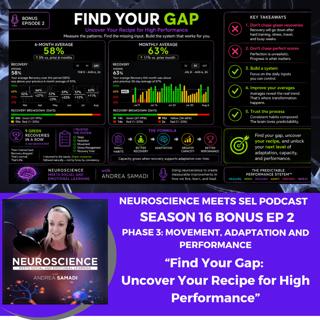
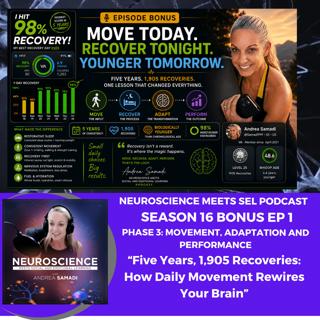
Five Years, 1,905 Recoveries: How Daily Movement Rewires Your Brain (Bonus Episode)

Five Years, 1,905 Recoveries: How Daily Movement Rewires Your Brain (Bonus Episode)

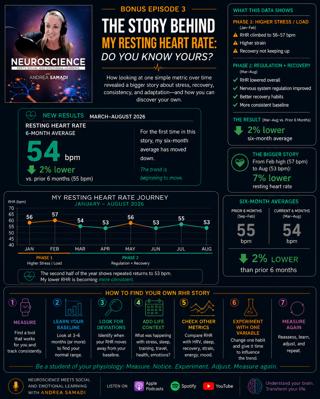
Andrea Samadi shares a five-year self-experiment using a WHOOP wearable to track sleep, recovery, movement, and biological age. She reveals how daily low-intensity movement and consistent recovery—not...

25 Jul 0s

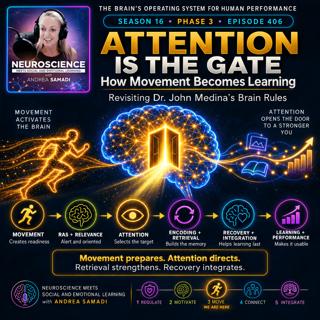
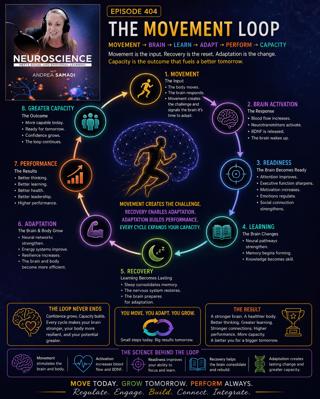
The Movement Loop: How Movement Activates the Brain for Learning, Adaptation & Performance

The Movement Loop: How Movement Activates the Brain for Learning, Adaptation & Performance

Welcome back to Season 16 of the Neuroscience Meets Social and Emotional Learning Podcast. I'm Andrea Samadi, and this is where we bridge neuroscience, social and emotional learning, and human perform...

19 Jul 34min

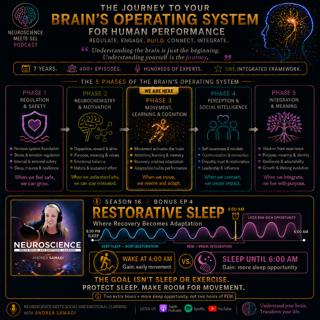
How Movement Builds the Brain, the Body & Human Performance (Phase 3 Introduction)

How Movement Builds the Brain, the Body & Human Performance (Phase 3 Introduction)

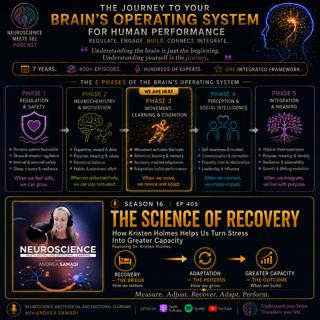
Season 16, Episode 402 explores the Brain's Operating System for Human Performance, focusing on Phase 3: movement, adaptation, and performance. Andrea Samadi explains how movement triggers neurochemic...

12 Jul 25min

Trust as the Foundation with Greg Hill: How Great Leaders Create the Conditions for Learning, Growth and Performance

Trust as the Foundation with Greg Hill: How Great Leaders Create the Conditions for Learning, Growth and Performance

In episode 401 Andrea Samadi welcomes Greg Hill to explore why trust is the essential foundation for learning, growth, and high performance. They discuss how trust creates psychological safety, encour...

27 Jun 37min

Episode 400: Sales Leadership Under Pressure with Majid Samadi: 7 Lessons Learned from 7 Years of Neuroscience

Episode 400: Sales Leadership Under Pressure with Majid Samadi: 7 Lessons Learned from 7 Years of Neuroscience

In this milestone episode (400), Andrea Samadi celebrates seven years of the Neuroscience Meets SEL Podcast with her husband Majid Samadi. They reflect on the journey of translating neuroscience into ...

20 Jun 47min

Phase 2 Review: The Motivation Loop: How to Keep Effort Worthwhile

Phase 2 Review: The Motivation Loop: How to Keep Effort Worthwhile

Episode 399 reviews Phase 2 of Season 15 and introduces the Motivation Loop — the sequence of meaning, belief, attention, action, reward, and recovery that drives sustained effort. The episode explain...

14 Jun 28min

Fun, Fear, Focus: Closing the Motivation Loop with Friederike Fabritius

Fun, Fear, Focus: Closing the Motivation Loop with Friederike Fabritius

Episode 398 revisits neuroscientist Friederike Fabritius (from November 2022) to explain how three ingredients — fun (dopamine), fear (productive challenge), and focus — create the neurochemical condi...

9 Jun 23min

Move to Learn: How Movement Activates the Brain and Fuels Motivation (with Dr. Chuck Hillman and Paul Zientarski)

Move to Learn: How Movement Activates the Brain and Fuels Motivation (with Dr. Chuck Hillman and Paul Zientarski)

Season 15, Episode 397 revisits research and real-world practice showing movement is more than fitness: it activates the brain, boosts attention, enhances learning, and sustains motivation. Dr. Chuck ...

31 Mai 35min

Populært innen Fakta

fastlegen
dine-penger-pengeradet
relasjonspodden-med-dora-thorhallsdottir-kjersti-idem
treningspodden
foreldreradet
mikkels-paskenotter
rss-strid-de-norske-borgerkrigene
hverdagspsyken
rss-kunsten-a-leve
sinnsyn
gravid-uke-for-uke
fryktlos
rss-sarbar-med-lotte-erik
dopet
rss-bisarr-historie
tomprat-med-gunnar-tjomlid
jakt-og-fiskepodden
sovnlos
rss-impressions-2
rss-renters-rente