Brain Fact Friday on ”The Neuroscience of Trust”

Brain Fact Friday on ”The Neuroscience of Trust”

Did you know that “trust is the highest form of human motivation? It brings out the very best in people. But it takes time and patience.” Stephen Covey

For returning guests, welcome back, and for those who are new here, I’m Andrea Samadi, author, and educator, with a passion for learning, understanding difficult concepts, and breaking them down so that we can all use and apply the most current research to improve productivity and results in our schools, and modern workplaces. Today’s EPISODE #206, is on a topic inspired by one of my early influencers, “The Neuroscience of Trust.” This episode came to me as I’m preparing for our next episode next week, with someone I have quoted often on this podcast, Greg Link[i], the co-founder of the Covey Leadership Center. Greg was the one who orchestrated the strategy that led Dr. Stephen R. Covey’s book, The 7 Habits of Highly Effective People: Powerful Lessons in Personal Change, (1989)[ii] to become one of the two best-selling business books of the 20th century according to CEO Magazine, selling over 20 million copies in 38 languages. Greg created the marketing momentum that helped propel Covey Leadership Center from a start-up company to a $110-plus million-dollar enterprise with offices in 40 countries.

You’ll need to tune into our next episode #207 to learn more from Greg Link’s incredible experience working with Dr. Covey, and with individuals and companies around the world, where Greg will share what qualities are important and integral for success for our students in today’s classrooms, and in our modern workplaces as we dive into our topic of “Unleashing Greatness with Neuroscience, SEL, Trust, and the 7 Habits.”

While researching Greg, who I met when he came to work in the seminar industry in 2002, I was reminded of a topic that he thought was so important that he wrote a book about it with Stephen M.R. Covey (the son of the late Stephen R. Covey) called Smart Trust: The Defining Skill That Transforms Managers into Leaders.[iii]

If you look up quotes from Stephen Covey on trust, you can see how important this skill was to him. He said, “trust is the glue to life” and “the one thing that affects everything else you’re doing. It’s a performance multiplier which takes your trajectory upwards, for every action you engage in, from strategy to execution.”

The quote I like the most is where he says that “the first job of a leader—at work or at home—is to inspire trust. It’s to bring out the best in people by entrusting them” and what I learned from Greg and his book Smart Trust, is that “we have to extend trust to others, to get it back.” This seems counterintuitive, or not what we’d expect to hear, especially in a low-trust world, where many of us don’t want to be too naïve, and too trusting on one side of trust, or we don’t want to be too suspicious either, on the other side of trust. So how do we use Smart Trust, and find the right balance with this skill that transforms managers into leaders? If you read the book, you will see where Greg had a huge AHA moment with his relationship with trust, when someone extended trust to him. Leaders go first, they extend their trust to others, by walking their talk, by showing their character and competence (by doing what they say they will do) and watch how people respond around them (not with blind trust, but with Smart Trust) and you will be surprised that when you give trust, most often, you’ll get it back.

Greg does mention cases where trust is not possible to be restored, like for those who invested their money with Bernie Madoff[iv] who was known for defrauding thousands of investors out of tens of billions of dollars over a time span of around 17 years, it would be difficult for trust to be restored in this case, but he affirms that “it’s possible to restore and regain trust”[v] and possibly even on a deeper level with time and transparency.

Which brought me to wonder, where does trust exist in our brain?

DID YOU KNOW THAT “high levels of trust are associated with decreased amygdala activity and low fear. When there’s a breach of trust the brain’s conflict detector the ACC (anterior cingulate cortex) activates the amygdala. Trust and fear are inversely related; fear activates the amygdala and trust decreases activation. Trust therefore frees up the brain for other activities like creativity, planning and decision-making”[vi] which to me shows on a brain level why “the act of extending trust is an act of leadership.” (Stephen M.R. Covey).

To conclude this episode and set us all on the right frame of mind for our next episode with Greg Link, (next week) I highly encourage you to read Greg’s book, Smart Trust, and pre-order Stephen MR Covey’s NEW book, coming out next month, Trust and Inspire: How Truly Great Leaders Inspire Greatness in Others[vii] so that we can all deepen our knowledge of this skill that is a prerequisite for success in life, and business, especially for those in a position of leadership.

To Build Smart Trust, and open your brain up to higher levels of creativity, planning and decision-making, Here are Some Tips From Greg Link:

    Believe in Trust: and remember that extending trust is the key to leadership. Start With YOU: look at the two sides of trust. Integrity-do I walk my talk? Competence—do I do what I will say I will do? Declare Your Intent: Be transparent and say what you want to accomplish so others are clear of your expectations. Assume Positive Intent in Others: Always give others the benefit of the doubt. Extend Trust: to others and you will gain more influence. No need to micromanage others, just use SMART Trust.

With those tips, I’ll bring this episode to close. Have a good weekend and I’ll see you next week on EPISODE #207, where Greg Link will share what only someone who worked directly with Dr. Stephen Covey and the blockbuster 7 Habits book would know. It’s going to be memorable.

FOLLOW ANDREA SAMADI:

YouTube Channel: https://www.youtube.com/c/AndreaSamadi

Website https://www.achieveit360.com/

LinkedIn: https://www.linkedin.com/in/samadi/

Facebook: https://www.facebook.com/Achieveit360com

Neuroscience Meets SEL Facebook Group https://www.facebook.com/groups/2975814899101697

Twitter: https://twitter.com/andreasamadi

Instagram: https://www.instagram.com/andreasamadi/

REFERENCES:

[i] Greg Link Speaker’s Bio https://premierespeakers.com/greg-link/bio

[ii] https://www.franklincovey.com/the-7-habits/

[iii] Smart Trust: The Defining Skill That Transforms Managers into Leaders by Stephen M.R. Covey and Greg Link Published September 3, 2013 https://www.amazon.com/Smart-Trust-Defining-Transforms-Managers/dp/1451652178

[iv] https://en.wikipedia.org/wiki/Bernie_Madoff

[v] Interview with Greg Link on Smart Trust November 27, 2014 https://www.youtube.com/watch?v=J-PyD-pX8nk

[vi] The Neuroscience of Trust https://headheartbrain.com/brain-savvy-hr/the-neuroscience-of-trust/#:~:text=High%20levels%20of%20trust%20are,amygdala%20and%20trust%20decreases%20activation.

[vii]Trust and Inspire: How Truly Great Leaders Inspire Greatness in Others by Stephen MR Covey April 5, 2022 https://www.amazon.com/exec/obidos/ASIN/198214372X?tag=simonsayscom

Denne episoden er hentet fra en åpen RSS-feed og er ikke publisert av Podme. Den kan derfor inneholde annonser.

Episoder(408)

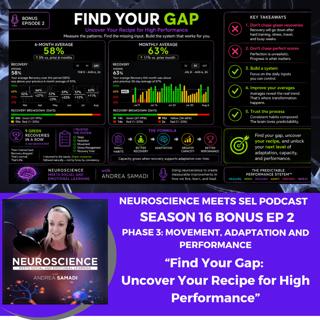
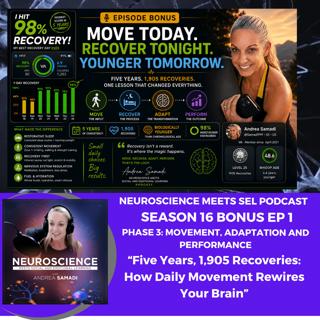
Five Years, 1,905 Recoveries: How Daily Movement Rewires Your Brain (Bonus Episode)

Five Years, 1,905 Recoveries: How Daily Movement Rewires Your Brain (Bonus Episode)

Andrea Samadi shares a five-year self-experiment using a WHOOP wearable to track sleep, recovery, movement, and biological age. She reveals how daily low-intensity movement and consistent recovery—not...

25 Jul 0s

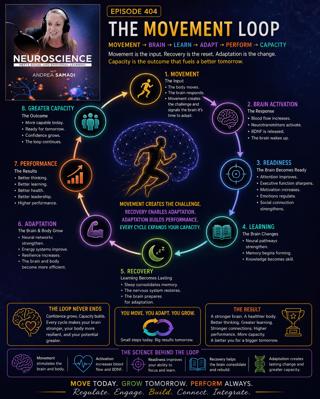
The Movement Loop: How Movement Activates the Brain for Learning, Adaptation & Performance

The Movement Loop: How Movement Activates the Brain for Learning, Adaptation & Performance

Welcome back to Season 16 of the Neuroscience Meets Social and Emotional Learning Podcast. I'm Andrea Samadi, and this is where we bridge neuroscience, social and emotional learning, and human perform...

19 Jul 34min

How Movement Builds the Brain, the Body & Human Performance (Phase 3 Introduction)

How Movement Builds the Brain, the Body & Human Performance (Phase 3 Introduction)

Season 16, Episode 402 explores the Brain's Operating System for Human Performance, focusing on Phase 3: movement, adaptation, and performance. Andrea Samadi explains how movement triggers neurochemic...

12 Jul 25min

Trust as the Foundation with Greg Hill: How Great Leaders Create the Conditions for Learning, Growth and Performance

Trust as the Foundation with Greg Hill: How Great Leaders Create the Conditions for Learning, Growth and Performance

In episode 401 Andrea Samadi welcomes Greg Hill to explore why trust is the essential foundation for learning, growth, and high performance. They discuss how trust creates psychological safety, encour...

27 Jun 37min

Episode 400: Sales Leadership Under Pressure with Majid Samadi: 7 Lessons Learned from 7 Years of Neuroscience

Episode 400: Sales Leadership Under Pressure with Majid Samadi: 7 Lessons Learned from 7 Years of Neuroscience

In this milestone episode (400), Andrea Samadi celebrates seven years of the Neuroscience Meets SEL Podcast with her husband Majid Samadi. They reflect on the journey of translating neuroscience into ...

20 Jun 47min

Phase 2 Review: The Motivation Loop: How to Keep Effort Worthwhile

Phase 2 Review: The Motivation Loop: How to Keep Effort Worthwhile

Episode 399 reviews Phase 2 of Season 15 and introduces the Motivation Loop — the sequence of meaning, belief, attention, action, reward, and recovery that drives sustained effort. The episode explain...

14 Jun 28min

Fun, Fear, Focus: Closing the Motivation Loop with Friederike Fabritius

Fun, Fear, Focus: Closing the Motivation Loop with Friederike Fabritius

Episode 398 revisits neuroscientist Friederike Fabritius (from November 2022) to explain how three ingredients — fun (dopamine), fear (productive challenge), and focus — create the neurochemical condi...

9 Jun 23min

Move to Learn: How Movement Activates the Brain and Fuels Motivation (with Dr. Chuck Hillman and Paul Zientarski)

Move to Learn: How Movement Activates the Brain and Fuels Motivation (with Dr. Chuck Hillman and Paul Zientarski)

Season 15, Episode 397 revisits research and real-world practice showing movement is more than fitness: it activates the brain, boosts attention, enhances learning, and sustains motivation. Dr. Chuck ...

31 Mai 35min

Populært innen Fakta

fastlegen
dine-penger-pengeradet
relasjonspodden-med-dora-thorhallsdottir-kjersti-idem
treningspodden
foreldreradet
mikkels-paskenotter
rss-strid-de-norske-borgerkrigene
hverdagspsyken
rss-kunsten-a-leve
sinnsyn
gravid-uke-for-uke
fryktlos
rss-sarbar-med-lotte-erik
dopet
rss-bisarr-historie
tomprat-med-gunnar-tjomlid
jakt-og-fiskepodden
sovnlos
rss-impressions-2
rss-renters-rente