Navigating Workplace Conflicts: Insights from a Mediation Expert, John Ford

Navigating Workplace Conflicts: Insights from a Mediation Expert, John Ford

Welcome back to Season 12 of the Neuroscience Meets Social and Emotional Learning podcast! In episode number 340, host Andrea Samadi speaks with John Ford, an experienced workplace mediator and author of "Peace at Work: The HR Manager's Guide to Workplace Mediation." With a wealth of expertise in conflict resolution, emotional intelligence, and soft skills training, John shares his journey from practicing law to becoming a mediator. He discusses the importance of trust, effective communication, and addressing conflict head-on in both personal and professional settings. Discover practical tools like talking sticks and empathy cards, and learn how to apply neuroscience and emotional intelligence to navigate conflicts and improve workplace dynamics. Don't miss this insightful conversation that bridges the gap between science and everyday application!

Watch our interview here https://youtu.be/NShwQio_QAk

EPISODE #340 with John Ford on “Peace at Work: Connecting Emotional Intelligence to Conflict Resolution” we will cover:

✔ The importance of acquiring Emotional Intelligence Skills for conflict resolution in our workplaces of the future.

✔ The influencers who inspired John Ford's work (Daniel Goleman, John Gottman, Ken Cloke and many more.

✔ Tools and resources to support Conflict Resolution in our workplaces.

On today's episode #340, we welcome John Ford[i] BA. LLB (UCT) Founder, Author of Peace at Work: the HR Manager’s Guide to Workplace Mediation, who is an experienced workplace mediator and works as a Conflict Resolution Coach and Workplace Mediator. He’s also a past president of the Association for Dispute Resolution of Northern California and served as managing editor for Mediate.com for over 10 years. Currently, he teaches negotiation and mediation through UC Law SF (formerly UC Hastings).

When I saw the work John has been doing, providing soft skills training on communication, conflict resolution, emotional intelligence, assertion, negotiation, mediation, dealing with difficult behavior, customer service, nonverbal communication, de-escalation, stress management, diversity and inclusion, I knew I had to have him on the podcast. I saw the importance of teaching our next generation of students these important social and emotional learning skills over 25 years ago, working with 12 teenagers, who turned their results in school, sports and their personal lives around, in a matter of weeks. I had to learn more about John Ford’s pathway that took him from practicing law, to working on workplace mediation, training others in these important emotional intelligence training skills.

Let’s meet John Ford, and see what we can learn from his vast experience with conflict resolution to see how he gains trust, with a calming effect in the most difficult and tense situations.

Welcome John, thank you for meeting with me today. Where have we reached you today? (I’m located in Arizona).

Q1: John, can you share what inspired you to transition from practicing law to focusing on workplace mediation and soft-skills training?

Q2: Can you also explain how your work was influenced by all of these researchers and influencers that our listeners would know well. Like Daniel Goleman, the author of Emotional Intelligence, neuroscientist Antonio Damasio, John Gottman’s evidence-based research as well as Paul Ekman’s work on facial expressions.

Q3: What are some other books that you can point us to improve these important skills, books, like Difficult Conversations (Douglas Stone, Bruce Patton and Sheila Hein), or Nonviolent Communication to help us to improve how to better communicate our feelings in our work and personal lives?

Q4: I see you have created tools to help express our feelings without using blame (which we all know takes us down a pathway to more conflict). I don’t remember how long along it was that I learned to take “you made me feel” out of my vocabulary, since no one can make me feel anything. It was a good lesson to keep in mind that only I control my feelings. Could you explain how The Empathy Set[ii] and The Talking Sticks work and the benefits they bring to users?

Q5: In your opinion, what are the most common challenges organizations face when dealing with workplace conflicts?

Q6: What advice would you give to someone who wants to start incorporating empathy and effective communication strategies into their professional or personal life?

Final Thoughts: Can you share a success story that highlights the impact of your products or training programs on a team or organization?

John, I want to thank you very much for meeting with me today. For people to learn more about you, what is the best place?

CONNECT with JOHN FORD

John Ford

www.johnford.com

www.empathyset.com

www.empathysetapp.com

john@johnford.com

REFERENCES:

[i] https://www.johnford.com/johnford

[ii] https://www.empathyset.com/

Denne episoden er hentet fra en åpen RSS-feed og er ikke publisert av Podme. Den kan derfor inneholde annonser.

Episoder(414)

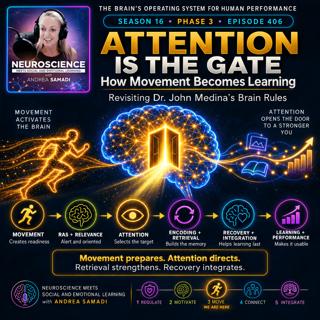
Attention Is the Gate—How Movement Becomes Lasting Learning with Dr. John Medina

Attention Is the Gate—How Movement Becomes Lasting Learning with Dr. John Medina

Episode 406 explains how movement prepares the brain but does not guarantee learning. It traces the full sequence—movement, RAS-driven readiness, salience and relevance, focused attention, encoding, r...

6 Sep 46min
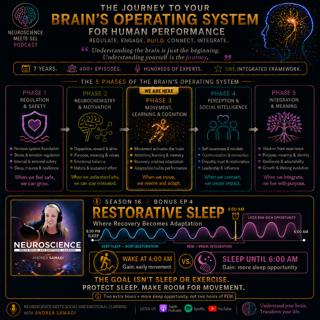
The 4:00 AM Tradeoff: Movement, REM and Recovery (Bonus Episode)

The 4:00 AM Tradeoff: Movement, REM and Recovery (Bonus Episode)

In this episode Andrea Samadi explores how movement and sleep work together in a "brain operating system" for human performance, focusing on restorative sleep (deep + REM), personal WHOOP data, and th...

30 Aug 29min
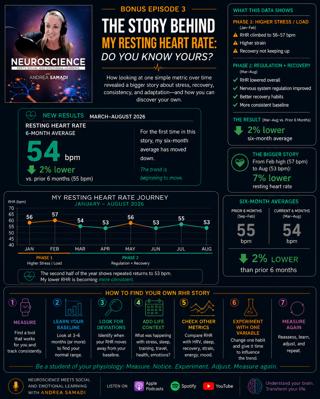
The Hidden Story Behind Your Resting Heart Rate: What Your RHR Can Reveal About Stress, Recovery & Adaptation

The Hidden Story Behind Your Resting Heart Rate: What Your RHR Can Reveal About Stress, Recovery & Adaptation

Andrea Samadi shares her personal resting heart rate data to show why measuring over time matters more than fixating on a single score. She explains how trends reveal stress, recovery, and adaptation,...

23 Aug 30min
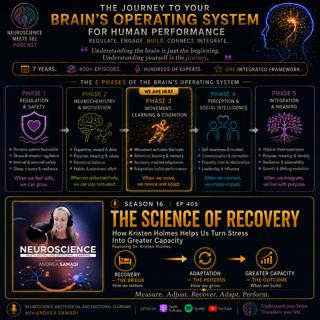
The Science of Recovery—How Dr. Kristen Holmes Helps Us Turn Stress Into Greater Capacity

The Science of Recovery—How Dr. Kristen Holmes Helps Us Turn Stress Into Greater Capacity

In this episode Andrea Samadi explores Phase 3 of the Brain's Operating System—movement, learning, and cognition—focusing on the recovery and adaptation side of the "movement loop." She revisits Dr. K...

16 Aug 45min
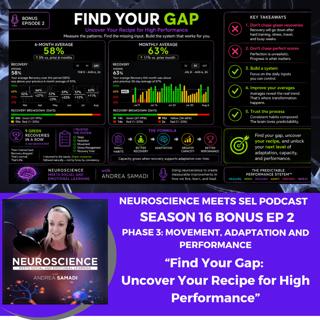
Find Your Gap: How Recovery Unlocks Predictable Performance (Bonus Episode)

Find Your Gap: How Recovery Unlocks Predictable Performance (Bonus Episode)

In this bonus episode Andrea Samadi introduces the Predictable Performance System, a practical roadmap from her Brain’s Operating System. She shows how measuring patterns—not chasing daily scores—plus...

9 Aug 30min
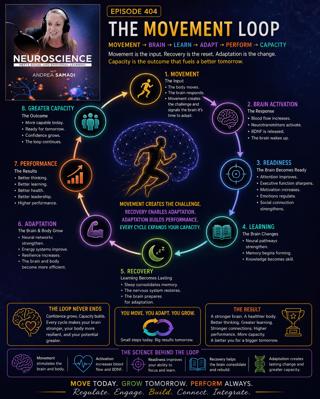
Dr. John Ratey and The Movement Loop: How Movement Becomes Human Performance

Dr. John Ratey and The Movement Loop: How Movement Becomes Human Performance

In this episode Andrea Samadi explores Phase Three of the Brain’s Operating System — how movement acts as the essential input that activates the brain, sharpens attention, boosts learning, and improve...

2 Aug 21min
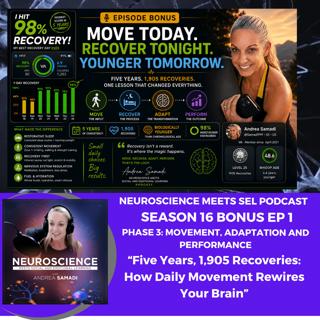
Five Years, 1,905 Recoveries: How Daily Movement Rewires Your Brain (Bonus Episode)

Five Years, 1,905 Recoveries: How Daily Movement Rewires Your Brain (Bonus Episode)

Andrea Samadi shares a five-year self-experiment using a WHOOP wearable to track sleep, recovery, movement, and biological age. She reveals how daily low-intensity movement and consistent recovery—not...

25 Jul 16min
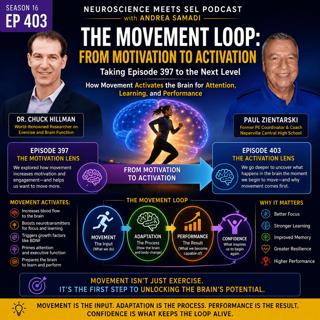
The Movement Loop: How Movement Activates the Brain for Learning, Adaptation & Performance

The Movement Loop: How Movement Activates the Brain for Learning, Adaptation & Performance

Welcome back to Season 16 of the Neuroscience Meets Social and Emotional Learning Podcast. I'm Andrea Samadi, and this is where we bridge neuroscience, social and emotional learning, and human perform...

19 Jul 34min

Populært innen Fakta

fastlegen
dine-penger-pengeradet
relasjonspodden-med-dora-thorhallsdottir-kjersti-idem
foreldreradet
rss-orjasater
treningspodden
jakt-og-fiskepodden
rss-strid
mikkels-paskenotter
hverdagspsyken
sinnsyn
rss-var-forste-kaffe
tomprat-med-gunnar-tjomlid
lederskap-nhhs-podkast-om-ledelse
rss-kunsten-a-leve
fryktlos
gravid-uke-for-uke
branncast
babyverden
rss-det-virker-en-podkast-om-spesialpedagogikk