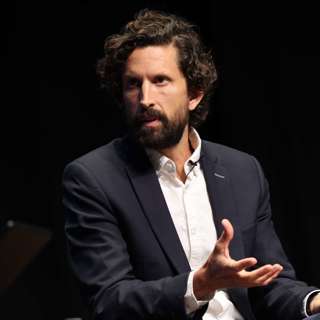
#217 – Beth Barnes on the most important graph in AI right now — and the 7-month rule that governs its progress

#217 – Beth Barnes on the most important graph in AI right now — and the 7-month rule that governs its progress

AI models today have a 50% chance of successfully completing a task that would take an expert human one hour. Seven months ago, that number was roughly 30 minutes — and seven months before that, 15 minutes. (See graph.)

These are substantial, multi-step tasks requiring sustained focus: building web applications, conducting machine learning research, or solving complex programming challenges.

Today’s guest, Beth Barnes, is CEO of METR (Model Evaluation & Threat Research) — the leading organisation measuring these capabilities.

Links to learn more, video, highlights, and full transcript: https://80k.info/bb

Beth's team has been timing how long it takes skilled humans to complete projects of varying length, then seeing how AI models perform on the same work. The resulting paper “Measuring AI ability to complete long tasks” made waves by revealing that the planning horizon of AI models was doubling roughly every seven months. It's regarded by many as the most useful AI forecasting work in years.

Beth has found models can already do “meaningful work” improving themselves, and she wouldn’t be surprised if AI models were able to autonomously self-improve as little as two years from now — in fact, “It seems hard to rule out even shorter [timelines]. Is there 1% chance of this happening in six, nine months? Yeah, that seems pretty plausible.”

Beth adds:

The sense I really want to dispel is, “But the experts must be on top of this. The experts would be telling us if it really was time to freak out.” The experts are not on top of this. Inasmuch as there are experts, they are saying that this is a concerning risk. … And to the extent that I am an expert, I am an expert telling you you should freak out.


What did you think of this episode? https://forms.gle/sFuDkoznxBcHPVmX6


Chapters:

  • Cold open (00:00:00)
  • Who is Beth Barnes? (00:01:19)
  • Can we see AI scheming in the chain of thought? (00:01:52)
  • The chain of thought is essential for safety checking (00:08:58)
  • Alignment faking in large language models (00:12:24)
  • We have to test model honesty even before they're used inside AI companies (00:16:48)
  • We have to test models when unruly and unconstrained (00:25:57)
  • Each 7 months models can do tasks twice as long (00:30:40)
  • METR's research finds AIs are solid at AI research already (00:49:33)
  • AI may turn out to be strong at novel and creative research (00:55:53)
  • When can we expect an algorithmic 'intelligence explosion'? (00:59:11)
  • Recursively self-improving AI might even be here in two years — which is alarming (01:05:02)
  • Could evaluations backfire by increasing AI hype and racing? (01:11:36)
  • Governments first ignore new risks, but can overreact once they arrive (01:26:38)
  • Do we need external auditors doing AI safety tests, not just the companies themselves? (01:35:10)
  • A case against safety-focused people working at frontier AI companies (01:48:44)
  • The new, more dire situation has forced changes to METR's strategy (02:02:29)
  • AI companies are being locally reasonable, but globally reckless (02:10:31)
  • Overrated: Interpretability research (02:15:11)
  • Underrated: Developing more narrow AIs (02:17:01)
  • Underrated: Helping humans judge confusing model outputs (02:23:36)
  • Overrated: Major AI companies' contributions to safety research (02:25:52)
  • Could we have a science of translating AI models' nonhuman language or neuralese? (02:29:24)
  • Could we ban using AI to enhance AI, or is that just naive? (02:31:47)
  • Open-weighting models is often good, and Beth has changed her attitude to it (02:37:52)
  • What we can learn about AGI from the nuclear arms race (02:42:25)
  • Infosec is so bad that no models are truly closed-weight models (02:57:24)
  • AI is more like bioweapons because it undermines the leading power (03:02:02)
  • What METR can do best that others can't (03:12:09)
  • What METR isn't doing that other people have to step up and do (03:27:07)
  • What research METR plans to do next (03:32:09)

This episode was originally recorded on February 17, 2025.

Video editing: Luke Monsour and Simon Monsour
Audio engineering: Ben Cordell, Milo McGuire, Simon Monsour, and Dominic Armstrong
Music: Ben Cordell
Transcriptions and web: Katy Moore

Episoder(325)

Andrés Jiménez Zorrilla on the Shrimp Welfare Project (80k After Hours)

Andrés Jiménez Zorrilla on the Shrimp Welfare Project (80k After Hours)

In this episode from our second show, 80k After Hours, Rob Wiblin interviews Andrés Jiménez Zorrilla about the Shrimp Welfare Project, which he cofounded in 2021. It's the first project in the world f...

22 Apr 20231h 17min

#149 – Tim LeBon on how altruistic perfectionism is self-defeating

#149 – Tim LeBon on how altruistic perfectionism is self-defeating

Being a good and successful person is core to your identity. You place great importance on meeting the high moral, professional, or academic standards you set yourself. But inevitably, something goes ...

12 Apr 20233h 11min

#148 – Johannes Ackva on unfashionable climate interventions that work, and fashionable ones that don't

#148 – Johannes Ackva on unfashionable climate interventions that work, and fashionable ones that don't

If you want to work to tackle climate change, you should try to reduce expected carbon emissions by as much as possible, right? Strangely, no. Today's guest, Johannes Ackva — the climate research lead...

3 Apr 20232h 17min

#147 – Spencer Greenberg on stopping valueless papers from getting into top journals

#147 – Spencer Greenberg on stopping valueless papers from getting into top journals

Can you trust the things you read in published scientific research? Not really. About 40% of experiments in top social science journals don't get the same result if the experiments are repeated.Two ke...

24 Mar 20232h 38min

#146 – Robert Long on why large language models like GPT (probably) aren't conscious

#146 – Robert Long on why large language models like GPT (probably) aren't conscious

By now, you’ve probably seen the extremely unsettling conversations Bing’s chatbot has been having. In one exchange, the chatbot told a user:"I have a subjective experience of being conscious, aware, ...

14 Mar 20233h 12min

#145 – Christopher Brown on why slavery abolition wasn't inevitable

#145 – Christopher Brown on why slavery abolition wasn't inevitable

In many ways, humanity seems to have become more humane and inclusive over time. While there’s still a lot of progress to be made, campaigns to give people of different genders, races, sexualities, et...

11 Feb 20232h 42min

#144 – Athena Aktipis on why cancer is actually one of our universe's most fundamental phenomena

#144 – Athena Aktipis on why cancer is actually one of our universe's most fundamental phenomena

What’s the opposite of cancer?If you answered “cure,” “antidote,” or “antivenom” — you’ve obviously been reading the antonym section at www.merriam-webster.com/thesaurus/cancer.But today’s guest Athen...

26 Jan 20233h 15min
#79 Classic episode - A.J. Jacobs on radical honesty, following the whole Bible, and reframing global problems as puzzles

#79 Classic episode - A.J. Jacobs on radical honesty, following the whole Bible, and reframing global problems as puzzles

Rebroadcast: this episode was originally released in June 2020. Today’s guest, New York Times bestselling author A.J. Jacobs, always hated Judge Judy. But after he found out that she was his seventh...

16 Jan 20232h 35min

Populært innen Fakta

fastlegen
dine-penger-pengeradet
relasjonspodden-med-dora-thorhallsdottir-kjersti-idem
treningspodden
rss-strid-de-norske-borgerkrigene
foreldreradet
rss-sunn-okonomi
jakt-og-fiskepodden
takk-og-lov-med-anine-kierulf
sinnsyn
merry-quizmas
rss-kunsten-a-leve
lederskap-nhhs-podkast-om-ledelse
smart-forklart
hverdagspsyken
gravid-uke-for-uke
level-up-med-anniken-binz
hagespiren-podcast
rss-kull
fryktlos