More than a Mud Puddle: The Exciting World of Vernal Pools

More than a Mud Puddle: The Exciting World of Vernal Pools

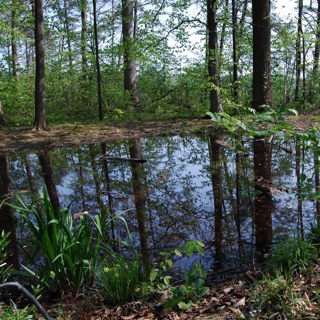
Vernal pools are a special type of shallow wetlands that fill with snow melt and rain in late fall through early spring, then dry up sometime during the summer. Because they dry up, they are sometimes overlooked or dismissed as "not very good wetlands." However, they serve an important role in the ecosystem and can be teeming with all kinds of life.

In this episode, we talk with Tom Biebighauser about vernal pools. Tom is a wildlife biologist, wetland ecologist, educator, and author. He has written multiple books about vernal pools and has made a career of restoring and creating wetlands. Throughout our conversation, Tom shares many stories about creating vernal pools on his own property, on other people's properties, and at schools.

Almost by definition, vernal pools don't contain fish, because fish wouldn't be able to survive when the vernal pool dries up. However, because they don't have fish, vernal pools are extremely important breeding sites for frogs, toads, salamanders, and many aquatic invertebrates. In more permanent bodies of water, those animals and their eggs, tadpoles, and larva would face a significant threat of being eaten by hungry fish, but that's obviously not a risk in a place where there aren't any fish.

In many states, 90% of our wetlands have been drained and filled. This is especially true for vernal pools, probably because they do dry out for part of the year. Vernal pools are often relatively small – sometimes only the size of a living room or even smaller. They are also very shallow, usually only inches to maybe a foot or so deep, and have gently sloping sides.

One of the reasons that wetlands are often drained is for mosquito control. However, mosquitoes typically aren't a problem around vernal pools because the mosquito eggs and larvae are eaten by everything that is in the vernal pool. If a vernal pool or wetland holds water for more than a couple of months then it will attract frogs, dragonflies, damselflies, and other mosquito predators.

Many people are probably familiar with the concept of rain gardens and may even have a rain garden already. However, vernal pools differ from rain gardens in that vernal pools hold water for several months, while rain gardens go dry much faster. Because rain gardens typically only hold water for a few hours to a few days, they don't develop the complex ecosystems of a vernal pool.

There are lots of opportunities to create vernal pools around our homes, on our school grounds, or in other places within our communities. The cost of creating a vernal pool can range from practically nothing, to a few hundred dollars, to several thousand dollars, depending on the size of the vernal pool you want to create, the type of soil you have, and how much labor you want to do yourself. However, in many cases there are funds available to help cover the costs of creating vernal pools or other shallow wetlands. Tom has written several books that walk you through how to create vernal pools. His books plus lots of free resources and guides are available through his website.

Links:

Episode image:

  • Vernal pool created at McBrayer Elementary school
  • Photo credit: Thomas Biebighauser

Episoder(115)

The Great Backyard Bird Count

The Great Backyard Bird Count

The Great Backyard Bird Count is an annual citizen science / community science project hosted by the Cornell Lab of Ornithology, Audubon, and Birds Canada. This international project takes place all o...

4 Feb 202141min
The Valuable Ecological Roles of Crayfish and the Discovery of Two New Species

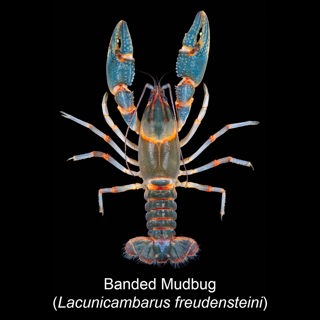
The Valuable Ecological Roles of Crayfish and the Discovery of Two New Species

We're lucky in the eastern U.S. because bodies of water are pretty common. For most of us, if we don't have access to a creek, stream, river, pond, etc. in our immediate backyards, then we likely have...

28 Jan 20211h 9min
Native Seed Production and Tips for Starting a New Native Plant Garden or Restoration Area

Native Seed Production and Tips for Starting a New Native Plant Garden or Restoration Area

Growing native plants has grown in popularity over the last couple of decades. This has led to an increased demand for native plant seeds. However, many of us have never really stopped to think about ...

21 Jan 20211h 3min
Land Snails and their Amazing Diversity

Land Snails and their Amazing Diversity

Land snails???? Come on, how do they fit with Backyard Ecology? True, land snails aren't the most charismatic organism in our yards and communities, so it would be easy to just write them off and igno...

14 Jan 202156min
Conserving our Southeastern Grasslands with Dwayne Estes

Conserving our Southeastern Grasslands with Dwayne Estes

Many of us grew up hearing about the decline of the old growth forests and their impacts on neotropical songbirds and other wildlife. I think this was especially true for those of us who grew up here ...

7 Jan 202154min
Native and Non-native Earthworms in the Eastern U.S. with Mac Callaham

Native and Non-native Earthworms in the Eastern U.S. with Mac Callaham

Hi Everyone! Today we are talking with Mac Callaham who is a Research Ecologist with the Southern Research Station of the U.S. Forest Service. Mac's focus is on invasive species, with a specialty in s...

31 Des 202053min
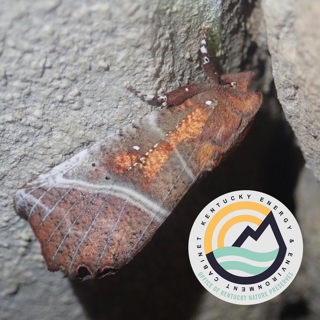
Moths in the Winter with Shelby Fulton

Moths in the Winter with Shelby Fulton

Hi, Everyone! In today's episode of the Backyard Ecology podcast we are talking with Shelby Fulton who is a terrestrial biologist with the Kentucky Nature Preserves. Our conversation focuses on moths ...

24 Des 202031min
An Introduction to iNaturalist with Maddy Heredia

An Introduction to iNaturalist with Maddy Heredia

Hi Everyone! On today's episode of Backyard Ecology, we talk with Maddy Heredia who is the outreach specialist and a biologist with the Kentucky Nature Preserves. Maddy and I first met when she was in...

17 Des 202036min

Populært innen Vitenskap

fastlegen
rekommandert
jss
tingenes-tilstand
rss-rekommandert
liberal-halvtime
sinnsyn
forskningno
tomprat-med-gunnar-tjomlid
villmarksliv
rss-nysgjerrige-norge
fjellsportpodden
dekodet-2
kvinnehelsepodden
smart-forklart
rss-paradigmepodden
vett-og-vitenskap-med-gaute-einevoll
nevropodden
tidlose-historier
utenrikshospitalet