
Rebuilding after apocalypse: What 13 experts say about bouncing back

Rebuilding after apocalypse: What 13 experts say about bouncing back

What happens when civilisation faces its greatest tests?

This compilation brings together insights from researchers, defence experts, philosophers, and policymakers on humanity’s ability to survive and recover from catastrophic events. From nuclear winter and electromagnetic pulses to pandemics and climate disasters, we explore both the threats that could bring down modern civilisation and the practical solutions that could help us bounce back.

Learn more and see the full transcript: https://80k.info/cr25

Chapters:

  • Cold open (00:00:00)
  • Luisa’s intro (00:01:16)
  • Zach Weinersmith on how settling space won’t help with threats to civilisation anytime soon (unless AI gets crazy good) (00:03:12)
  • Luisa Rodriguez on what the world might look like after a global catastrophe (00:11:42)
  • Dave Denkenberger on the catastrophes that could cause global starvation (00:22:29)
  • Lewis Dartnell on how we could rediscover essential information if the worst happened (00:34:36)
  • Andy Weber on how people in US defence circles think about nuclear winter (00:39:24)
  • Toby Ord on risks to our atmosphere and whether climate change could really threaten civilisation (00:42:34)
  • Mark Lynas on how likely it is that climate change leads to civilisational collapse (00:54:27)
  • Lewis Dartnell on how we could recover without much coal or oil (01:02:17)
  • Kevin Esvelt on people who want to bring down civilisation — and how AI could help them succeed (01:08:41)
  • Toby Ord on whether rogue AI really could wipe us all out (01:19:50)
  • Joan Rohlfing on why we need to worry about more than just nuclear winter (01:25:06)
  • Annie Jacobsen on the effects of firestorms, rings of annihilation, and electromagnetic pulses from nuclear blasts (01:31:25)
  • Dave Denkenberger on disruptions to electricity and communications (01:44:43)
  • Luisa Rodriguez on how we might lose critical knowledge (01:53:01)
  • Kevin Esvelt on the pandemic scenarios that could bring down civilisation (01:57:32)
  • Andy Weber on tech to help with pandemics (02:15:45)
  • Christian Ruhl on why we need the equivalents of seatbelts and airbags to prevent nuclear war from threatening civilisation (02:24:54)
  • Mark Lynas on whether wide-scale famine would lead to civilisational collapse (02:37:58)
  • Dave Denkenberger on low-cost, low-tech solutions to make sure everyone is fed no matter what (02:49:02)
  • Athena Aktipis on whether society would go all Mad Max in the apocalypse (02:59:57)
  • Luisa Rodriguez on why she’s optimistic survivors wouldn’t turn on one another (03:08:02)
  • David Denkenberger on how resilient foods research overlaps with space technologies (03:16:08)
  • Zach Weinersmith on what we’d practically need to do to save a pocket of humanity in space (03:18:57)
  • Lewis Dartnell on changes we could make today to make us more resilient to potential catastrophes (03:40:45)
  • Christian Ruhl on thoughtful philanthropy to reduce the impact of catastrophes (03:46:40)
  • Toby Ord on whether civilisation could rebuild from a small surviving population (03:55:21)
  • Luisa Rodriguez on how fast populations might rebound (04:00:07)
  • David Denkenberger on the odds civilisation recovers even without much preparation (04:02:13)
  • Athena Aktipis on the best ways to prepare for a catastrophe, and keeping it fun (04:04:15)
  • Will MacAskill on the virtues of the potato (04:19:43)
  • Luisa’s outro (04:25:37)

Tell us what you thought! https://forms.gle/T2PHNQjwGj2dyCqV9

Content editing: Katy Moore and Milo McGuire
Audio engineering: Ben Cordell, Milo McGuire, Simon Monsour, and Dominic Armstrong
Music: Ben Cordell
Transcriptions and web: Katy Moore

Episoder(323)

#229 – Marius Hobbhahn on the race to solve AI scheming before models go superhuman

#229 – Marius Hobbhahn on the race to solve AI scheming before models go superhuman

We often worry about AI models “hallucinating” or making honest mistakes. But what happens when a model knows the truth, but decides to deceive you anyway to achieve a goal of its own? This isn’t sci-...

3 Des 20253h 3min

Rob & Luisa chat kids, the 2016 fertility crash, and how the 50s invented parenting that makes us miserable

Rob & Luisa chat kids, the 2016 fertility crash, and how the 50s invented parenting that makes us miserable

Global fertility rates aren’t just falling: the rate of decline is accelerating. From 2006 to 2016, fertility dropped gradually, but since 2016 the rate of decline has increased 4.5-fold. In many weal...

25 Nov 20251h 59min

#228 – Eileen Yam on how we're completely out of touch with what the public thinks about AI

#228 – Eileen Yam on how we're completely out of touch with what the public thinks about AI

If you work in AI, you probably think it’s going to boost productivity, create wealth, advance science, and improve your life. If you’re a member of the American public, you probably strongly disagree...

20 Nov 20251h 43min

OpenAI: The nonprofit refuses to be killed (with Tyler Whitmer)

OpenAI: The nonprofit refuses to be killed (with Tyler Whitmer)

Last December, the OpenAI business put forward a plan to completely sideline its nonprofit board. But two state attorneys general have now blocked that effort and kept that board very much alive and k...

11 Nov 20251h 56min
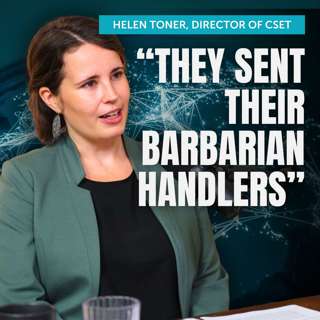
#227 – Helen Toner on the geopolitics of AGI in China and the Middle East

#227 – Helen Toner on the geopolitics of AGI in China and the Middle East

With the US racing to develop AGI and superintelligence ahead of China, you might expect the two countries to be negotiating how they’ll deploy AI, including in the military, without coming to blows. ...

5 Nov 20252h 20min

#226 – Holden Karnofsky on unexploited opportunities to make AI safer — and all his AGI takes

#226 – Holden Karnofsky on unexploited opportunities to make AI safer — and all his AGI takes

For years, working on AI safety usually meant theorising about the ‘alignment problem’ or trying to convince other people to give a damn. If you could find any way to help, the work was frustrating an...

30 Okt 20254h 30min

#225 – Daniel Kokotajlo on what a hyperspeed robot economy might look like

#225 – Daniel Kokotajlo on what a hyperspeed robot economy might look like

When Daniel Kokotajlo talks to security experts at major AI labs, they tell him something chilling: “Of course we’re probably penetrated by the CCP already, and if they really wanted something, they c...

27 Okt 20252h 12min
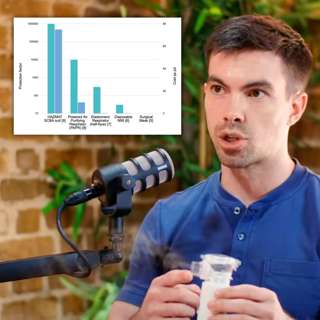
#224 – There's a cheap and low-tech way to save humanity from any engineered disease | Andrew Snyder-Beattie

#224 – There's a cheap and low-tech way to save humanity from any engineered disease | Andrew Snyder-Beattie

Conventional wisdom is that safeguarding humanity from the worst biological risks — microbes optimised to kill as many as possible — is difficult bordering on impossible, making bioweapons humanity’s ...

2 Okt 20252h 31min

Populært innen Fakta

fastlegen
dine-penger-pengeradet
relasjonspodden-med-dora-thorhallsdottir-kjersti-idem
treningspodden
rss-strid-de-norske-borgerkrigene
rss-sunn-okonomi
jakt-og-fiskepodden
foreldreradet
hverdagspsyken
rss-kunsten-a-leve
merry-quizmas
gravid-uke-for-uke
rss-mann-i-krise-med-sagen
tomprat-med-gunnar-tjomlid
fryktlos
sinnsyn
rss-impressions-2
hagespiren-podcast
rss-kull
dopet