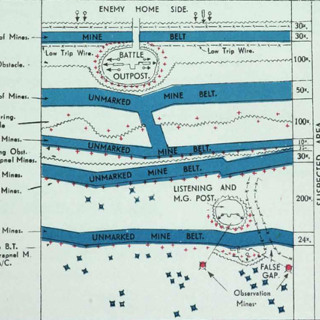
Do anti-personnel mines still have military utility in modern warfare?

Do anti-personnel mines still have military utility in modern warfare?

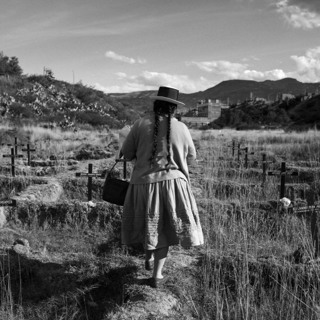
Five States Parties to the Anti-Personnel Mine Ban Convention have recently submitted instruments of withdrawal, citing national security and military necessity, while at least one other has taken steps to “suspend” the Convention. These developments raise important questions about whether anti-personnel mines retain any meaningful military utility in contemporary conflict. In this post, Erik Tollefsen, Head of the ICRC Weapon Contamination Unit and Pete Evans, Head of the ICRC Unit for Arms Carriers and Prevention examine this question from an operational perspective. They argue that advances in technology and the realities of modern warfare have significantly reduced the military relevance of anti-personnel mines, while their humanitarian consequences remain severe. They outline why some of the most frequently cited justifications – border security, the supposed benefits of “smart” mines, or perceived low cost – no longer withstand scrutiny, and why renewed interest in these weapons risks reversing decades of progress. The authors call on states to base decisions on rigorous, transparent assessments of current military relevance weighed against humanitarian and legal obligations. In a security environment defined by rapid innovation, they conclude that, now as at the Convention’s adoption 30 years ago, anti-personnel mines have no place on the modern battlefield – and that reaffirming the norm against their use is more urgent than ever.

Det här avsnittet är hämtat från ett öppet RSS-flöde och publiceras inte av Podme. Det kan innehålla reklam.

Avsnitt(300)

“A number that learned how not to scream”: the case for community-led metrics on protection

“A number that learned how not to scream”: the case for community-led metrics on protection

The international humanitarian system has built a sophisticated architecture for the protection of civilians, namely political resolutions, cluster coordination mechanisms, reporting frameworks, and a...

7 Juli 15min

Amplifying Pacific voices: the region’s crucial role in advancing IHL

Amplifying Pacific voices: the region’s crucial role in advancing IHL

Pacific Island states have long demonstrated leadership in promoting peace, disarmament, and humanitarian values. From traditional customs that reflect principles contained in contemporary internation...

2 Juli 15min

The shelter that shone in the distance | Written and Performed by Mamuch Bey

The shelter that shone in the distance | Written and Performed by Mamuch Bey

For the world's more than 120 million forcibly displaced people, the idea of refuge is not an abstraction – it is a horizon, an act of imagination, and sometimes the only thing that keeps hope alive. ...

18 Juni 4min

African traditions and the protection of children in armed conflict

African traditions and the protection of children in armed conflict

Across Africa, norms regulating the conduct of hostilities long predate the codification of modern international humanitarian law (IHL). The ICRC Tool on African traditions and the preservation of hum...

16 Juni 12min

We helped individuals while harming persons: what conflict-affected communities deserve beyond beneficiary status

We helped individuals while harming persons: what conflict-affected communities deserve beyond beneficiary status

Conflict and displacement do more than destroy homes, livelihoods, and infrastructure. They also fracture the social relationships through which people sustain dignity, identity, and collective life. ...

11 Juni 14min

Climate resilience is not optional: what people in fragile, urban settings should expect from WASH

Climate resilience is not optional: what people in fragile, urban settings should expect from WASH

Climate change is intensifying water insecurity in fragile urban settings, where ageing infrastructure, rapid urbanization, and inequality already strain access to essential services. In Peshawar, Pak...

9 Juni 18min

Life teaches before school does: the invisible curriculum of the super child

Life teaches before school does: the invisible curriculum of the super child

Refugee education is often framed in terms of access, infrastructure, and policy – but for children who grow up inside camps, meaningful learning begins long before they enter a classroom. It unfolds ...

4 Juni 12min

Why Africa should act now on explosive weapons in populated areas: Malawi’s case for action

Why Africa should act now on explosive weapons in populated areas: Malawi’s case for action

Across contemporary armed conflicts, the use of explosive weapons in populated areas (EWIPA) has emerged as one of the gravest threats to civilians. Urban centres are increasingly sites of hostilities...

28 Maj 13min

Populärt inom Politik & nyheter

svenska-fall
tv4-nyheterna-story
p3-krim
aftonbladet-krim
flashback-forever
aftonbladet-daily
rss-krimstad
motiv
de-fyras-gang
spar
rss-sanning-konsekvens
rss-vad-fan-hande
mannen-utan-spar
rss-aftonbladet-krim
rss-expressen-dok
kungligt
olyckan-inifran
rss-krimreportrarna
grans
rss-flodet