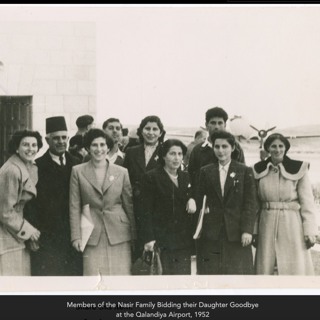
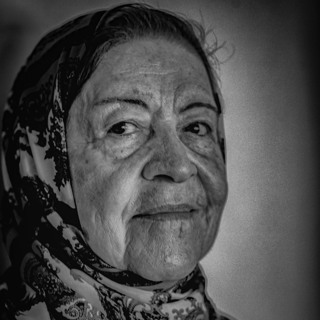
Nakba #56 - Samia Nasir Khury

Nakba #56 - Samia Nasir Khury

“My father worked as a governor for the British government, and the rest of the family followed him. He was later transferred to Safad. There we had good relations with our Jewish neighbors. That was normal. Women exchanged baked goods with one another during different holidays and celebrations. In 1946 it finally became clear to him what the British were doing—that they were preparing the way for the Jews to take over. His job became impossible, and he decided to resign. He went to the King David Hotel to submit his letter of resignation. As he stepped over the threshold of the hotel, he looked at his watch and realized he was early. He decided to visit a friend in Mamilla in the meantime. Shortly after he left the hotel, it was blown to pieces. The man my father was going to visit was not as lucky. He had gone to the hotel and was killed by the bomb. This was in 1946. Irgun was responsible for the attack, but the various Zionist organizations constantly blamed one another. This was only the beginning. Then came the bombing of the Semiramis Hotel and the massacre in Dayr Yasin. That was when people began to feel real fear. After my father resigned, he began teaching physics. We remained in al-Quds. I was a happy teenager. I went to parties, and my aunts and cousins lived there. It was a wonderful time. We used to go to the YMCA, where we were members. They had leadership courses, tennis courts, a gym, and a swimming pool. It was a fantastic place. In 1948, the family moved to Birzeit, where my father taught and where I attended a boarding school—it felt like my second home. Suddenly, rumors spread that something was wrong. People began pouring in from al-Ramla and Lydda. They were fleeing and had been walking for two or three days. I will never forget that sight. Everything was so sad; people were utterly exhausted. Someone told us they had lost a son. One man was confused and rambling; he did not understand what was happening. I especially remember a woman who had lost all her belongings. Despite that, she was grateful to have survived. She said: “Furniture can be replaced, but not people.” My aunt told my cousins and me to cook food for the refugees. We boiled eggs and potatoes, sliced tomatoes and cucumbers—everything we could get hold of. My aunt also helped prepare a school building where some of the refugees could find shelter. My aunts and cousins had come to Birzeit to escape the unrest in al-Quds. Everyone believed this would be over in a few weeks, and that we would be able to return. But in October, we began to understand that this was no picnic. After the war in 1967, East al-Quds was annexed by Jordan. It then became possible again for my mother and me to visit our house. The house had become a daycare center, so it was easy to enter. My mother began explaining to a woman sitting in the office that it had once been her bedroom. It was painful to see our house again. I had hoped, for as long as possible, that we would be allowed to return. We never went back again. The Nakba is still ongoing; the displacement is still ongoing. Everything here is so hard to predict under the Israeli occupation. When you get up in the morning and put your right foot down, you do not know whether your left foot will follow. In 1993, during the first intifada, my son produced a song and made cassette copies of it. He was arrested by the police and taken for interrogation at Moscobiyeh in al-Quds. He was accused of spreading music that glorified the intifada. He was imprisoned for six months. First he was held in Ayalon prison in al-Ramla. He went through hell there. We were allowed to visit him, but I was not allowed to touch him. He sat behind a net. Later he was transferred to Prison Six, outside Atlit. The time in prison made my son more enthusiastic and determined than before. He continues to make music.

Det här avsnittet är hämtat från ett öppet RSS-flöde och publiceras inte av Podme. Det kan innehålla reklam.

Avsnitt(323)

Nakba #18- Fatima Abdurahman Steti

Nakba #18- Fatima Abdurahman Steti

1944 “My father had a fairly large shoe shop in Haifa. We also owned real estate. We were very well off financially. As a child, I never noticed any tension between the Jews and us. We lived next door...

30 Dec 202553min
Nakba #17 - Hayat Dawud Muhammad al-Qawasmi

Nakba #17 - Hayat Dawud Muhammad al-Qawasmi

1941 “The house I grew up in was located on one of Jerusalem’s main streets. The façade was white and the door was blue. When you entered the house, you went down a few steps and arrived in a large ro...

30 Dec 20252h 11min
Nakba #16 - Fayza Abed Bayrakji

Nakba #16 - Fayza Abed Bayrakji

1946 “My father owned a lot of land where he grew grapes, figs, olives, and other crops. We also had livestock. Many people worked for us during the harvest season. My father died when I was three yea...

30 Dec 202548min
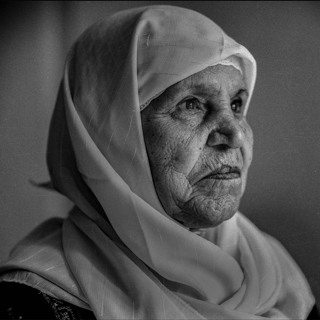
Nakba #15 - Sara Aydi

Nakba #15 - Sara Aydi

1937 “I was an only child. My father died when I was four years old. My mother remarried his cousin. They had four more children.” 1947 “I got married when I was fifteen. My husband, Mahmud, was eight...

30 Dec 202559min
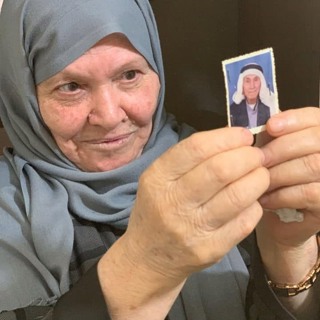
Nakba #14 - Fawzeeyya Mustafa

Nakba #14 - Fawzeeyya Mustafa

1948 “Before I had turned seven, we finally got a school in our village. My father wanted me to receive an education. I, along with eight other girls, started school. Four months later, al-Nakba occur...

30 Dec 202546min
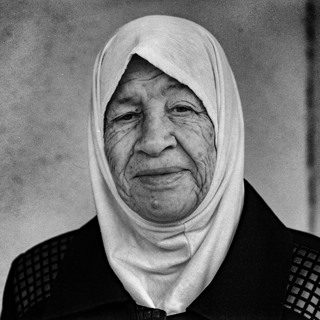
Nakba #14 - Dunia Hameed

Nakba #14 - Dunia Hameed

“I always slept next to my grandmother. I used to lie there hugging her. One evening, I woke up to gunfire and bombing. There were only children and women in the room. It was crowded. Everyone was lyi...

29 Dec 20251h 17min
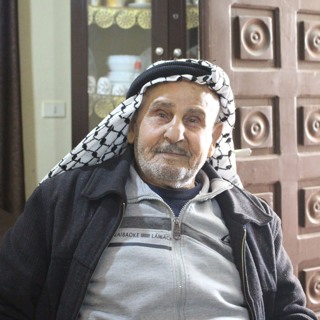
Nakba #13 - Hassan Ahmed Jaber

Nakba #13 - Hassan Ahmed Jaber

“My country is not a suitcase, and I am not on a journey.”

29 Dec 202557min
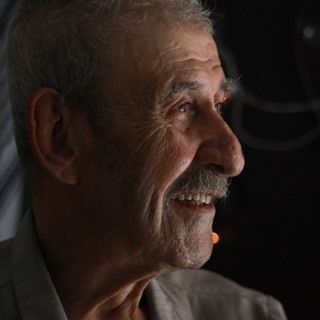
Nakba #12 - Mofid al Sadek

Nakba #12 - Mofid al Sadek

1948 — When was the first time you met a Jew? “It was when they bombed our village and we were forced to flee with only the clothes we were wearing. Everything else we had to leave behind. But I never...

29 Dec 202538min

Populärt inom Utbildning

historiepodden-se
det-skaver
rss-bara-en-till-om-missbruk-medberoende-2
allt-du-velat-veta
nu-blir-det-historia
roda-vita-rosen
sektledare
johannes-hansen-podcast
harrisons-dramatiska-historia
not-fanny-anymore
rss-viktmedicinpodden
i-vantan-pa-katastrofen
sa-in-i-sjalen
rss-dr-bjorklund
rss-foraldramotet-bring-lagercrantz
rikatillsammans-om-privatekonomi-rikedom-i-livet
rss-max-tant-med-max-villman
rss-real-talk-with-jesper-stahl
rss-relationsrevolutionen
rss-basta-livet