Rimsky-Korsakov: Scheherezade

Rimsky-Korsakov: Scheherezade

Rimsky-Korsakov, above anything else, is regarded as a master of orchestration, the art of creating orchestral sound and color. As Rachmaninoff said about Rimsky-Korsakov's music: "When there is a snowstorm, the flakes seem to dance and drift. When the sun is high, all instruments shine with an almost fiery glow. When there is water, the waves ripple and splash audibly throughout the orchestra … ; the sound is cool and glassy when he describes a calm winter night with glittering starlit sky." Nowhere is this gift more on display than in one of Rimsky-Korsakov's seminal works, Scheherezade. But this work is far more than only orchestration. It is a shining example of a number of complicated facets of both Rimsky-Korsakov's and Russian Nationalist music of the time. It also displays so many of the contradictions that marked this era of classical music, and in particular, Russian classical music. Rimsky-Korsakov originally gave the piece a clear narrative, but then withdrew it angrily, saying that any programmatic narrative was merely meant peripherally, and "I meant these hints to direct but slightly the hearer's fancy…All I had desired was that the hearer, if he liked my piece as symphonic music, should carry away the impression that it is beyond doubt an oriental narrative of some numerous and varied fairy-tale wonders and not merely four pieces played one after the other…" And that word, oriental, a complicated word in our modern times to be sure, plays a huge and unavoidable role in this piece. This was a time when Imperial Russia occupied lands in Central Asia, and when the Russian public became obsessed with so called "oriental" literature and music. Composers drew liberally on these sources for their music, and Rimsky Korsakov's mentor, the great composer Mily Balakirev, heavily encouraged Russian composers to use these sources as a way to set their music apart from German composers of the time. A group of composers, the not at all egotistically named "Mighty Five" Balakirev, Mussorgsky, Rimsky-Korsakov, Borodin, and Cesar Cui, almost all became famous through their use of Central Asian and Middle Eastern themes and stories. But no piece has captured the imagination of listeners around the world more than Scheherezade, a piece that drew upon the collection of Middle Eastern folk tales known and One Thousand and One Nights, and features some of the most legendary melodies in the history of Western Classical Music. We're going to talk about all of this today on this Patreon sponsored episode, so please join us!

Det här avsnittet är hämtat från ett öppet RSS-flöde och publiceras inte av Podme. Det kan innehålla reklam.

Avsnitt(297)

Shostakovich Symphony No. 6

Shostakovich Symphony No. 6

Dmitri Shostakovich: "I have set myself a task fraught with tremendous responsibility, to express in sound the immortal image of Lenin as a great son of the Russian people and as a leader of the masse...

17 Sep 1h 2min

Grieg: Peer Gynt

Grieg: Peer Gynt

Grieg's Peer Gynt suites are among the best-known and best-loved works of classical music in the world. They are practically embedded into popular culture, being used in a dizzying number of cartoons,...

3 Sep 1h 7min
Mozart Clarinet Concerto

Mozart Clarinet Concerto

When it comes to a piece like the Mozart Clarinet Concerto, a few words or phrases regularly come up: the concerto is described as "mellow" or Mozart's "swan song," but most often it is described as "...

20 Aug 51min
Bohuslav Martinu Symphony No. 1

Bohuslav Martinu Symphony No. 1

It took a lot to make the composer and critic Virgil Thomson happy. He was famous for savaging new works he didn't like, and the truth is, he didn't like very many new works at all. One exception was ...

6 Aug 1h 1min
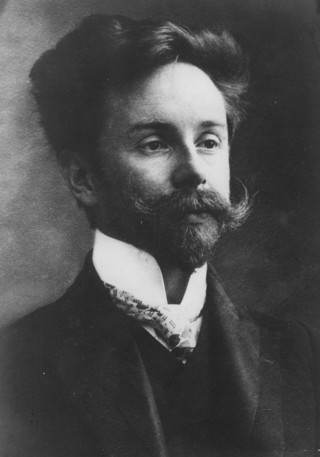
Scriabin Poem of Ecstasy

Scriabin Poem of Ecstasy

Thence the universe resounds
 With a joyful cry  I AM. These are the final lines of Alexander Scriabin's epic Poem of Ecstasy, a 300-line poem that takes nearly 10 minutes to read aloud and is one of ...

23 Juli 51min
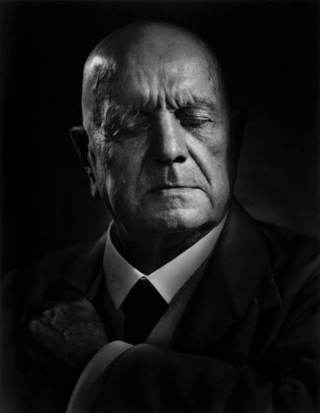
Sibelius Tapiola

Sibelius Tapiola

Ancient, mysterious, brooding savage dreams; Within them dwells the Forest's mighty God, And wood-sprites in the gloom weave magic secrets. These lines are affixed to the first page of Sibelius' tone...

10 Juli 47min
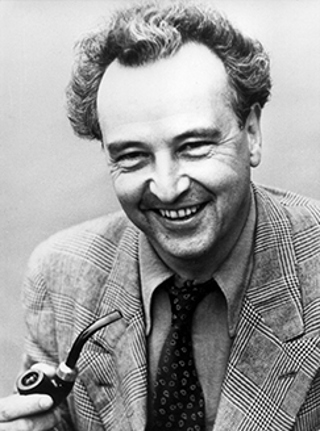
Arthur Honneger, Symphony No. 3, "Liturgique"

Arthur Honneger, Symphony No. 3, "Liturgique"

In the aftermath of World War II, the Swiss composer Arthur Honegger, who had been living in occupied Paris throughout the war, wrote a new symphony entitled "Liturgical." He wrote an extended comment...

25 Juni 53min
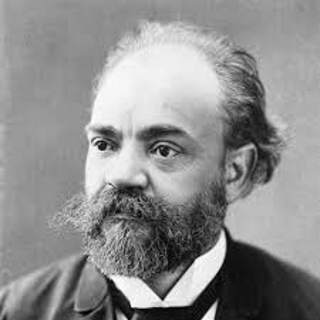
Dvorak Piano Quintet, Op. 81

Dvorak Piano Quintet, Op. 81

In 1872, at the age of 31, Dvořák wrote a Piano Quintet designated as Opus 5. Dvořák was not a prodigy like some other famous composers; instead, his development as a composer was slow and steady. Lat...

11 Juni 49min

Populärt inom Nöje

mellan-himmel-och-jord-med-jlc
filip-fredrik-svarar
fordomspodden
mardromsgasten
dialogiskt
rss-p3-musikdokumentar
chilla-med-de-vet-du
fem-i-topp
badfluence
karatefylla
gott-snack-med-fredrik-soderholm
skandal
schulman-show
hemma-hos-strage
mannen-utan-spar
rss-made-in-sverige-podcast
rss-bl-metal-podcast
podme-bio-4
sexet
rss-kulturkalaset