Stenhammar Symphony No. 2

Stenhammar Symphony No. 2

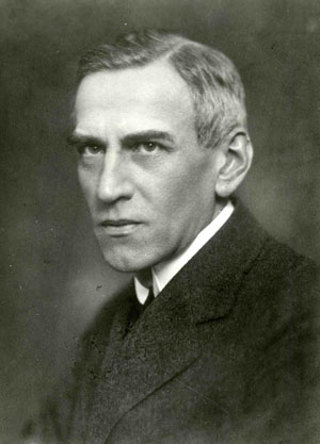
The year is 1910. Imagine that you are a young composer, and the music world is in flux all around you. Mahler is dying, and with his death many agreed that the great Austro-German symphonic tradition that stretched from the late 18th century with Haydn all the way through Mozart, Beethoven, Brahms, Mendelssohn, Schubert and more, was over and done with. Wagner's music dramas had inspired an entirely new style of music, and composers like Strauss, Liszt, and Berlioz had blown open the possibilities of what music could portray. But even their experiments had seemed to have reached a breaking point. For many composers, there seemed to be nowhere to go. As the great Swedish conductor Herbert Blomstedt said: "There was nothing to be done all the great melodies had all been written - what could one do. There was so much wonderful music but composers had to regroup and develop their own language and that wasn't easy in 1910. Stravinsky found his own method inspired by Russian culture, Bartok was similar, Hindemith went to Baroque and the Renaissance. Schoenberg's idea was: it's all nonsense, we need to start from the beginning. Every composer has to make a new start." Over the next few weeks, I'm going to talk about composers who struggled with these questions, and the first one on the list is the most important Swedish composer Wilhelm Stenhammar, who started out his life as a disciple of Wagner, but in the end rejected that influence and created a style all his own, which is perhaps best exemplified in his second symphony, which features the sounds of Swedish folk music, harmonies that stretch back not into the classical era but into the Medieval period, and a powerful resolve to not be like Wagner, but also to not even approach the idea of sounding like Schoenberg either. Stenhammar wrote to a friend as he began writing his G Minor symphony: "In these times of Arnold Schoenberg, I dream of an art far removed from him, clear, joyful and naïve." We're going to discuss all of these roiling tensions this week, so please join us for a look at this underrated symphony!

Det här avsnittet är hämtat från ett öppet RSS-flöde och publiceras inte av Podme. Det kan innehålla reklam.

Avsnitt(297)

Shostakovich Symphony No. 6

Shostakovich Symphony No. 6

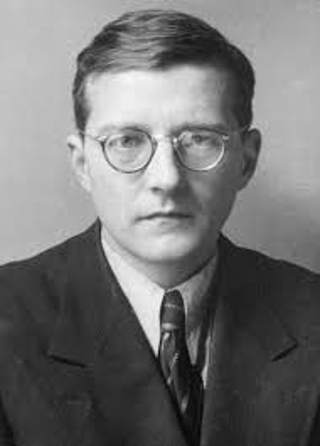
Dmitri Shostakovich: "I have set myself a task fraught with tremendous responsibility, to express in sound the immortal image of Lenin as a great son of the Russian people and as a leader of the masse...

17 Sep 1h 2min
Grieg: Peer Gynt

Grieg: Peer Gynt

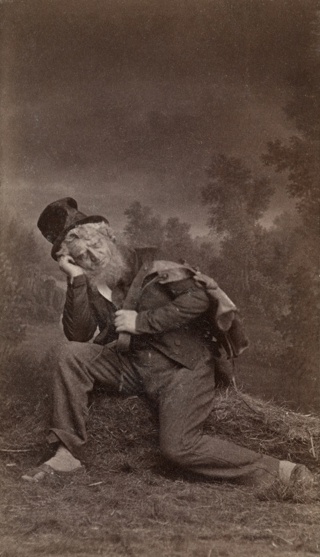
Grieg's Peer Gynt suites are among the best-known and best-loved works of classical music in the world. They are practically embedded into popular culture, being used in a dizzying number of cartoons,...

3 Sep 1h 7min
Mozart Clarinet Concerto

Mozart Clarinet Concerto

When it comes to a piece like the Mozart Clarinet Concerto, a few words or phrases regularly come up: the concerto is described as "mellow" or Mozart's "swan song," but most often it is described as "...

20 Aug 51min
Bohuslav Martinu Symphony No. 1

Bohuslav Martinu Symphony No. 1

It took a lot to make the composer and critic Virgil Thomson happy. He was famous for savaging new works he didn't like, and the truth is, he didn't like very many new works at all. One exception was ...

6 Aug 1h 1min
Scriabin Poem of Ecstasy

Scriabin Poem of Ecstasy

Thence the universe resounds
 With a joyful cry  I AM. These are the final lines of Alexander Scriabin's epic Poem of Ecstasy, a 300-line poem that takes nearly 10 minutes to read aloud and is one of ...

23 Juli 51min
Sibelius Tapiola

Sibelius Tapiola

Ancient, mysterious, brooding savage dreams; Within them dwells the Forest's mighty God, And wood-sprites in the gloom weave magic secrets. These lines are affixed to the first page of Sibelius' tone...

10 Juli 47min
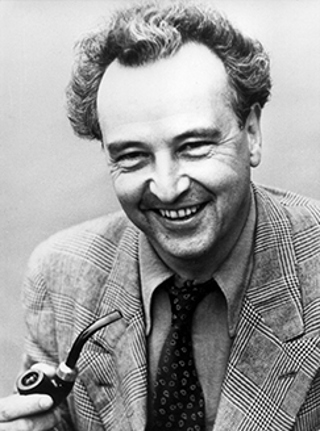
Arthur Honneger, Symphony No. 3, "Liturgique"

Arthur Honneger, Symphony No. 3, "Liturgique"

In the aftermath of World War II, the Swiss composer Arthur Honegger, who had been living in occupied Paris throughout the war, wrote a new symphony entitled "Liturgical." He wrote an extended comment...

25 Juni 53min
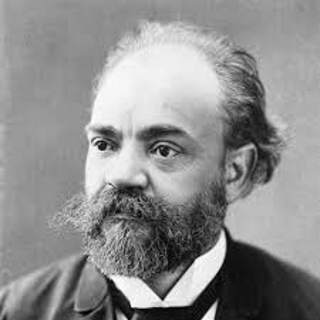
Dvorak Piano Quintet, Op. 81

Dvorak Piano Quintet, Op. 81

In 1872, at the age of 31, Dvořák wrote a Piano Quintet designated as Opus 5. Dvořák was not a prodigy like some other famous composers; instead, his development as a composer was slow and steady. Lat...

11 Juni 49min

Populärt inom Nöje

mellan-himmel-och-jord-med-jlc
filip-fredrik-svarar
fordomspodden
mardromsgasten
dialogiskt
rss-p3-musikdokumentar
chilla-med-de-vet-du
fem-i-topp
badfluence
karatefylla
gott-snack-med-fredrik-soderholm
skandal
schulman-show
hemma-hos-strage
mannen-utan-spar
rss-made-in-sverige-podcast
rss-bl-metal-podcast
podme-bio-4
sexet
rss-kulturkalaset