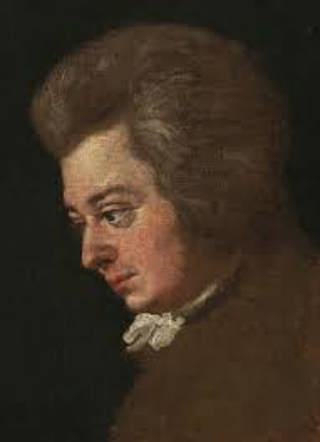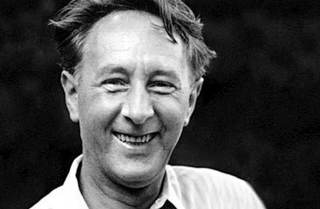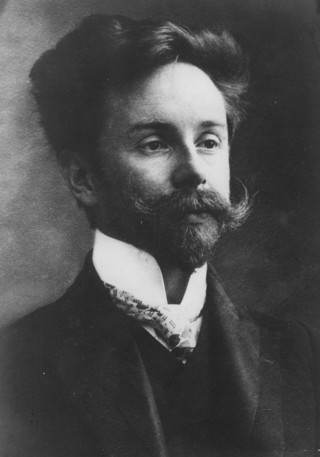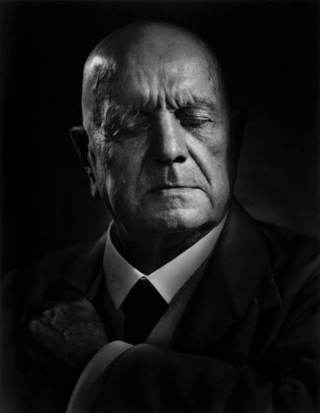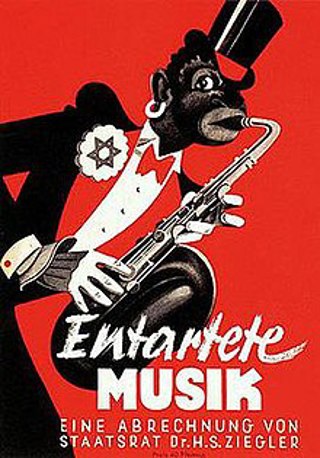
The Degenerates: Music Suppressed By The Nazis

The Degenerates: Music Suppressed By The Nazis

The center of Western Classical Music, ever since the time of Bach, has been modern-day Germany and Austria. You can trace a line from Bach, to Haydn to Mozart to Beethoven to Schubert to Schumann, Brahms, and Wagner, and finally to Mahler. But why does that line stop in 1911, the year of Mahler's death? Part of the answer is the increasing influence of composers from outside the Austro-German canon, something that has enriched Western Classical music to this day. There was also World War I getting in the way. But after the war, one could have expected that this line would continue again. The 1920's in Germany and the rest of Europe were a time of radical experimentation, a flowering of ideas, a sort of wild ecstasy of innovation across all the arts. So why don't we hear of these Austro-German experimenters and innovators anymore? Because of Adolf Hitler, Joseph Goebbels, and their Entartete, or Degenerate music. Hitler's worst crime was by no means his suppression of dozens of German, Austrian, and Eastern European composers, but it is a fact all the same that from the end of World War I until 1933, classical music in Germany and Eastern Europe(especially Czechoslovakia), was flourishing, with composers such as Zemlinsky, Krenek, Korngold, Schreker, Schulhoff, Haas, Krasa, and Ullmann taking up the mantle of the giants of the past and hoisting it upon themselves to carry it forward. The Nazis silenced, exiled, or killed off many of these musicians during the twelve years of 1933-1945, and those voices are forever lost, but the music they wrote before, during the War and the Holocaust, and after it, some of it masterpieces quite on the level of their predecessors, has been preserved. So why then are these composers not better known? I've chosen 12 composers, all of whom were writing music at the highest level. Some of them may be familiar to you, but many probably won't be. And through all of their trials and tribulations, one of the things I want to emphasize throughout these stories, even the bleakest ones, is that so many of them found the will to be able to compose this heart-rending, beautiful, and often optimistic music all as they witnessed unimaginable horrors. It may seem empty when the end for many of these artists was so horrific, but these compositions and the men and women who were behind them are a true testament to the resilience of the human spirit. These artists created a life for their friends, neighbors, and fellow inmates in concentration camps. They wrote music they knew would almost certainly not be heard in their lifetimes, from an urge that could not be destroyed, even by gas chambers. Join us to learn about them this week.

Det här avsnittet är hämtat från ett öppet RSS-flöde och publiceras inte av Podme. Det kan innehålla reklam.

Avsnitt(292)

Sibelius Tapiola

Sibelius Tapiola

Ancient, mysterious, brooding savage dreams; Within them dwells the Forest's mighty God, And wood-sprites in the gloom weave magic secrets. These lines are affixed to the first page of Sibelius' tone...

10 Juli 47min
Arthur Honneger, Symphony No. 3, "Liturgique"

Arthur Honneger, Symphony No. 3, "Liturgique"

In the aftermath of World War II, the Swiss composer Arthur Honegger, who had been living in occupied Paris throughout the war, wrote a new symphony entitled "Liturgical." He wrote an extended comment...

25 Juni 53min
Dvorak Piano Quintet, Op. 81

Dvorak Piano Quintet, Op. 81

In 1872, at the age of 31, Dvořák wrote a Piano Quintet designated as Opus 5. Dvořák was not a prodigy like some other famous composers; instead, his development as a composer was slow and steady. Lat...

11 Juni 49min
Mozart String Quartet, K. 465, "Dissonance"

Mozart String Quartet, K. 465, "Dissonance"

You might be wondering: why on earth would I choose a piece that is literally called "Dissonance" when I was looking for something a bit simpler or cleaner to talk about on the show today? Actually, M...

28 Maj 49min

Bonus Episode: Beethoven 5 en français!

Bonus Episode: Beethoven 5 en français!

Bienvenue dans cette édition spéciale du podcast Sticky Notes en français ! Aujourd'hui, nous parlons de la symphonie la plus célèbre du monde, et de la symphonie que nous allons interpréter à Lille l...

15 Maj 42min

Liszt Faust Symphony

Liszt Faust Symphony

Thank you to Jerry for sponsoring today's episode on Patreon! Goethe's Faust is considered to be the greatest work of German literature. This sprawling, 2-part play occupied Goethe's life for nearly 6...

14 Maj 1h 3min

Schubert: Die Schöne Mullerin Mini-Episode No. 1 (Free Preview)

Schubert: Die Schöne Mullerin Mini-Episode No. 1 (Free Preview)

This is a free preview of my new series of mini-episodes over on Patreon all about Schubert's Die Schöne Mullerin, one of the great masterpieces of the 19th century. Each week we'll explore one song f...

8 Maj 6min

Wagner: Prelude and Liebestod from Tristan and Isolde w/Case Scaglione

Wagner: Prelude and Liebestod from Tristan and Isolde w/Case Scaglione

This is a continuation of my new series where I learn about a new piece from a great friend/musician. This week I'm thrilled to welcome Case Scaglione, the Music Director of the Orchestre National D'I...

1 Maj 50min

Populärt inom Nöje

mellan-himmel-och-jord-med-jlc
filip-fredrik-svarar
badfluence
mardromsgasten
mannen-utan-spar
dialogiskt
chilla-med-de-vet-du
fem-i-topp
rss-p3-musikdokumentar
skandal
podme-bio-4
hemma-hos-strage
vardagsmysterier
sexet
gott-snack-med-fredrik-soderholm
schulman-show
rss-rockpodden
rss-bl-metal-podcast
karatefylla
skalla-dagen-med-mia-skaringer