Shostakovich String Quartet No. 8

Shostakovich String Quartet No. 8

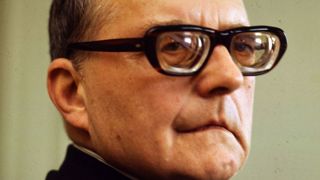
What did Dmitri Shostakovich intend to portray in his music? There is probably no more debated a question in all of 20th century Western Classica lMusic than this one. On the surface, it seems to have an easy answer. Shostakovich portrayed his own thoughts and feelings in his music, just as any other composer would. And that is certainly true. Shostakovich, above anything else, was truly one of the great composers in history. HIs mastery of form, meldoy, strcuture, pacing, and his ability to find a near universal expression of grief and passion is practically unparalelled among composers. That much is clear to those of us who love Shostakovich's music. But everything else, including that thorny question of what his music MEANS, is much, much, much less clear. Practically Shostakovich's entire life was lived under the shadow of Soviet Russia, and naturally his musical career was lived under that shadow as well. This means that a sometimes impenetrable layer of secrecy, mystery, and doubt always lies under the surface of Shostakovich's music.

In 1960, Kruschev, who had been loudly trumpetting Shostakovich's name to Western Press as an example of a free Soviet artist post the excesses of the Stalin regime, decided that Shostakovich should be the new head of the Russian Union of Composers. The catch was that Shostakovich would need to join the Communist Party in order to take the job. Shostakovich, who had long resisted becoming a full Party member, agreed. Shostakovich was clearly disappointed in himself, as his friend Lev Lebedinsky wrote this: "I will never forget some of the things he said that night [before his induction into the Party], sobbing hysterically: 'I'm scared to death of them.'

Why does all this matter? Because just a few days after joining the Commhnist party and after meeting with his friends Isaac Glikman and Lev Lebedinsky, Shostakovich traveled to East Germany -- specifically to Dresden — to work on a film which would commemorate the destruction of the city during World War II. He was supposed to write music for this film, but instead, Shostakovich sat down, and in THREE DAYS, he wrote his 8th string quartet. He would later write to Glikman: "However much I've tried to draft my obligations for the film, I just couldn't do it. Instead I wrote an ideologically deficient quartet that nobody needs. I reflected that if I die it's not likely anyone will write a quartet dedicated to my memory. So I decided to write it myself. You could even write on the cover: 'Dedicated to the memory of the composer of this quartet." Today on the show we're going to explore this remarkable piece together - join us!

Det här avsnittet är hämtat från ett öppet RSS-flöde och publiceras inte av Podme. Det kan innehålla reklam.

Avsnitt(296)

Grieg: Peer Gynt

Grieg: Peer Gynt

Grieg's Peer Gynt suites are among the best-known and best-loved works of classical music in the world. They are practically embedded into popular culture, being used in a dizzying number of cartoons,...

3 Sep 1h 7min
Mozart Clarinet Concerto

Mozart Clarinet Concerto

When it comes to a piece like the Mozart Clarinet Concerto, a few words or phrases regularly come up: the concerto is described as "mellow" or Mozart's "swan song," but most often it is described as "...

20 Aug 51min
Bohuslav Martinu Symphony No. 1

Bohuslav Martinu Symphony No. 1

It took a lot to make the composer and critic Virgil Thomson happy. He was famous for savaging new works he didn't like, and the truth is, he didn't like very many new works at all. One exception was ...

6 Aug 1h 1min
Scriabin Poem of Ecstasy

Scriabin Poem of Ecstasy

Thence the universe resounds
 With a joyful cry  I AM. These are the final lines of Alexander Scriabin's epic Poem of Ecstasy, a 300-line poem that takes nearly 10 minutes to read aloud and is one of ...

23 Juli 51min
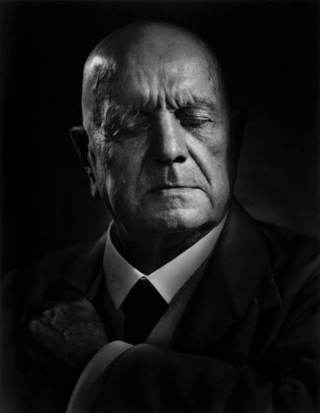
Sibelius Tapiola

Sibelius Tapiola

Ancient, mysterious, brooding savage dreams; Within them dwells the Forest's mighty God, And wood-sprites in the gloom weave magic secrets. These lines are affixed to the first page of Sibelius' tone...

10 Juli 47min
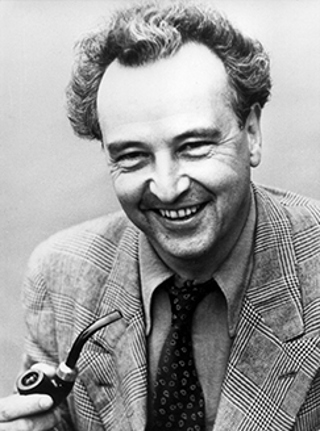
Arthur Honneger, Symphony No. 3, "Liturgique"

Arthur Honneger, Symphony No. 3, "Liturgique"

In the aftermath of World War II, the Swiss composer Arthur Honegger, who had been living in occupied Paris throughout the war, wrote a new symphony entitled "Liturgical." He wrote an extended comment...

25 Juni 53min
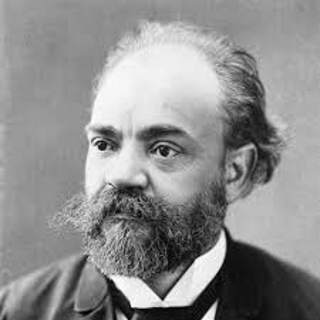
Dvorak Piano Quintet, Op. 81

Dvorak Piano Quintet, Op. 81

In 1872, at the age of 31, Dvořák wrote a Piano Quintet designated as Opus 5. Dvořák was not a prodigy like some other famous composers; instead, his development as a composer was slow and steady. Lat...

11 Juni 49min
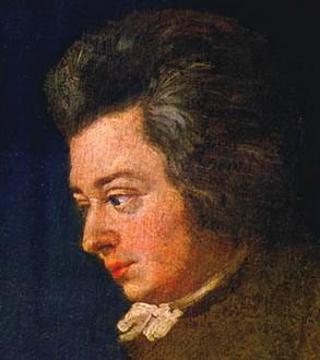
Mozart String Quartet, K. 465, "Dissonance"

Mozart String Quartet, K. 465, "Dissonance"

You might be wondering: why on earth would I choose a piece that is literally called "Dissonance" when I was looking for something a bit simpler or cleaner to talk about on the show today? Actually, M...

28 Maj 49min

Populärt inom Nöje

mellan-himmel-och-jord-med-jlc
filip-fredrik-svarar
fordomspodden
mardromsgasten
dialogiskt
rss-p3-musikdokumentar
chilla-med-de-vet-du
fem-i-topp
badfluence
gott-snack-med-fredrik-soderholm
rss-made-in-sverige-podcast
schulman-show
karatefylla
skandal
hemma-hos-strage
vardagsmysterier
rss-bl-metal-podcast
sexet
podme-bio-4
mannen-utan-spar