Ernie Tedeschi on Full Employment, the US Safe Harbor Premium, and the Current Path of R-Star

Ernie Tedeschi on Full Employment, the US Safe Harbor Premium, and the Current Path of R-Star

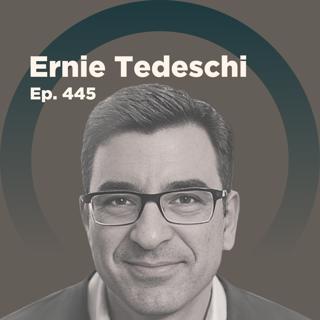
Ernie Tedeschi is the Director of Economics at the Budget Lab and is a visiting fellow at the Psaros Center for Financial Markets and Policy. Recently, Ernie was a chief economist at the White House's Council of Economic Advisors, and he is also a returning guest to the podcast. Ernie rejoins Macro Musings to talk about the CEA and some of his recent work on the political risks to the US safe harbor premium and R-star. David and Ernie also discuss the benefits and healing properties of a high employment economy, Ernie's favorite measures of the labor market, the current and past trends in the path of R-Star, and more.

Transcript for this week's episode.

Ernie's Twitter: @ernietedeschi

Ernie's Budget Lab profile

David Beckworth's Twitter: @DavidBeckworth

Follow us on Twitter: @Macro_Musings

Check out our new AI chatbot: the Macro Musebot!

Join the new Macro Musings Discord server!

Join the Macro Musings mailing list!

Check out our Macro Musings merch!

Related Links:

*Political Risks to the U.S. Safe Harbor Premium* by Ernie Tedeschi

*Recent Movements in [R-star]: The Most Important Interest Rate That You have Never Heard Of* by Ernie Tedeschi

*The 2024 Economic Report of the President* by the White House Council of Economic Advisers

*The Fed Governor Who Proved Larry Summers Wrong* by Nick Timiraos

*Summers, Blanchard Say Waller's 'Soft-Landing' Paper Has Errors* by Craig Torres

Timestamps:

(00:00:00) – Intro

(00:01:49) – Ernie's Experience at the CEA

(00:09:15) – The Benefits and Healing Properties of a High Employment Economy

(00:15:28) – Ernie's Favorite Measures of the Labor Market

(00:20:17) – The Broader Debate Surrounding Labor Market Measures

(00:24:07) – The Basics of a US Safe Harbor Premium

(00:28:56) – Political Risk vs. Exorbitant Privilege

(00:33:46) – Debt Ceiling Crises as a Political Risk Scenario

(00:37:01) – Fiscal Dominance as a Political Risk Scenario

(00:43:25) – Outlining the Distinction Between Different R-Stars

(00:48:39) – Past and Current Trends in the Path of R-Stars

(00:54:46) – Assessing the Sources of High Productivity

(00:58:22) – Outro

Avsnitt(533)

Mike Bird on the Land Trap and How the History of Housing Impacts the Global Economy

Mike Bird on the Land Trap and How the History of Housing Impacts the Global Economy

Mike Bird is the Wall Street editor for The Economist magazine and is the author of The Land Trap: A New History of the World's Oldest Asset. Mike returns to the show to discuss the conclusion of Abenomics, the origins of land as an asset, the surge in housing prices during the COVID-19 Pandemic, the unsuspecting story of Wolf Ladejinsky, how housing impacted Japan's lost decade, the modern history of land in China, and much more. Check out the transcript for this week's episode, now with links. Recorded on November 4th, 2025 Subscribe to David's Substack: Macroeconomic Policy Nexus Follow David Beckworth on X: @DavidBeckworth Follow Mike on X: @Birdyword Follow the show on X: @Macro_Musings Check out our Macro Musings merch! Subscribe to David's new BTS YouTube Channel  Timestamps 00:00:00 - Intro 00:01:27 - Abenomics 00:04:32 - Motivations for The Land Trap 00:7:58 - Land as a Different Kind of Asset 00:14:55 - COVID-19 Housing Prices 00:20:42 - Land as an Enduringly Important Asset 00:24:34 - Wolf Ladejinsky 00:37:14 - Japan from 1980s Onward 00:47:28 - Land in China 00:56:36 - Henry George 01:00:42 - Outro

24 Nov 20251h 1min

Lukasz Rachel on Non-Ricardian Macroeconomic Policy and Its Implications for Inflation

Lukasz Rachel on Non-Ricardian Macroeconomic Policy and Its Implications for Inflation

Lukasz Rachel is a former Bank of England economist and currently is an assistant professor of economics at the University College of London. In Lukasz's first appearance on the show he discusses his big career breaks, the implications of secular stagnation in the industrialized world, what is next for R-star, what non-Ricardian macro policy looks like, his policy prescriptions for the US, and much more. Check out the transcript for this week's episode, now with links. Recorded on October 29th, 2025 Subscribe to David's Substack: Macroeconomic Policy Nexus Follow David Beckworth on X: @DavidBeckworth Follow Lukasz on X: @LukaszRachel Follow the show on X: @Macro_Musings Check out our Macro Musings merch! Subscribe to David's new BTS YouTube Channel  Timestamps 00:00:00 - Intro 00:01:42 - Lukasz's Career 00:07:30 - Secular Stagnation in the Industrialized World 00:21:08 - What Next for R-Star? 00:36:11 - Brothers in Arms: Monetary-Fiscal Interactions 00:49:53 - Policy Recommendations 00:51:03 - Outro

17 Nov 202551min

Tara Sinclair on Building a Synthetic FOMC Through AI

Tara Sinclair on Building a Synthetic FOMC Through AI

Tara Sinclair is a professor and chair of the economics department at George Washington University. Tara returns to the show to discuss her ambitious paper simulating an FOMC meeting before it happens with LLM models, the process of building sim FOMC members, the importance of publicly funding economic data, the future of AI and macroeconomics, and much more. Check out the transcript for this week's episode, now with links. Recorded on October 27th, 2025 Subscribe to David's Substack: Macroeconomic Policy Nexus Follow David Beckworth on X: @DavidBeckworth Follow Tara on X: @TaraSinc Follow the show on X: @Macro_Musings Check out our Macro Musings merch! Subscribe to David's new BTS YouTube Channel  Timestamps 00:00:00 - Intro 00:01:44 - Data and Policymaking 00:05:28 - Federal Forecasters Conference 00:08:01 - FOMC in Silico 00:32:56 - Future Applications 00:38:29 - Broader Implications 00:42:57 - Central Bank Governance and AI 00:51:40 - Outro

10 Nov 202552min

Bryan Cutsinger on the What the History of Growth Driven Deflation Can Teach us about a Potential AI Boom

Bryan Cutsinger on the What the History of Growth Driven Deflation Can Teach us about a Potential AI Boom

Bryan Cutsinger is a monetary historian and an assistant professor of economics at Florida Atlantic University. Bryan returns to the show to discuss how we think about deflation, the history of growth driven deflation, the connection between the postbellum period and today, the potential of rapid productivity growth from AI, and much more. Check out the transcript for this week's episode, now with links. Recorded on September 23rd, 2025 Subscribe to David's Substack: Macroeconomic Policy Nexus Follow David Beckworth on X: @DavidBeckworth Follow Bryan on X: @BryanPCutsinger Follow the show on X: @Macro_Musings Check out our Macro Musings merch! Subscribe to David's new BTS YouTube Channel  Timestamps 00:00:00 - Intro 00:04:41 - Rethinking Deflation 00:35:48 - Rapid Productivity Growth from AI 00:46:35 - Tolerating Deflation 00:55:28 - Outro

3 Nov 202556min

Will Roberds and Steve Quinn on the Original Central Bank: the Bank of Amsterdam

Will Roberds and Steve Quinn on the Original Central Bank: the Bank of Amsterdam

Will Roberds is an economist emeritus of the research department of the Federal Reserve Bank of Atlanta. Steve Quinn is a professor of economics at Texas Christian University. In Will and Steve's first appearance on the show they discuss the historical significance of the Bank of Amsterdam, The use of ledger at the Bank of Amsterdam, It's use of repo and open market operations, it's connection to central banking today, and much more. Check out the transcript for this week's episode, now with links. Recorded on September 23rd, 2025 Subscribe to David's Substack: Macroeconomic Policy Nexus Follow David Beckworth on X: @DavidBeckworth Follow the show on X: @Macro_Musings Check out our Macro Musings merch! Subscribe to David's new BTS YouTube Channel Timestamps 00:00:00 - Intro 00:00:53 - Bank of Amsterdam 00:10:31 - Bank of Amsterdam's Ledger 00:32:09 - Motivations 00:36:49 - Seven Years' War 00:40:53 - The Repo Versus the Open Market 00:56:30 - Outro

27 Okt 202557min

Jim Clouse on the Last 4 Decades at the Most Powerful Central Bank in the World

Jim Clouse on the Last 4 Decades at the Most Powerful Central Bank in the World

Jim Clouse is a veteran of the Federal Reserve System and is currently a fellow at the Andersen Institute. In Jim's first appearance on the show, he discusses the evolution of monetary rules at the Fed, what happened at the Fed during Y2K, 9/11, the Great Financial Crisis, and the COVID Pandemic, the ever changing stigma of the discount window, Ted Cruz's calls to end interest on reserves, and much more. Check out the transcript for this week's episode, now with links. Recorded on September 11th, 2025 Subscribe to David's Substack: Macroeconomic Policy Nexus Follow David Beckworth on X: @DavidBeckworth Follow the show on X: @Macro_Musings Check out our Macro Musings merch! Subscribe to David's new BTS YouTube Channel Timestamps 00:00:00 - Intro 00:03:16 - Jim's Career 00:05:38 - Monetary Rules at the Fed 00:09:12 - Increasing Transparency at the Fed 00:17:25 - Y2K and the Fed 00:26:19 - Discount Window 00:32:21 - Global Financial Crisis 00:39:10 - Covid Pandemic 00:46:10 - Jim's Current Research 01:00:31 - Outro

20 Okt 20251h 1min

Manmohan Singh on the Meaning of Money after the GENIUS Act

Manmohan Singh on the Meaning of Money after the GENIUS Act

Manmohan Singh is the editor-in-chief of the Journal of Financial Markets Infrastructure. Manmohan returns to the show to discuss whether money still matters, the impacts of the GENIUS ACT, the lobbying show down over stablecoins in the US, stablecoins impact on the Eurodollar market, and much more. Check out the transcript for this week's episode, now with links. Recorded on September 10th, 2025 Subscribe to David's Substack: Macroeconomic Policy Nexus Follow David Beckworth on X: @DavidBeckworth Follow the show on X: @Macro_Musings Check out our Macro Musings merch! Subscribe to David's new BTS YouTube Channel Timestamps 00:00:00 - Intro 00:02:12 - Does Money Still Matter? 00:10:33 - Stablecoins 00:37:53 - Stablecoins and the Eurodollar Market 00:53:15 - Outro

13 Okt 202553min

Raphael Bostic on Life as a Regional Fed President, the Responsibilities of a Dual Mandate, and the Results of the 2025 Framework Review

Raphael Bostic on Life as a Regional Fed President, the Responsibilities of a Dual Mandate, and the Results of the 2025 Framework Review

Raphael Bostic is the president and chief executive officer of the Federal Reserve Bank of Atlanta. In President Bostic's first appearance on the show, he discusses his love of birding, what that teaches him about central banking, the unique role of the Federal Reserve Bank of Atlanta, switching for FIT to FAIT back to FIT, what to do about inflation, the importance of globalization, rising fiscal pressures, and much more. Check out the transcript for this week's episode, now with links. Recorded on September 23rd, 2025 Subscribe to David's Substack: Macroeconomic Policy Nexus Follow David Beckworth on X: @DavidBeckworth Follow President Raphasel Bostic on X: @RaphaelBostic Follow the Federal Reserve Bank of Atlanta on X: @AtlantaFed Follow the show on X: @Macro_Musings Check out our Macro Musings merch! Subscribe to David's new BTS YouTube Channel Timestamps 00:00:00 - Intro 00:01:34 - Birding 00:06:07 - Birding's Connection to Central Banking 00:09:05 - Atlanta Fed 00:15:27 - Fed Framework Revisions 00:24:31 - Inflation 00:32:23 - Forecasted Long-Run Federal Funds Rate 00:37:43 - Globalization 00:39:13 - Fiscal Pressures 01:03:39 - Outro

6 Okt 202542min

Populärt inom Business & ekonomi

framgangspodden
badfluence
varvet
rss-jossan-nina
rss-borsens-finest
bathina-en-podcast
uppgang-och-fall
svd-tech-brief
avanzapodden
borsmorgon
rss-kort-lang-analyspodden-fran-di
fill-or-kill
rss-dagen-med-di
kapitalet-en-podd-om-ekonomi
lastbilspodden
rss-inga-dumma-fragor-om-pengar
rss-borslunch
tabberaset
rikatillsammans-om-privatekonomi-rikedom-i-livet
market-makers