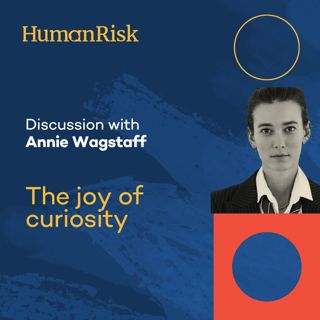
Dr Kirsty Sedgman on Being Unreasonable

Dr Kirsty Sedgman on Being Unreasonable

What do we mean when we say that someone is being unreasonable? On the face of it, the person we're describing has either broken a rule or a social norm. But what are we basing that on?

My guest Dr Kirsty Sedgman is a Doctor of Audiences at the University of Bristol. That means she researches how audiences — for example, in the theatre — behave and respond to the performance they're watching.

Her work investigates how people find value in cultural participation. How do they experience and respond to the things they see? How are these pleasures and disappointments made meaningful in their lives? And what can all this tell us about the role of the arts in society and the relationship between cultural institutions, power, identity, and place?

More recently, she's turned that same lens onto other situations — for example, being on public transport, at work or in a cafe - to explore what being reasonable or unreasonable means.

Through her research, Kirsty has discovered that the idea of being reasonable is deeply embedded in our moral and legal judgment system and can often be subjective and influenced by personal biases. From theatre etiquette to crossing the road, there are rules in place for our safety and social norms. These can be useful, but they can also have the potential to marginalize and exclude certain groups of people.

As Kristy explains, what is reasonable or unreasonable, is actually a matter of perception. That's relevant to how we all behave, how we judge the behaviour of others and is highly relevant for those of us responsible for influencing human behaviour.

The story about the performance of the Bodyguard that was disrupted by members of the audience that I refer to is explained here: https://www.manchestereveningnews.co.uk/news/greater-manchester-news/astonishing-moment-audience-member-screams-26658204

You can find out more about Kirsty on her website: https://kirstysedgman.com/
Her academic profile: https://www.bristol.ac.uk/people/person/Kirsty-Sedgman-35581165-6a8e-4715-9e89-05670807d2e0/

For details of her book 'Being Unreasonable':
https://www.faber.co.uk/product/9780571366835-on-being-unreasonable/

You can find her on social media:

Twitter - https://twitter.com/KirstySedgman

LinkedIn - https://www.linkedin.com/in/kirstysedgman/

For more details on my new book 'Humanizing Rules: Bringing Behavioural Science to Ethics & Compliance' visit https://www.human-risk.com/humanizing-rules-book

Det här avsnittet är hämtat från ett öppet RSS-flöde och publiceras inte av Podme. Det kan innehålla reklam.

Avsnitt(372)

David Grosse on The Unconvention

David Grosse on The Unconvention

What happens when two people who spend their careers thinking about human behaviour meet in a London pub and start complaining about conferences? Apparently, they decide to organise one.Episode Summar...

25 Juni 48min
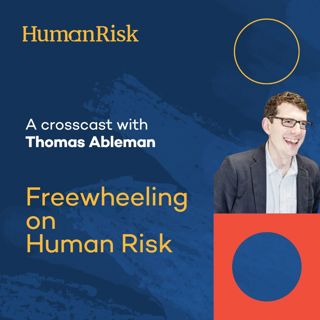
Freewheeling on Human Risk with Thomas Ableman

Freewheeling on Human Risk with Thomas Ableman

Why is it so hard to stop people playing vides, music or phone calls out loud on public transport — and what does that tell us about changing human behaviour? Show Summary This episode of The Human Ri...

11 Juni 45min

Jill Wick on The Human Side of Cybersecurity

Jill Wick on The Human Side of Cybersecurity

What if the best way to improve cybersecurity — or any other form of human risk — wasn't another policy, training course, or piece of technology, but a board game?  That's the kind of question my gues...

30 Maj 1h 3min

Tobias Sturesson: from cult to corporate culture

Tobias Sturesson: from cult to corporate culture

What can businesses learn from cults?It might sound like an uncomfortable comparison: one involves strategy meetings, values statements and quarterly targets; the other manipulation, charismatic leade...

23 Maj 1h 8min

Will Tarrant on Service: Closing the gap between brand promise and reality

Will Tarrant on Service: Closing the gap between brand promise and reality

What makes great service? It’s one of those things we instantly recognise when we experience it, but struggle to define. And while organisations spend huge amounts of time trying to design seamless cu...

8 Maj 1h

Dr Carissa Véliz on Prophecy

Dr Carissa Véliz on Prophecy

What if prediction isn’t about knowing the future, but controlling it?  On this episode, I'm joined by a leading thinker on digital ethics, privacy and technology to explore the idea of prophecy.Episo...

25 Apr 1h 2min

Dr C Thi Nguyen on How to stop playing someone else's game

Dr C Thi Nguyen on How to stop playing someone else's game

We like to think we choose what matters. But what if the goals we’re chasing… aren’t actually ours?Episode Summary My guest on this episode is Dr. C. Thi Nguyen, philosopher and author of The Score: H...

12 Apr 1h 8min

Phil Dobson on Cognitive Leadership

Phil Dobson on Cognitive Leadership

We tend to assume that if we’re working hard, we’re working well. But what if that isn’t true?Episode SummaryMy guest on this episode is Phil Dobson, author of The Brain Book and founder of Brain Work...

4 Apr 1h 9min

Populärt inom Vetenskap

p3-dystopia
dumma-manniskor
allt-du-velat-veta
kapitalet-en-podd-om-ekonomi
medicinvetarna
svd-nyhetsartiklar
bildningspodden
det-morka-psyket
rss-ufobortom-rimligt-tvivel
rss-spraket
rss-vetenskapsradion
rss-vetenskapsradion-2
sexet
rss-broccolipodden-en-podcast-som-inte-handlar-om-broccoli
rss-kriminologerna
dumforklarat
rss-arkeologi-historia-podden-som-graver-i-vart-kulturlandskap
vetenskapsradion
rss-lara-fran-larda-en-fackbok-och-en-forfattare
doden-hjarnan-kemisten