
#153 – Elie Hassenfeld on 2 big picture critiques of GiveWell's approach, and 6 lessons from their recent work

#153 – Elie Hassenfeld on 2 big picture critiques of GiveWell's approach, and 6 lessons from their recent work

GiveWell is one of the world's best-known charity evaluators, with the goal of "searching for the charities that save or improve lives the most per dollar." It mostly recommends projects that help the world's poorest people avoid easily prevented diseases, like intestinal worms or vitamin A deficiency.

But should GiveWell, as some critics argue, take a totally different approach to its search, focusing instead on directly increasing subjective wellbeing, or alternatively, raising economic growth?

Today's guest — cofounder and CEO of GiveWell, Elie Hassenfeld — is proud of how much GiveWell has grown in the last five years. Its 'money moved' has quadrupled to around $600 million a year.

Its research team has also more than doubled, enabling them to investigate a far broader range of interventions that could plausibly help people an enormous amount for each dollar spent. That work has led GiveWell to support dozens of new organisations, such as Kangaroo Mother Care, MiracleFeet, and Dispensers for Safe Water.

But some other researchers focused on figuring out the best ways to help the world's poorest people say GiveWell shouldn't just do more of the same thing, but rather ought to look at the problem differently.

Links to learn more, summary and full transcript.

Currently, GiveWell uses a range of metrics to track the impact of the organisations it considers recommending — such as 'lives saved,' 'household incomes doubled,' and for health improvements, the 'quality-adjusted life year.'

The Happier Lives Institute (HLI) has argued that instead, GiveWell should try to cash out the impact of all interventions in terms of improvements in subjective wellbeing. This philosophy has led HLI to be more sceptical of interventions that have been demonstrated to improve health, but whose impact on wellbeing has not been measured, and to give a high priority to improving lives relative to extending them.

An alternative high-level critique is that really all that matters in the long run is getting the economies of poor countries to grow. On this view, GiveWell should focus on figuring out what causes some countries to experience explosive economic growth while others fail to, or even go backwards. Even modest improvements in the chances of such a 'growth miracle' will likely offer a bigger bang-for-buck than funding the incremental delivery of deworming tablets or vitamin A supplements, or anything else.

Elie sees where both of these critiques are coming from, and notes that they've influenced GiveWell's work in some ways. But as he explains, he thinks they underestimate the practical difficulty of successfully pulling off either approach and finding better opportunities than what GiveWell funds today.

In today's in-depth conversation, Elie and host Rob Wiblin cover the above, as well as:

  • Why GiveWell flipped from not recommending chlorine dispensers as an intervention for safe drinking water to spending tens of millions of dollars on them
  • What transferable lessons GiveWell learned from investigating different kinds of interventions
  • Why the best treatment for premature babies in low-resource settings may involve less rather than more medicine.
  • Severe malnourishment among children and what can be done about it.
  • How to deal with hidden and non-obvious costs of a programme
  • Some cheap early treatments that can prevent kids from developing lifelong disabilities
  • The various roles GiveWell is currently hiring for, and what's distinctive about their organisational culture
  • And much more.

Chapters:

  • Rob’s intro (00:00:00)
  • The interview begins (00:03:14)
  • GiveWell over the last couple of years (00:04:33)
  • Dispensers for Safe Water (00:11:52)
  • Syphilis diagnosis for pregnant women via technical assistance (00:30:39)
  • Kangaroo Mother Care (00:48:47)
  • Multiples of cash (01:01:20)
  • Hidden costs (01:05:41)
  • MiracleFeet (01:09:45)
  • Serious malnourishment among young children (01:22:46)
  • Vitamin A deficiency and supplementation (01:40:42)
  • The subjective wellbeing approach in contrast with GiveWell's approach (01:46:31)
  • The value of saving a life when that life is going to be very difficult (02:09:09)
  • Whether economic policy is what really matters overwhelmingly (02:20:00)
  • Careers at GiveWell (02:39:10)
  • Donations (02:48:58)
  • Parenthood (02:50:29)
  • Rob’s outro (02:55:05)

Producer: Keiran Harris

Audio mastering: Simon Monsour and Ben Cordell

Transcriptions: Katy Moore

Avsnitt(324)

#230 – Dean Ball on how AI is a huge deal — but we shouldn’t regulate it yet

#230 – Dean Ball on how AI is a huge deal — but we shouldn’t regulate it yet

Former White House staffer Dean Ball thinks it's very likely some form of 'superintelligence' arrives in under 20 years. He thinks AI being used for bioweapon research is "a real threat model, obvious...

10 Dec 20252h 54min

#229 – Marius Hobbhahn on the race to solve AI scheming before models go superhuman

#229 – Marius Hobbhahn on the race to solve AI scheming before models go superhuman

We often worry about AI models “hallucinating” or making honest mistakes. But what happens when a model knows the truth, but decides to deceive you anyway to achieve a goal of its own? This isn’t sci-...

3 Dec 20253h 3min

Rob & Luisa chat kids, the 2016 fertility crash, and how the 50s invented parenting that makes us miserable

Rob & Luisa chat kids, the 2016 fertility crash, and how the 50s invented parenting that makes us miserable

Global fertility rates aren’t just falling: the rate of decline is accelerating. From 2006 to 2016, fertility dropped gradually, but since 2016 the rate of decline has increased 4.5-fold. In many weal...

25 Nov 20251h 59min
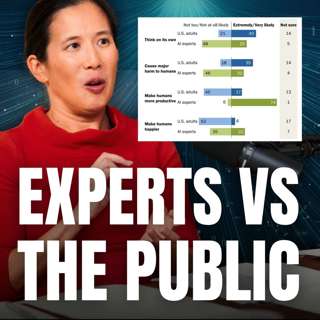
#228 – Eileen Yam on how we're completely out of touch with what the public thinks about AI

#228 – Eileen Yam on how we're completely out of touch with what the public thinks about AI

If you work in AI, you probably think it’s going to boost productivity, create wealth, advance science, and improve your life. If you’re a member of the American public, you probably strongly disagree...

20 Nov 20251h 43min
OpenAI: The nonprofit refuses to be killed (with Tyler Whitmer)

OpenAI: The nonprofit refuses to be killed (with Tyler Whitmer)

Last December, the OpenAI business put forward a plan to completely sideline its nonprofit board. But two state attorneys general have now blocked that effort and kept that board very much alive and k...

11 Nov 20251h 56min
#227 – Helen Toner on the geopolitics of AGI in China and the Middle East

#227 – Helen Toner on the geopolitics of AGI in China and the Middle East

With the US racing to develop AGI and superintelligence ahead of China, you might expect the two countries to be negotiating how they’ll deploy AI, including in the military, without coming to blows. ...

5 Nov 20252h 20min

#226 – Holden Karnofsky on unexploited opportunities to make AI safer — and all his AGI takes

#226 – Holden Karnofsky on unexploited opportunities to make AI safer — and all his AGI takes

For years, working on AI safety usually meant theorising about the ‘alignment problem’ or trying to convince other people to give a damn. If you could find any way to help, the work was frustrating an...

30 Okt 20254h 30min

#225 – Daniel Kokotajlo on what a hyperspeed robot economy might look like

#225 – Daniel Kokotajlo on what a hyperspeed robot economy might look like

When Daniel Kokotajlo talks to security experts at major AI labs, they tell him something chilling: “Of course we’re probably penetrated by the CCP already, and if they really wanted something, they c...

27 Okt 20252h 12min

Populärt inom Utbildning

historiepodden-se
rss-bara-en-till-om-missbruk-medberoende-2
det-skaver
alska-oss
nu-blir-det-historia
rss-viktmedicinpodden
harrisons-dramatiska-historia
sektledare
johannes-hansen-podcast
roda-vita-rosen
not-fanny-anymore
allt-du-velat-veta
rss-sjalsligt-avkladd
rss-max-tant-med-max-villman
rikatillsammans-om-privatekonomi-rikedom-i-livet
i-vantan-pa-katastrofen
sa-in-i-sjalen
polisutbildningspodden
rss-om-vi-ska-vara-arliga
rss-basta-livet