Brahms Double Concerto

Brahms Double Concerto

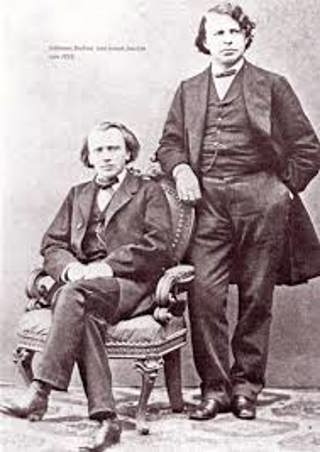
It's entirely possible that we would not know the name of Johannes Brahms very well if Brahms hadn't met Joseph Joachim as a very young man. Joachim, who was one of the greatest violinists of all time, had already established himself as touring soloist and recitalist, and he happened to know the musical power couple of Robert and Clara Schumann quite well. Joachim encouraged Brahms to go to Dusseldorf to meet the Schumann's, and the rest is history. I've talked about the Brahms-Schumann relationship dozens of times on the show before, but to keep it very brief, Robert Schumann's rhapsodic article Neue Bahnen(new paths) launched Brahms' career, and until Schumann's deterioration from mental illness he acted as a valued friend and mentor for Brahms. Clara Schumann, as a performer, was a powerful advocate for Brahms' music as well as a devoted and loving friend throughout the rest of their lives. Almost constantly present in this relationship was the sound of Joseph Joachim's violin. Brahms did not have a huge circle of friends, but for the often difficult to get along with composer, Joachim was a musical and spiritual companion. Brahms' legendary violin concerto was written for him, and the two collaborated closely for the entire course of their musical lives, except for one significant break. Brahms and Joachim were estranged for 7 years, until Brahms reached out with a remarkable conciliatory gesture: a concerto for Violin and Cello and that would be dedicated to Joachim. Brahms and Joachim(as well as Brahms and Clara Schumann) had often resolved disputes through music, and this was no exception. Clara Schumann gleefully wrote in her diary after Joachim had read through the piece with cellist Robert Hausmann: "This concerto is a work of reconciliation - Joachim and Brahms have spoken to each other again for the first time in years." One would expect that a work like this would be beloved, but the Double Concerto has had a checkered history, which we'll also get into later. Clara herself wrote that it lacked "the warmth and freshness which are so often found to be in his works," It would turn out to be Brahms' last work for orchestra, and one of the few in his later style, which makes It fascinating to look at from a compositional perspective. Partly because of the cool reception it got in its first few performances, and the practical challenges of finding two spectacular soloists who can meet its challenges, the piece is not performed all that often, though I have always adored this piece and am very grateful to Avi who sponsored this week's show from my fundraiser last year before the US election. So let's dive into this gorgeous concerto, discussing the reasons for Joachim and Brahms' break, their reconciliation, the reception this piece got, and then of course, the music itself! Join us!

Det här avsnittet är hämtat från ett öppet RSS-flöde och publiceras inte av Podme. Det kan innehålla reklam.

Avsnitt(296)

Grieg: Peer Gynt

Grieg: Peer Gynt

Grieg's Peer Gynt suites are among the best-known and best-loved works of classical music in the world. They are practically embedded into popular culture, being used in a dizzying number of cartoons,...

3 Sep 1h 7min
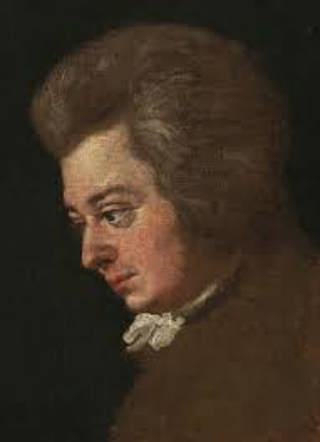
Mozart Clarinet Concerto

Mozart Clarinet Concerto

When it comes to a piece like the Mozart Clarinet Concerto, a few words or phrases regularly come up: the concerto is described as "mellow" or Mozart's "swan song," but most often it is described as "...

20 Aug 51min
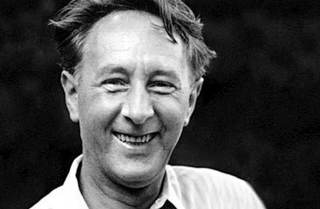
Bohuslav Martinu Symphony No. 1

Bohuslav Martinu Symphony No. 1

It took a lot to make the composer and critic Virgil Thomson happy. He was famous for savaging new works he didn't like, and the truth is, he didn't like very many new works at all. One exception was ...

6 Aug 1h 1min
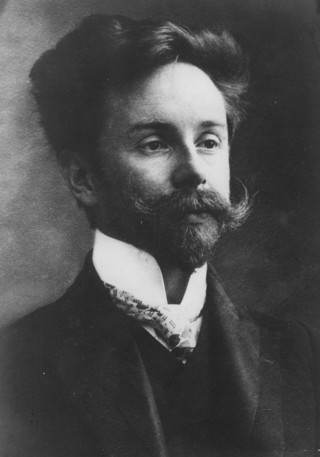
Scriabin Poem of Ecstasy

Scriabin Poem of Ecstasy

Thence the universe resounds
 With a joyful cry  I AM. These are the final lines of Alexander Scriabin's epic Poem of Ecstasy, a 300-line poem that takes nearly 10 minutes to read aloud and is one of ...

23 Juli 51min
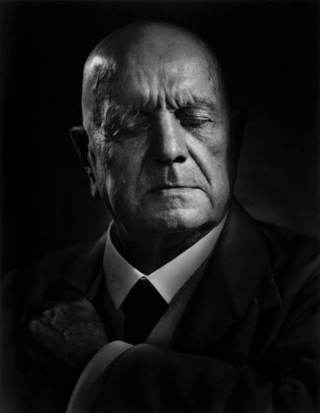
Sibelius Tapiola

Sibelius Tapiola

Ancient, mysterious, brooding savage dreams; Within them dwells the Forest's mighty God, And wood-sprites in the gloom weave magic secrets. These lines are affixed to the first page of Sibelius' tone...

10 Juli 47min
Arthur Honneger, Symphony No. 3, "Liturgique"

Arthur Honneger, Symphony No. 3, "Liturgique"

In the aftermath of World War II, the Swiss composer Arthur Honegger, who had been living in occupied Paris throughout the war, wrote a new symphony entitled "Liturgical." He wrote an extended comment...

25 Juni 53min
Dvorak Piano Quintet, Op. 81

Dvorak Piano Quintet, Op. 81

In 1872, at the age of 31, Dvořák wrote a Piano Quintet designated as Opus 5. Dvořák was not a prodigy like some other famous composers; instead, his development as a composer was slow and steady. Lat...

11 Juni 49min
Mozart String Quartet, K. 465, "Dissonance"

Mozart String Quartet, K. 465, "Dissonance"

You might be wondering: why on earth would I choose a piece that is literally called "Dissonance" when I was looking for something a bit simpler or cleaner to talk about on the show today? Actually, M...

28 Maj 49min

Populärt inom Nöje

mellan-himmel-och-jord-med-jlc
filip-fredrik-svarar
fordomspodden
mardromsgasten
dialogiskt
chilla-med-de-vet-du
rss-p3-musikdokumentar
badfluence
fem-i-topp
gott-snack-med-fredrik-soderholm
schulman-show
skandal
karatefylla
hemma-hos-strage
sexet
mannen-utan-spar
vardagsmysterier
rss-bl-metal-podcast
norden-jag
podme-bio-4