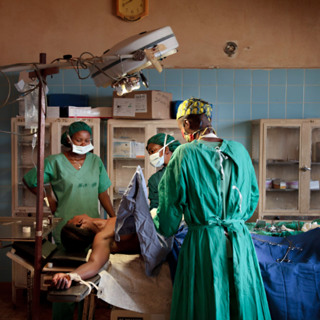
Reaffirming IHL’s specific protection of hospitals

Reaffirming IHL’s specific protection of hospitals

In today’s armed conflicts, hospitals are increasingly being attacked or misused for military purposes, undermining one of international humanitarian law’s most fundamental protections. These strikes have devastating consequences for the people who rely on hospitals for life-saving care, from patients and medical staff to entire communities. When hospitals are damaged or forced to shut down, critical services like paediatric care or intensive care treatment vanish, often with fatal results. Despite clear legal safeguards granting protection to hospitals, cases indicate that hospitals are at times misused for military purposes and attacks regularly ensue. In many cases, core IHL principles are either deliberately ignored or applied in a permissive manner, threatening the very idea that hospitals must be specifically protected as neutral sanctuaries by all sides to a conflict. In this post, ICRC Legal Advisers Supriya Rao and Alex Breitegger explore how IHL’s specific protection of hospitals is both robust and comprehensive, grounded in a presumption of neutrality that can only be lost in narrowly defined cases. Even when misuse occurs, parties are required to issue a warning and give time for it to stop, striking as a last resort only if the hospital meets the definition of a military objective – and even then, the rules of proportionality and precautions apply to limit the harm. Upholding this framework is essential to ensuring that the wounded and sick can access care, and that humanitarian principles endure, even amid the horror of war.

Det här avsnittet är hämtat från ett öppet RSS-flöde och publiceras inte av Podme. Det kan innehålla reklam.

Avsnitt(306)

“Aid must be sustainable”: communities affected by conflict share what they want from humanitarians

“Aid must be sustainable”: communities affected by conflict share what they want from humanitarians

The humanitarian landscape is being reshaped by converging trends, including the rapid adoption of new technologies in warfare, growing restrictions on how and where humanitarians can operate, impacts...

17 Sep 14min

The humanitarian case for universalizing the Convention on Cluster Munitions

The humanitarian case for universalizing the Convention on Cluster Munitions

Cluster munitions cause harm both at the moment of attack and long after fighting has ended. By scattering submunitions across wide areas, often with high failure rates, they expose civilians to immed...

3 Sep 23min
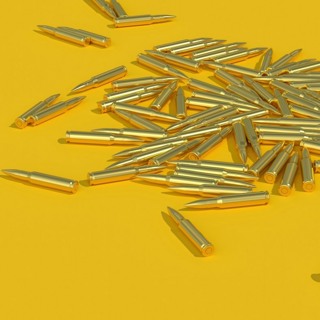
Before the fighting begins: IHL and the location of military objectives

Before the fighting begins: IHL and the location of military objectives

International humanitarian law (IHL) is primarily associated with the conduct of hostilities and the protection of people during armed conflict. Yet some of the decisions that determine civilian risk ...

27 Aug 11min
Civilian protection has a dependency-chain problem

Civilian protection has a dependency-chain problem

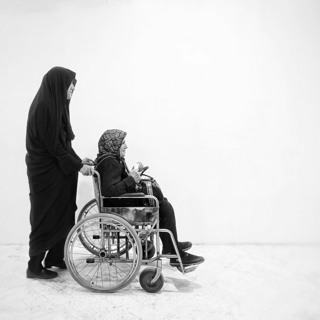
Civilian protection is often assessed by whether a person has been warned, evacuated, registered, sheltered or reached with relief. For many persons with disabilities, each measure depends on a wider ...

20 Aug 21min

The machines must not choose who dies: a humanitarian case for disarming AI

The machines must not choose who dies: a humanitarian case for disarming AI

As states race to develop autonomous weapons systems, the effort to agree binding international rules on machine decisions over life and death has reached a critical moment. In this post, Eberechukwu...

13 Aug 18min
Memorializing IHL violations in the age of AI: opportunities and risks for transitional justice

Memorializing IHL violations in the age of AI: opportunities and risks for transitional justice

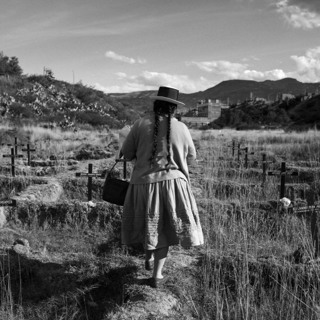
Memorialization, one of the five pillars of transitional justice, plays a vital role in preserving the memory of international humanitarian law (IHL) violations and gross human rights violations, supp...

23 Juli 17min

“A number that learned how not to scream”: the case for community-led metrics on protection

“A number that learned how not to scream”: the case for community-led metrics on protection

The international humanitarian system has built a sophisticated architecture for the protection of civilians, namely political resolutions, cluster coordination mechanisms, reporting frameworks, and a...

7 Juli 15min

Amplifying Pacific voices: the region’s crucial role in advancing IHL

Amplifying Pacific voices: the region’s crucial role in advancing IHL

Pacific Island states have long demonstrated leadership in promoting peace, disarmament, and humanitarian values. From traditional customs that reflect principles contained in contemporary internation...

2 Juli 15min
Populärt inom Politik & nyheter

aftonbladet-krim
svenska-fall
p3-krim
rss-krimstad
fordomspodden
aftonbladet-daily
en-runda-till
flashback-forever
rss-sanning-konsekvens
politiken
rss-vad-fan-hande
svd-ledarredaktionen
rss-krimreportrarna
rss-flodet
rss-frandfors-horna
motiv
omni-podd
rss-utopia-2
rss-politikrummet
the-power-meeting-podcast