Eric Kaufmann on Immigration, Identity, and the Limits of Individualism
Going back and forth between Canada and Japan during his childhood sparked Eric Kaufmann's interest in the question of identity. As a foreigner in an international school, he encountered young individuals from at least 60 other countries, and this made him think more about national identity and how people affiliate and interact with one another. Now as an academic, he explores how demographic changes — most notably caused by ethnic migration and assimilation — are the key to understanding Brexit, Trump, and pretty much every major issue du jour. Kauffman's latest book Whiteshift, which examines how declining white ethnic majorities will respond to these changes, is on Tyler's list as one of the best books of the year. The two discuss the book and more, including Orangeism in Northern Ireland, Switzerland's secret for stability, what Tocqueville got most wrong about America, predictions on Brexit's final form, why Portugal seems immune to populism, how Notre Dame should be rebuilt, whether the Amish — or Mormons — will take over the world, and much more. Read a full transcript enhanced with helpful links. Recorded May 28th, 2019 Other ways to connect Follow us on Twitter and Instagram Follow Tyler on Twitter Follow Eric on Twitter Email us: cowenconvos@mercatus.gmu.edu Subscribe at our newsletter page to have the latest Conversations with Tyler news sent straight to your inbox.
3 Juli 201956min

Hal Varian on Taking the Academic Approach to Business
Before he became the Adam Smith of Googlenomics, Hal Varian spent decades as an academic economist, writing influential papers, a popular book about the information economy, and several textbooks that are still taught today. So how has his nearly twenty years in the business world affected what he'd write and teach now? Is learning Shephard's lemma really that important anymore? Tyler asks Hal these questions and more: why aren't there more second-priced auctions — or prediction markets? How have the economics of sales changed with the internet? In what ways did his hiring criteria change between academia and business? What could we learn from the sack of Rome? When should economists avoid looking at the literature? How are we always eking out victory in the war on spam? And what are people least likely to understand about Google? Fear not — Hal has an answer for it all. Read a full transcript enhanced with helpful links. Recorded May 10th, 2019 Other ways to connect Follow us on Twitter and Instagram Follow Tyler on Twitter Follow Hal on Twitter Email us: cowenconvos@mercatus.gmu.edu Subscribe at our newsletter page to have the latest Conversations with Tyler news sent straight to your inbox.
19 Juni 201956min

Russ Roberts on Life as an Economics Educator
What are the virtues of forgiveness? Are we subject to being manipulated by data? Why do people struggle with prayer? What really motivates us? How has the volunteer army system changed the incentives for war? These are just some of the questions that keep Russ Roberts going as he constantly analyzes the world and revisits his own biases through thirteen years of conversations on EconTalk. Russ made his way to the Mercatus studio to talk with Tyler about these ideas and more. The pair examines where classical liberalism has gone wrong, if dropping out of college is overrated, and what people are missing from the Bible. Tyler questions Russ on Hayek, behavioral economics, and his favorite EconTalk conversation. Ever the host, Russ also throws in a couple questions to Tyler. Read a full transcript enhanced with helpful links. Recorded May 7th, 2019 Other ways to connect Follow us on Twitter and Instagram Follow Tyler on Twitter Follow Russ on Twitter Email us: cowenconvos@mercatus.gmu.edu Subscribe at our newsletter page to have the latest Conversations with Tyler news sent straight to your inbox.
5 Juni 20191h 1min

Ezekiel Emanuel on the Practice of Medicine, Policy, and Life
Ezekiel Emanuel is a reflection of his upbringing: a doctor for a father who loved to travel, a mother interested in policy and community activism, and all the competition and friendship that comes with growing up closely with two brothers. Put those together and you wouldn't be surprised that the result is someone who has worked at both the highest levels of, medicine, policy and academia — though the intense interest in jam might surprise you. Do we overrate the importance of doctors? What's the importance of IQ versus EQ in the practice of medicine? What is the prospect for venture capital in biotech? How should medical training be changed? Why does he think the conventional wisdom about a problem tends to be wrong? Would immortality be boring? What would happen if we let parents genetically engineer their kids? Tyler questions Emanuel on these topics and more, including the smartest thing his parents did while raising him, whether we have right to medical self-defense, healthcare in low- versus high-trust institutions, and much more. Read a full transcript enhanced with helpful links. Recorded April 19th, 2019 Other ways to connect Follow us on Twitter and Instagram Follow Tyler on Twitter Email us: cowenconvos@mercatus.gmu.edu Subscribe at our newsletter page to have the latest Conversations with Tyler news sent straight to your inbox.
22 Maj 20191h 2min

Karl Ove Knausgård on Literary Freedom
What is Karl Ove Knausgård's struggle, exactly? The answer is simple: achieving total freedom in his writing. "It's a space where I can be free in every sense, where I can say whatever, go wherever I want to. And for me, literature is almost the only place you could think that that is a possibility." Knausgård's literary freedom paves the way for this conversation with Tyler, which starts with a discussion of mimesis and ends with an explanation of why we live in the world of Munch's The Scream. Along the way there is much more, including what he learned from reading Ingmar Bergman's workbooks, the worst thing about living in London, how having children increased his productivity, whether he sees himself in a pietistic tradition, thoughts on Bible stories, angels, Knut Hamsun, Elena Ferrante, the best short story ("Tlön, Uqbar, Orbis Tertius"), the best poet (Paul Celan), the best movie (Scenes from a Marriage), and what his punctual arrival says about his attachment to bourgeois values. Read a full transcript enhanced with helpful links. Recorded March 15th, 2019 Other ways to connect Follow us on Twitter and Instagram Follow Tyler on Twitter Email us: cowenconvos@mercatus.gmu.edu Subscribe at our newsletter page to have the latest Conversations with Tyler news sent straight to your inbox.
8 Maj 20191h

Margaret Atwood on Canada, Writing, and Invention (Live at Mason)
Margaret Atwood defines the Canadian sense of humor as "a bit Scottish," and in this live conversation with Tyler, she loves to let her own comedic sensibilities shine. In addition to many other thoughts about Canada — it's big after all — she and Tyler discuss Twitter, biotechnology, Biblical history, her families of patents, poetry, literature, movies, and feminism. Is it coincidence that Atwood started The Handmaid's Tale in West Berlin during 1984? Does she believe in ghosts? Is the Western commitment to free speech waning? How does she stay so productive? Why is she against picking favorites? Atwood provides insight to these questions and much more. Read a full transcript enhanced with helpful links. Recorded April 9th, 2019 Other ways to connect Follow us on Twitter and Instagram Follow Tyler on Twitter Follow Margaret on Twitter Email us: cowenconvos@mercatus.gmu.edu Subscribe at our newsletter page to have the latest Conversations with Tyler news sent straight to your inbox.
24 Apr 20191h 14min
Ed Boyden on Minding your Brain
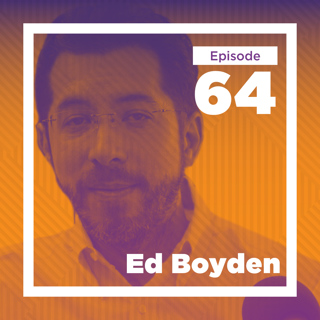
Ed Boyden builds the tools and technologies that help researchers think about and treat the brain, an organ we still know surprisingly little about. When it comes to how our brains make decisions, form emotions, and exhibit consciousness, there is still a lot we can learn. But just as fascinating as the tools Boyden and his team build is the way in which they build them. Boyden employs a number of methods to design more useful tools, such as thinking backwards from the problem, hiring eclectic talent, practicing a particular type of meditation, waking long before dawn, or just trying the opposite of what's already been attempted. Would emulating the brain require emulating the entire body? Is consciousness fundamental to the universe, or is it actually just an illusion? Does a certain disharmony in thought lead to creativity? Why don't people feel comfortable talking about their brains? And why is it so hard for us to be empathetic with one another? Listen to this engaging and brain-stimulating conversation with Tyler to hear his perspective. Read a full transcript enhanced with helpful links. Recorded February 5th, 2019 Other ways to connect Follow us on Twitter and Instagram Follow Tyler on Twitter Follow Ed on Twitter Email us: cowenconvos@mercatus.gmu.edu Subscribe at our newsletter page to have the latest Conversations with Tyler news sent straight to your inbox.
10 Apr 20191h 1min

Emily Wilson on Translations and Language
In a recent Twitter thread, Emily Wilson listed some of the difficulties of translating Homer into English. Among them: "There aren't enough onomatopoeic words for very loud chaotic noises" (#2 on the list), "It's very hard to come up with enough ways to describe intense desire to act that don't connote modern psychology" (#5), and "There is no common English word of four syllables or fewer connoting 'person particularly favored by Zeus due to high social status, and by the way this is a very normal ordinary word which is not drawing any special attention to itself whatsoever, beyond generic heroizing.'" (#7). Using Twitter this way is part of her effort to explain literary translation. What do translators do all day? Why can the same sentence turn out so differently depending on the translator? Why did she get stuck translating the Iliad immediately after producing a beloved translation of the Odyssey? She and Tyler discuss these questions and more, including why Silicon Valley loves Stoicism, whether Plato made Socrates sound smarter than he was, the future of classics education, the effect of AI on translation, how to make academia more friendly to women, whether she'd choose to 'overlive', and the importance of having a big Ikea desk and a huge orange cat. Read a full transcript enhanced with helpful links. Recorded March 7th, 2019 Other ways to connect Follow us on Twitter and Instagram Follow Tyler on Twitter Follow Emily on Twitter Email us: cowenconvos@mercatus.gmu.edu Subscribe at our newsletter page to have the latest Conversations with Tyler news sent straight to your inbox.
27 Mars 201956min