Sixty years on: why the Fundamental Principles must be lived, not just remembered

Sixty years on: why the Fundamental Principles must be lived, not just remembered

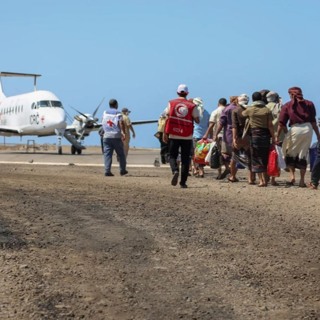
This year marks the 60th anniversary of the Fundamental Principles of the Red Cross and Red Crescent Movement – humanity, impartiality, neutrality, independence, voluntary service, unity and universality. Proclaimed in Vienna in 1965, they were born not as abstract ideals but as the direct result of over a hundred years of humanitarian action. They have enabled aid to cross frontlines, families to be reunited, and hope to reach places of despair. Yet today, the world in which they must operate is under extraordinary strain: conflicts drag on for years, humanitarian workers face record levels of attack, climate shocks compound existing crises, digitalization reshapes the battlefield, and politicization erodes the fragile space where help can reach those who need it most. The human consequences of war remain devastatingly constant, and the Principles- that have guided the Movement since 1965 are under growing pressure. In this post, ICRC’s Director General Pierre Krähenbühl reflects on the enduring relevance and importance of the Fundamental Principles in a rapidly shifting world. He argues that they are not self-sustaining ideals to be admired from afar, but living commitments that must be exercised and defended. Drawing on his three decades of humanitarian work, he makes the case that the Principles resist the dangerous normalization of war, safeguard access to people in need, and fuel the courage necessary to channel indignation into lifesaving action. At sixty, the Principles will only remain vital if we choose to live them, and in so doing, keep humanity alive in the darkest of times.

Det här avsnittet är hämtat från ett öppet RSS-flöde och publiceras inte av Podme. Det kan innehålla reklam.

Avsnitt(300)

“A number that learned how not to scream”: the case for community-led metrics on protection

“A number that learned how not to scream”: the case for community-led metrics on protection

The international humanitarian system has built a sophisticated architecture for the protection of civilians, namely political resolutions, cluster coordination mechanisms, reporting frameworks, and a...

7 Juli 15min

Amplifying Pacific voices: the region’s crucial role in advancing IHL

Amplifying Pacific voices: the region’s crucial role in advancing IHL

Pacific Island states have long demonstrated leadership in promoting peace, disarmament, and humanitarian values. From traditional customs that reflect principles contained in contemporary internation...

2 Juli 15min
The shelter that shone in the distance | Written and Performed by Mamuch Bey

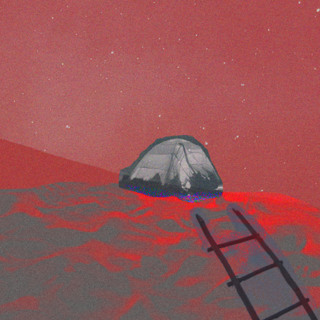
The shelter that shone in the distance | Written and Performed by Mamuch Bey

For the world's more than 120 million forcibly displaced people, the idea of refuge is not an abstraction – it is a horizon, an act of imagination, and sometimes the only thing that keeps hope alive. ...

18 Juni 4min
African traditions and the protection of children in armed conflict

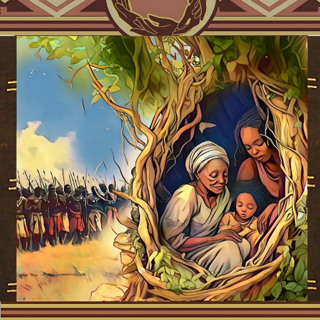
African traditions and the protection of children in armed conflict

Across Africa, norms regulating the conduct of hostilities long predate the codification of modern international humanitarian law (IHL). The ICRC Tool on African traditions and the preservation of hum...

16 Juni 12min
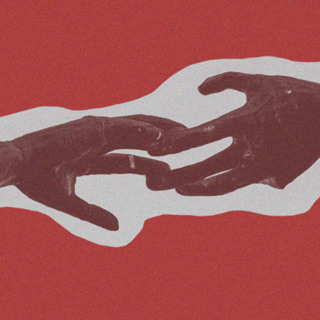
We helped individuals while harming persons: what conflict-affected communities deserve beyond beneficiary status

We helped individuals while harming persons: what conflict-affected communities deserve beyond beneficiary status

Conflict and displacement do more than destroy homes, livelihoods, and infrastructure. They also fracture the social relationships through which people sustain dignity, identity, and collective life. ...

11 Juni 14min
Climate resilience is not optional: what people in fragile, urban settings should expect from WASH

Climate resilience is not optional: what people in fragile, urban settings should expect from WASH

Climate change is intensifying water insecurity in fragile urban settings, where ageing infrastructure, rapid urbanization, and inequality already strain access to essential services. In Peshawar, Pak...

9 Juni 18min

Life teaches before school does: the invisible curriculum of the super child

Life teaches before school does: the invisible curriculum of the super child

Refugee education is often framed in terms of access, infrastructure, and policy – but for children who grow up inside camps, meaningful learning begins long before they enter a classroom. It unfolds ...

4 Juni 12min

Why Africa should act now on explosive weapons in populated areas: Malawi’s case for action

Why Africa should act now on explosive weapons in populated areas: Malawi’s case for action

Across contemporary armed conflicts, the use of explosive weapons in populated areas (EWIPA) has emerged as one of the gravest threats to civilians. Urban centres are increasingly sites of hostilities...

28 Maj 13min

Populärt inom Politik & nyheter

svenska-fall
tv4-nyheterna-story
p3-krim
aftonbladet-krim
flashback-forever
aftonbladet-daily
rss-krimstad
motiv
de-fyras-gang
spar
rss-sanning-konsekvens
rss-vad-fan-hande
mannen-utan-spar
rss-aftonbladet-krim
rss-expressen-dok
kungligt
olyckan-inifran
rss-krimreportrarna
grans
rss-flodet