

The Power and Control Wheel
In this episode Stephen Herd and I discuss the Power and Control Wheel: a widely used tool to help understand the dynamics of family violence and identify ways to address it.The Power and Control Wheel was developed by a group of activists in Duluth, Minnesota, in the 1980s, who recognised the need for a comprehensive approach to address family violence. The Duluth Model is based on the belief that domestic violence is a result of the abuser's desire for power and control over their partner. According to the Duluth Model, domestic violence is not caused by anger, substance abuse, or mental illness. Instead, it is a deliberate tactic used by abusers to control and dominate their partners. The Duluth Model identifies several different types of abuse, including physical abuse, sexual abuse, emotional abuse, economic abuse, and psychological abuse. These are presented in the Power and Control Wheel as a circular diagram that outlines the different tactics used by abusers.The Power and Control Wheel helps to illustrate the cyclical nature of family violence. The abuser may use a combination of different tactics to gain control over their partner, and the victim may respond with different coping strategies, such as walking on eggshells or trying to appease the abuser. Over time, the abuse can escalate, and the victim may feel trapped and unable to escape the cycle of violence.The Duluth Model and Power and Control Wheel are useful tools for understanding the dynamics of family violence and identifying ways to address it. They help to shift the focus away from the victim and onto the abuser, recognizing that family violence is a result of a deliberate choice made by the abuser to maintain power and control.There are several different approaches to addressing family violence, including criminal justice interventions, civil protective orders, and community-based interventions. The Duluth Model emphasizes the need for a coordinated community response to address family violence, including law enforcement, the court system, and community-based organizations.One of the strengths of the Duluth Model and Power and Control Wheel is that they recognize the importance of a multi-disciplinary approach to addressing family violence. Family violence is a complex issue that requires a coordinated response from multiple sectors, including the criminal justice system, social services, healthcare, and education.Discussions and comments in our videos are for informational purposes only and should not replace the advice of your medical professional. Please consult with your doctor before making any changes to your medical treatment or lifestyle.Latest Blogshttps://www.meducate.com.au/blogAbout Meducate ®Meducate provides online education for doctors, clinicians, health professionals and the public.See the website to browse the many different talks and courses available https://www.meducate.com.au
13 Apr 202313min
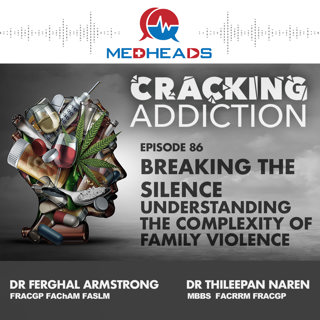
Breaking the Silence: Understanding the Complexity of Family Violence
Steve Herd is an expert in the field of family violence. In our first of a series of conversations, he explains that family violence is not just physical abuse. It includes emotional, psychological and sexual abuse as well. The abuser uses various tactics to maintain control over their partner, such as isolating them from friends and family, controlling their finances, and limiting their access to information.Herd also highlights the role of gender in family violence. He explains that men are more likely to use physical violence to control their partners. He argues that this is because society has traditionally given men more power and control over women, which has led to a sense of entitlement among some men.Overall, our conversation with Steve Herd sheds light on the complexity of family violence and its damaging effects on individuals and families. Understanding the root causes and different forms of abuse is crucial in order to prevent and respond to this pervasive issue.Discussions and comments in our videos are for informational purposes only and should not replace the advice of your medical professional. Please consult with your doctor before making any changes to your medical treatment or lifestyle.Latest Blogshttps://www.meducate.com.au/blogAbout Meducate ®Meducate provides online education for doctors, clinicians, health professionals and the public.See the website to browse the many different talks and courses available https://www.meducate.com.au
6 Apr 202314min

Trauma Assessment and Management
In this episode of Cracking Addiction, we are again joined by addiction psychiatrist Dr Dan Pham and discuss how to take a trauma history without further traumatising or triggering a patient. We also discuss the diagnostic criteria for PTSD and how to formulate this condition. In this episode, we discuss trauma-informed care and how to treat and manage trauma and PTSD, and what psychological and medical therapies may be useful to manage this condition, and briefly touch on some of the emerging research surrounding psychedelic-assisted psychotherapy in PTSD.Discussions and comments in our videos are for informational purposes only and should not replace the advice of your medical professional. Please consult with your doctor before making any changes to your medical treatment or lifestyle.Latest Blogshttps://www.meducate.com.au/blogAbout Meducate ®Meducate provides online education for doctors, clinicians, health professionals and the public.See the website to browse the many different talks and courses available https://www.meducate.com.au
29 Mars 202318min

Trauma, PTSD and Addiction
In the episode of Cracking Addiction, we are joined by Dr Daniel Pham an Addiction Psychiatrist working at Turning Point who discusses with us the differences and similarities between Addiction Medicine and Addiction Psychiatry. We discuss the term dual diagnosis and the interplay between mental health and substance use disorders. This episode focuses mainly on trauma, PTSD and its interplay with substance use disorders and we discuss how trauma occurs and how to diagnose trauma and PTSD. We also explore integrated care and how to manage patients with co-occurring trauma or PTSD and substance use disorders and we touch on trauma informed care and how to approach taking a trauma history.Discussions and comments in our videos are for informational purposes only and should not replace the advice of your medical professional. Please consult with your doctor before making any changes to your medical treatment or lifestyle.Latest Blogshttps://www.meducate.com.au/blogAbout Meducate ®Meducate provides online education for doctors, clinicians, health professionals and the public.See the website to browse the many different talks and courses available https://www.meducate.com.au
22 Mars 202320min
Working with Colleagues in the Grip of Addiction
Join us in this episode as we hear from Dr. Tony Weeks, a former Director of Anaesthesia at Alfred Health, as he shares his experiences in treating doctors with addiction and working in a medically supervised injecting room. Dr. Weeks speaks candidly about the challenges of helping colleagues with substance use disorders, and the complexities of treating doctors who are also struggling with addiction.After retiring from his work as an anesthetist, Dr. Weeks volunteered at a drug consumption room in North Richmond, Melbourne, where he helped patients find veins to inject into, assisted those who overdosed, and provided opioid substitution therapy. Through his vast and varied career, Dr. Weeks has seen firsthand the life-saving work that takes place in drug consumption rooms. He shares his insights on the evidence-based nature of harm reduction interventions, such as drug consumption rooms, and the importance of treating addiction as a public health issue.Don't miss this thought-provoking conversation with Dr. Tony Weeks, where he sheds light on the challenges and rewards of helping those struggling with addiction, including colleagues and fellow doctors.Discussions and comments in our videos are for informational purposes only and should not replace the advice of your medical professional. Please consult with your doctor before making any changes to your medical treatment or lifestyle.Latest Blogshttps://www.meducate.com.au/blogAbout Meducate ®Meducate provides online education for doctors, clinicians, health professionals and the public.See the website to browse the many different talks and courses available https://www.meducate.com.au
15 Mars 202341min
The DBT Workbook for Alcohol and Drug Addiction
This week on Cracking Addiction we talk with Psycologist and Author Dr Laura Petracek.We explore the principles of Dialectical Behavior Therapy (DBT) and how they can be applied to the 12 Steps of addiction recovery.Recovering from addiction and managing a mental illness can be challenging and often feels like they take over your life. However, with the right tools and strategies, you can regulate your emotions, develop self-management skills, reduce anxiety and stress, and feel like yourself again.DBT is a type of talking therapy that is specifically tailored to individuals who feel emotions very intensely. Her workbook takes the skills and strategies drawn from DBT and applies them to each of the 12 Steps of addiction recovery. This new roadmap helps reduce emotional distress symptoms, supports sobriety, and promotes overall mental health.By exploring the connection between DBT and the 12 Steps, this workbook equips you with the tools to manage your emotions and navigate your journey to recovery. If you're looking for a practical and effective approach to manage your mental health while recovering from addiction, this workbook is the perfect resource for you.Discussions and comments in our videos are for informational purposes only and should not replace the advice of a qualified medical professional. Please consult with your doctor before making any changes to your medical treatment or lifestyle.Discussions and comments in our videos are for informational purposes only and should not replace the advice of your medical professional. Please consult with your doctor before making any changes to your medical treatment or lifestyle.Latest Blogshttps://www.meducate.com.au/blogAbout Meducate ®Meducate provides online education for doctors, clinicians, health professionals and the public.See the website to browse the many different talks and courses available https://www.meducate.com.au
8 Mars 202330min
Overcoming Patient Stigma in Urine Drug Testing
Join us in this informative episode as we dive into the topic of urine drug tests in Addiction Medicine. We will discuss the purpose and importance of these tests and the circumstances in which they are performed. We will also touch on the key indications that may lead to a urine drug screen being administered during addiction treatment.Patients can often have concerns and feel stigma surrounding urine drug testing. We will address these issues and offer ways to mitigate any negative feelings that may arise. Additionally, we will provide guidance on how to interpret the results of a urine drug screen, including what they mean and what actions can be taken based on the results.Whether you are a healthcare provider, a patient, or simply curious about this topic, this show is a must-listen.Discussions and comments in our videos are for informational purposes only and should not replace the advice of your medical professional. Please consult with your doctor before making any changes to your medical treatment or lifestyle.Latest Blogshttps://www.meducate.com.au/blogAbout Meducate ®Meducate provides online education for doctors, clinicians, health professionals and the public.See the website to browse the many different talks and courses available https://www.meducate.com.au
1 Mars 202318min
Patient Perspective and Concerns Regarding Take Away Doses
In this episode, the focus is on the complicated issue of "takeaway doses" in opioid substitution therapy. Opioid substitution therapy is a treatment program that aims to help people overcome opioid addiction by substituting their drug of abuse with a safer and more controlled opioid, such as methadone or buprenorphine.One aspect of opioid substitution therapy is the use of "takeaway doses." This refers to the provision of extra doses of the opioid substitute to patients, which they can take away from the clinic for later use in case of emergency or unexpected circumstances. However, the use of take away doses raises several concerns from a clinical safety perspective, as there is always a risk of patients misusing or diverting the extra medication.In this episode of "Cracking Addiction," the topic of take away doses is thoroughly explored, with a focus on balancing the clinical safety concerns with the needs and requirements of patients. The criteria for takeaway doses, such as the patients' stability and progress in treatment, are discussed. Additionally, the contraindications to take away doses, such as recent drug use or a history of non-adherence, are also discussed.Finally, the show explores the patient's perspective and concerns with regards to takeaway doses. Patients may have concerns about the security and safety of their extra medication, as well as their own ability to resist the temptation to misuse it. By addressing these concerns and discussing the pros and cons of take away doses, "Cracking Addiction" aims to provide a comprehensive and balanced examination of this complex and controversial aspect of opioid substitution therapy.Discussions and comments in our videos are for informational purposes only and should not replace the advice of your medical professional. Please consult with your doctor before making any changes to your medical treatment or lifestyle.Latest Blogshttps://www.meducate.com.au/blogAbout Meducate ®Meducate provides online education for doctors, clinicians, health professionals and the public.See the website to browse the many different talks and courses available https://www.meducate.com.au
22 Feb 202319min