
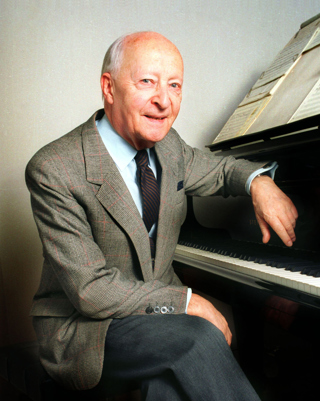
Lutoslawski Concerto for Orchestra
Throughout the history of Western Classical Music, folk music has imprinted itself as an invaluable resource for composers from all over the world. In fact, it's easier to make a list of composers who never used folk music in their compositions than it is to make a list of the composers who did! This tradition began long before the 20th century, but the work of composers like Bartok and a resurgence in the influence of nationalist music sparked a massive increase in composers using folk music throughout the 20th century and into the 21st. Bartok is thought of as the king of using folk music, as he was essentially the worlds first ethnomusicologist. But Stravinsky, who used dozens of uncredited folk tunes in his Rite of Spring, as well as Bernstein, Copland, Gershwin, Grainger, Vaughan Williams, Szymanowski, Dvorak, and so many others embraced folk music as an integral source for their music. This was in stark contrast to the second Viennese school composers like Schoenberg, Berg and Webern, and post World War II composers like Stockhausen, Boulez, and others who deliberately turned their backs on folk music. One composer who straddled both worlds during their lifetime was the Polish composer Witold Lutoslawski, a brilliant composer whose career started out in the folk music realm, though not entirely by choice, and ended up in music of aleatory, a kind of controlled chaos! One of his first major works, the Concerto for Orchestra is the topic for today's show, and it is heavily influenced by folk music from start to finish. It is a piece also inspired and might even be a bit of an homage to the great Bela Bartok and his own Concerto for Orchestra, which was written just ten years earlier. Lutoslawski, if you're not familiar with him, is one of those composers that once you learn about him, you can't get enough of him. I'll take you through this brilliant and utterly unique piece today from start to finish. Join us!
9 Nov 20231h 2min
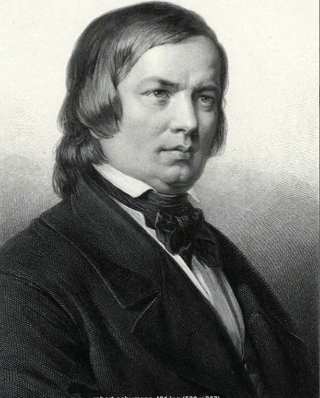
R. Schumann Piano Concerto
In January of 1839, Clara Wieck, Robert's future wife, wrote to Robert, "Don't take it amiss if I tell you that I've been seized by the desire to encourage you to write for orchestra. Your imagination and your spirit are too great for the weak piano." Clara knew that she would have struck a nerve with Robert, whose history with the piano was full of trials and tribulations. Robert had trained as a pianist, but a 3 year period of reckless amounts of practicing as well as the exacerbating effects of experimental devices meant to strengthen his fingers had destroyed his ability to play professionally. But already from the age of 17, in 1827, Robert had considered writing a piano concerto, probably for himself to perform. He made 4 further attempts to write a concerto, but it seems, like so many things in Schumann's life, that his marriage to Clara was the final inspiration that he needed to get over the hump. It made sense, as Clara Schumann was possibly the greatest pianist of her age, and someone who was ceaselessly devoted to promoting her husband's works wherever she played. In 1841, one year after their marriage, Robert finished a one movement piano concerto in A minor, which he called a Phantasie. Clara reported adoring the piece, but no publisher was interested in the work of a still relatively unknown composer. They were especially uninterested in a on movement concerto, and so Robert knew he needed to "finish" the piece with two extra movements. It would take him 4 more years to finally tack on those extra movements, and the first performance would be given 4 years after that Phantasie had been written, of course with Clara as soloist. This concerto has remained popular practically ever since it was written, and there are so many reasons for it, from its arresting opening, to its abundant lyricism, to its constant interplay with the orchestra, something that Robert grappled with when writing this concerto. This piece is one that doesn't have a story behind it, or any sort of narrative - it lives in the world as a sort of fantasy, constantly evolving in its beauty throughout. We're going to talk about this piece in detail, from start to finish on this Patreon Sponsored Episode. Join us!
2 Nov 202348min
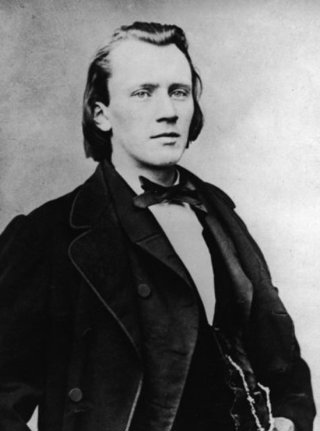
Brahms Violin Concerto
Brahms' violin concerto is one of the most difficult works for any violinist to tackle. It is as virtuosic as the hardest piece of Paganini as well as being as musically complex as a Brahms symphony. It takes most violinists years or even decades to feel comfortable with this piece, and many violinists consider it a kind of Mount Everest. Why? What makes this piece so complex, and yet so beautiful? What kind of choices do violinists make in their interpretations? For today, I'm not only going to tell you about this piece and how Brahms composed it, but I'm also going to compare 3 different recordings of the piece(Heifetz, Oistrakh, and Ferras) in order to show you the differences in interpretations between these 3 titanic violinists. We'll also talk about many of the topics we've covered before with Brahms; continuous development, gorgeous melodies, and that amazing Brahmsian quality of both respecting established forms while constantly subtly subverting them. Let's start the climb together and get to know this remarkable piece. Join us!
26 Okt 202350min
What Does Music Mean?
Today is a bit of an unusual episode. Last month I was invited by the British Society of Aesthetics to address their annual conference. My task was to give a lecture on whatever topic I wanted, having to do with music. So, considering it was an Academic Philosophy conference, I chose the easiest and most straightforward topic possible - What Does Music Mean? Obviously, this is a topic that has been interrogated from just about every different angle, and I certainly would never claim to have all the answers. But for my lecture, I decided to focus on how to find meaning in these amazing works from a performer's perspective. How do I study and learn these pieces so that I can find the meaning that I think is inside of them? What does history teach us about these pieces and can we use history to find meaning in these works? To try to answer these questions I chose three pieces to explore - Beethoven's Eroica Symphony, Barber's Adagio for Strings, and Shostakovich's 5th Symphony. After the lecture I realized it could easily be a podcast episode, so I've slightly changed a few things to make the lecture a bit more podcast-friendly. I hope you enjoy this one, and thanks to the British Society of Aesthetics for their invitation and their warm welcome!
19 Okt 202352min
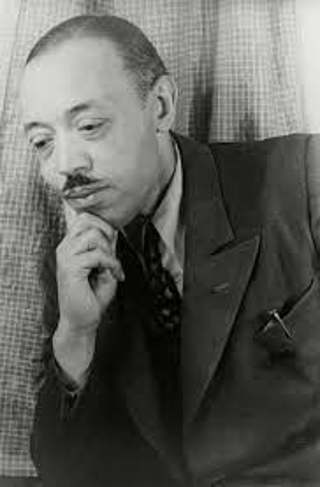
William Grant Still Symphony No. 1., "Afro-American"
On October 29th, 1931, The Rochester Philharmonic presented the world premiere of a new symphony by the composer William Grant Still. A symphonic premiere is always something to look out for in musical history, but this one had an even greater significance. The premiere of Wiliam Grant Still's First Symphony, subtitled "Afro American," was the first time a symphony written by a Black American composer was performed by a leading orchestra. William Grant Still was a man of many firsts, whether he was the first Black American conductor to conduct a major orchestra, the first to have an opera performed by a major company, the first Black American to conduct an orchestra in the South of the United States, and much more. Today we're going to focus in on Grant Still's first symphony, a piece that Grant Still had long thought about, conceptualized, and dreamed of. It was also a symphony wrapped up in the roiling currents of Black America at the time, with the Harlem Renaissance in full swing and Alain Locke's tract The New Negro sparking discussion and debate all over the country. It was a symphony that attempted to do something no one had ever done before, that is, to marry together the genre of the Blues with that of symphonic music. At the time of its premiere and afterwards, it was quite a success, and until 1950, it was THE most performed symphony written by an American composer. After 1950, the symphony practically disappeared from concert stages, but due to the explosion of interest in Black American composers of the past and present, this brilliant symphony is making its way back into the repertoire of orchestras all over the world. The way that Grant Still constructed this meeting of two genres of music was ingenious and innovative from start to finish, and so today on the show we'll explore all of the historical context of the symphony, what Grant Still was trying to do with his monumental new endeavor, and of course, all of the music itself. I'm also joined today by the great writer and linguist John McWhorter, who discusses the 4 Paul Laurence Dunbar poems Grant Still added to each movement as epigraphs, as well as their cultural context. Join us!
12 Okt 20231h 6min
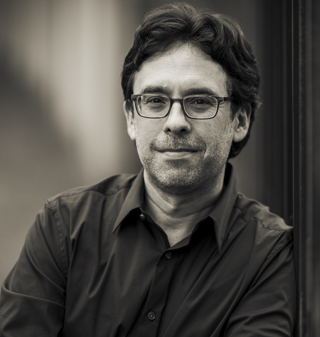
(Part 2) - The Music of World War II and the Holocaust with "Time's Echo" writer Jeremy Eichler
This is another episode where I highly recommend listening to Part 1 from last week before listening to this episode! It was a great honor to speak with the critic and cultural historian Jeremy Eichler about his remarkable new book "Time's Echo." In today's episode, we speak about Richard Strauss' Metamorphosen, as well as the complicated and hotly debated questions about Strauss' activities during World War II. We also talk about Shostakovich and his 13th Symphony, entitled "Babi Yar," a piece of memorial for a place where no memorial had stood for decades. Finally, we speak about Benjamin Britten and his War Requiem. We talk about Britten's devout pacificism, about his visit to the Belsen Displaced Persons camp after World War II, and why his War Requiem seems to have more connection with World War I than with World War II. It was truly a joy to talk to Jeremy about all of these different great composers, as well as the memories they created with their works. Join us!
5 Okt 202355min
The Music of World War II and the Holocaust with "Time's Echo" writer Jeremy Eichler (Part 1)
I had the great pleasure and honor this week(and next week) to speak with the author of the new book Time's Echo Jeremy Eichler. The book chronicles four composers and their varied reactions to World War II and the Holocaust, including Schoenberg, Strauss, Shostakovich, and Britten. This week we talked about the historical symbiosis between Germans and German Jews, the concept of Bildung, a central idea in German culture throughout the 19th and early 20th century, Mendelssohn's role in creating a sense of "German" music, Schoenberg's remarkable prescience about what lay in the future after the Nazis took power in Germany, his remarkable Survivor from Warsaw, the first major musical memorial to the Holocaust, and the almost hard to believe it's so wild story of the premiere of the piece. This is truly one of my favorite books about classical music that I've ever read, so I highly recommend picking it up. I hope you enjoy this interview as much as I did!
28 Sep 202357min
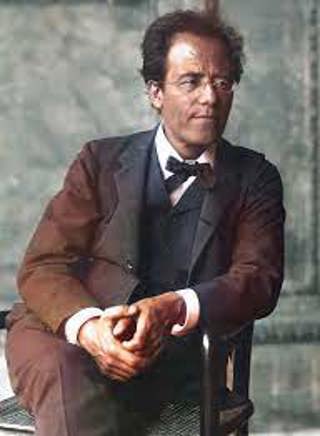
Mahler Symphony No. 4, Part 2
If you haven't listened to Part 1 of this episode about Mahler's 4th symphony, I highly recommend doing that, as every movement of this symphony builds to the "Heavenly Life" of the last movement. On Part 2, we'll be going through the 3rd and 4th movements. Mahler told his friend Natalie Bauer-Lechner that the 3rd movement of the symphony was created by "a vision of a tombstone on which was carved an image of the departed, with folded arms, in eternal sleep." As you can imagine based on that description, there is an unearthly beauty to the slow movement of Mahler's 4th. Much like the Heiliger Dankgesang movement from Beethoven's Op. 132 string quartet I talked about a couple of weeks ago, we often get the feeling in the slow movement of Mahler's 4th that we are listening to music that is coming to us from the other side. As the slow movement comes to its end, we are introduced to the last movement, a sublime and peaceful song Mahler entitled "The Heavenly Life." This is a symphony that leaves you in a state like no other in the musical world, and so today we'll go through that slow movement, investigating just how Mahler makes it so extraordinary, and then we'll talk about the last movement, a movement that has divided listeners from the beginning due to its unusual text. I can't promise we'll find all the answers, but along the way, we'll get to listen to some truly divine music. We'll also get to hear Mahler himself playing - that's right, Mahler himself! Join us!
21 Sep 202359min