
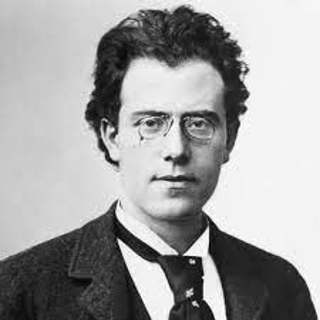
Mahler Symphony No. 4, Part 1
After the truly heavenly slow movement of Mahler's 4th symphony, a soprano emerges and sings a song literally called "The Heavenly Life." It is a symphonic ending like no other, one that leaves the listener peaceful and contented after taking a long(but not as long as usual) and winding journey with Gustav Mahler and his 4th symphony. The 4th symphony is a symphony of moments, like the famous sleigh bells that begin the piece, and a symphony of long, massive, and momentous arcs, like in the timeless 3rd movement, which might be my single favorite movement of any Mahler symphony. But this symphony, so renowned for its contentedness and beauty also features complicated emotions, drama that clouds the blue skies, and a dark side that we never truly escape, perhaps not until the very end of the symphony. Mahler said that his symphony was "divinely serene, yet profoundly sad, it can only have you laughing and crying at the same time." What a perfect way to define Mahler's music, always full of dualisms, contradictions, ironies, and complexities, but that's what makes Mahler's music so irresistible; its ability to plumb the depths of not only the human spirit but also its psyche. Mahler's music is truly musical therapy, and if there's one of his symphonies that really exemplifies that, it's this fourth symphony. With all that said, this is also his simplest and most easily grasped symphony in terms of its purely musical content. I've gotten a lot of emails in the past from folks who are skeptical or confused about Mahler and his appeal, so if you're one of those people, than this symphony MIGHT just be the one that changes your mind. As always with Mahler, his symphonies get multi-part episodes, so this week I'll go through the first two movements of the symphony, from the sleigh bells and brilliant sunshine of the first movement, to the devilish and ironic second movement. We'll talk all about Mahler's brilliant orchestration, his use(and deliberate misuse) of form, the pure beauty of this music, and the oddly negative reception that this symphony got when it was first performed. Join us!
14 Sep 202351min
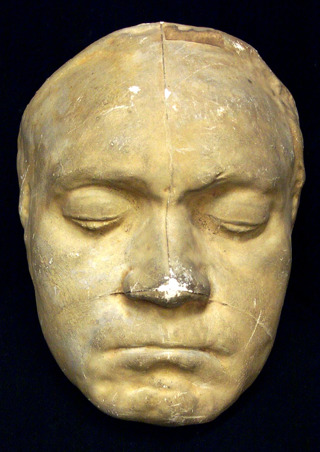
Beethoven String Quartet, Op. 132, Part 2
If you joined me last week, you heard about the severe intestinal illness that Beethoven suffered from during the year of 1825. Beethoven thought that he was near death; he was spitting up blood, in terrible pain, and regularly begged his doctor for help. Ensconced in Baden, a Viennese suburb known for its nature and calm, Beethoven slowly and miraculously recovered from the illness, giving him 2 more years to compose. These two years brought us the quartets Op. 130 Op. 131, Op. 135, a series of canons, sketches for a 10th symphony. and of course, Op. 132. Obviously, even as he suffered from this illness, Beethoven knew that he had much more in him left to compose. The 4 quartets he wrote upon recovery from this illness ALL rank in the top 10 of the greatest musical compositions ever written by anyone. During the slow movement of Op. 132, Beethoven takes the opportunity to thank the Deity, who or whatever that was to Beethoven, for his recovery. This 15-20 minute movement is, as I said last week, beyond superlatives, but I'll do my best to quell my enthusiasm and look at this movements structure, its fascinating harmonic language, and of course, its spiritual dimension. We'll then take apart the final two movements of the piece, two movements that teach us so much about Beethoven as a composer, as a person, and as a performer. No piece of Beethoven's struggles for so long before finally reaching a glorious conclusion, but don't worry, we'll get there in the end. Join us to explore part 2 of one of the greatest masterpieces of music ever written!
8 Sep 202344min
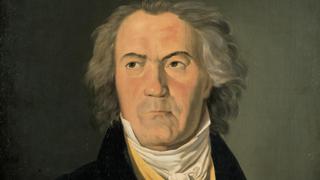
Beethoven String Quartet, Op. 132, Part 1
I had long hesitated to write a show about any of Beethoven's late string quartets. These are pieces that professional quartets spend the better part of their careers grappling with, struggling with, failing with, and much more rarely, succeeding with. They are some of the most extraordinary pieces of art ever conceived of. 5 quartets, Opus 127, Opus 130, Opus 131, Opus 132, and Opus 135, all written near or at the end of Beethoven's life, arguably representing the pinnacle of everything Beethoven achieved. They explore not only every conceivable emotion, but they dig down into the core of those emotions, defiantly refusing to skim the surface and daring to ask and then answer the fundamental questions of life and death. Everyone has a favorite Late Beethoven Quartet, but mine has always been Opus 132, and so this week I'm taking the opportunity to take the leap into Late Beethoven. We'll discuss Beethoven's situation as he recovered from a life-threatening illness which he was sure was going to be his end, the unusual 5 movement structure of the piece, and this week, the first two movements of the quartet, the first of which, to me, defines everything that Sonata Form can do to express emotion and a narrative in a piece of absolute music. Join us!
31 Aug 202345min

Nielsen Symphony No. 4, "Inextinguishable"
At the top of the score for the Danish composer Carl Nielsen's 4th symphony, he wrote: "Music is life, and like it, inextinguishable." This could easily be the shortest podcast I've ever done. I could leave you with that quote and then play you the beginning of the symphony, and you would understand everything Nielsen wanted to portray in this remarkable music. But don't worry, I won't do that. Carl Nielsen's music has never quite made it into the standard standard repertoire, but if there is one piece of his that is played more often than any other, it is his 4th symphony, subtitled The Inextinguishable. But as a whole, Nielsen's 4th symphony is not easy to digest. It is a piece that is contradictory, in the sense that Nielsen uses an extremely small set of motives to write practically every note of music in the score, and yet sometimes the music can feel like a stream of consciousness. Nielsen himself wrote: "I have an idea for a new composition, which has no programme but will express what we understand by the spirit of life or manifestations of life, that is: everything that moves, that wants to live ... just life and motion, though varied – very varied – yet connected, and as if constantly on the move, in one big movement or stream. I must have a word or a short title to express this; that will be enough. I cannot quite explain what I want, but what I want is good." There is a James Joyce-esque sense of jump-cutting between different ideas, as if that inextinguishable life force is unaffected by earthly things like form and recognizable structure. But if you peek under the hood of this piece, you find that it is really in 4 movements, and the first movement is even in a kind of a Sonata Form. It has an intermezzo, a slow movement, and a rambunctious finale. In many ways, this is a conventional symphony, but in terms of the musical material and the way Nielsen decided to manipulate that material, it is anything but conventional. We'll talk about all of this today, including the influence of World War 1 on the symphony and on Nielsen himself, and the remarkable music that throws us along like a relentless and boundless current of energy. Join us!
24 Aug 202359min
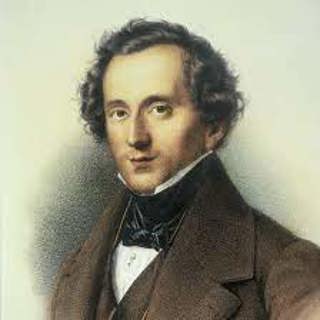
Mendelssohn: A Midsummer Night's Dream
The stories, legends, and myths about the trials and travails of composers lives are legion, like Beethoven's battles against fate, Mozart and Schubert's struggles with finances, Brahms' failures with women, Mahler's troubles with just about everyone, and Shostakovich's near fatal interactions with the government. These stories tend to add to the general understanding of these composers, and in fact they tend to enhance their reputations. We see their struggles in their music, and it makes us admire them more for overcoming them. With Mendelssohn, and to some extent Haydn as well, we have the opposite case. Mendelssohn grew up in a happy, wealthy German family, and it was only late in his life when he underwent any major struggles at all. Whether this happy upbringing contributed to the character of his music is anyone's guess, but Mendelssohn seems to always get the short end of the stick when it comes to reputation, and I think that his generally cheerful music has a lot to do with this fact. But Mendelssohn is no second-rate composer. As I mentioned in April with my show about Mendelssohn's Octet, he was certainly THE greatest composer under 18 that we know of(and yes I'm including Mozart in that), and his best music ranks up there with the best composers in history. And today, our focus on both the overture to Midsummer Night's Dream, and the incidental music that Mendelssohn wrote 17 years later, allows us to enjoy the full breadth of Mendelssohn's staggering talent. This is not only clever and cheerful music. It is also fantastically orchestrated, perfectly structured, and in the case of the overture, it is full of invention and character that is simply mind-blowing from a composer who was just 17 years old at the time. So today we'll talk all about this, from the beauty and perfection of the overture to the incidental music that followed, meant to be performed alongside Shakespeare's play. We'll also talk about the role Shakespeare played in Germany at the time, and how Mendelssohn's upbringing did indeed have a lot to do with the music he chose to write. Join us!
17 Aug 202352min
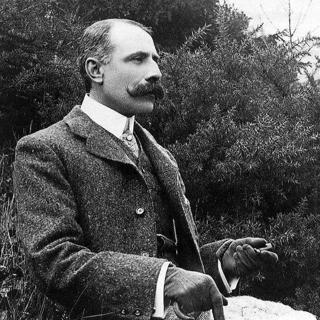
Elgar Cello Concerto
Elgar's Cello Concerto was composed in the shadow of World War 1. It was a piece that marked a profound shift in Elgar's outlook on life and music, and was his last major work before a long silence caused by the death of his wife Alice. It is a piece of remarkable passion for a composer like Elgar, and never fails to move the audience with its combination of grief, melancholy, nostalgia, rage, but also tenderness. Elgar as a composer had been passed by with the invention of atonality and with composers like Stravinsky and Schoenberg pushing the boundaries of where music could go. Elgar stubbornly stayed true to his Romantic impulses, but the concerto also displays some of the inescapable influence of those composers. It is one of the most powerful pieces of the 20th century, but one of the reasons we know the piece so well is an unforgettable recording made in 1965 by Jacqueline Du Pre. It is very unusual for a piece to be so associated with a single performer, but Du Pre truly made the Elgar a standard concerto for the cello and it is now a piece that every cellist makes a part of their repertoire. We'll talk about all this and more during the show today - join us!
10 Aug 202352min
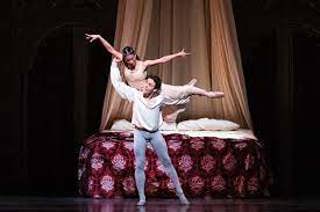
Romeo and Juliet in Classical Music
The "love theme" from Tchaikovsky's Romeo and Juliet Fantasy-Overture is one of the most famous themes in the history of Western Classical Music. The story it accompanies might be the most famous Western play ever written. Just like Eine Kleine Nachtmusik seems to define the powdered wig era of classical music to the general public, the passionate theme from Tchaikovsky's Romeo and Juliet seems to define romanticism in music because Tchaikovsky's Overture-Fantasy captures Shakespeare's masterpiece with a roiling and unstoppable intensity. But Tchaikovsky's setting of Romeo and Juliet, while probably the most famous, is by no means the only reimagining of the play by classical composers. There have been nearly a dozen adaptations of Romeo and Juliet by classical composers, including overtures, ballets, suites, and operas. Romeo and Juliet, just like it has been for actors, directors, and the audience, is an inexhaustible source for composers in a way that few pieces of literature or dramatic theatre have been in history. So today we'll compare just some of them for you - I'll be looking at Tchaikovsky's Romeo and Juliet Fantasy Overture, Prokofiev's Ballet Romeo and Juliet, Berlioz's choral symphony Romeo et Juliette, a brief look at Gounod's opera Romeo and Juliet, and Leonard Bernstein's Westside Story. We'll take a look at how these 5 composers inserted their distinctive personalities onto the music, leaving no doubt that this was Shakespeare, and Romeo and Juliet, through their eyes. I'll do this by giving a general overview of each piece, and then I'll zero in on two ideas - the portrayal of Juliet, and the portrayal of Tybalt's Death(or fighting in general). This way we can see how these composers handled these pivotal characters and moments, all in markedly different ways. Join us!
3 Aug 202349min
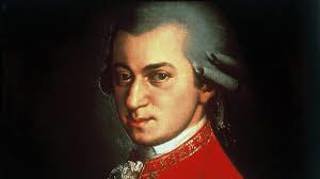
Mozart Symphony No. 38, "Prague"
Very few cities have had a relationship with a single person, especially a foreigner, like the city of Prague and its love affair with Mozart. Here's what Lorenzo Da Ponte, Mozart's librettist for some of his greatest operas, said about it: "It is not easy to convey an adequate conception of the enthusiasm of the Bohemians for [Mozart's] music. The pieces which were admired least of all in other countries were regarded by those people as things divine; and, more wonderful still, the great beauties which other nations discovered in the music of that rare genius only after many, many performances, were perfectly appreciated by the Bohemians on the very first evening." Mozart had been losing his popularity rapidly in Vienna, and so his trips to Prague were a boon to his self-esteem. He wrote in a letter, speaking of Prague's euphoric reaction to his opera the Marriage of Figaro: "here they talk about nothing but Figaro. Nothing is played, sung, or whistled but Figaro. No opera is drawing like Figaro. Nothing, nothing but Figaro. Certainly a great honor for me!" Now whether or not Mozart actually wrote this 38th symphony FOR the city of Prague or not is disputed. It seems as if he finished the symphony before he was invited to come to Prague for the first time. All we know for sure is that the first performance of the piece was definitely in Prague, and it included a couple of details that point to Mozart writing it specifically with both the audience and the musicians of Prague in mind. But the most important thing about this symphony is that it marks the beginning of a late period in Mozart's symphonies that sees him pushing at the bounds of symphonic form in a nearly Beethoven-like way. There is no symphony where that is more true than the one we're going to talk about today, the 38th symphony. The sheer amount of invention alone in the first movement is enough to hold our attention for weeks, but we'll talk about the whole symphony today, from its formal innovations, to its warmth and joy, and to the little clues that make us think that this symphony was a stunning and perhaps unprecedented gift from Mozart to the city that adored him so much. Join us!
27 Juli 202353min