Navigating violence: five insights to strengthen humanitarian action in contested territories

Navigating violence: five insights to strengthen humanitarian action in contested territories

More than 200 million people live today in contested territories – places where the authority of the state is challenged outright and armed groups exercise full or fluid control. This number has risen by 30 million since 2021. These are not distant statistics; each figure represents a person living in the shadow of competing powers, making difficult choices in an almost impossible environment. How do people navigate the presence of multiple, often competing, armed actors? Is dignity found in defiance, or safety in uneasy compliance? How do families secure food, water or medical care when neither the state nor armed groups are able or willing to provide basic services? And, crucially, what can humanitarian actors do to better protect and assist those caught in these fractured landscapes? In this post, and drawing on recently published research in Cameroon, Iraq and the Philippines, Arjun Claire, Senior Policy Adviser at the ICRC, and Matthew Bamber-Zryd, the ICRC’s Adviser on Armed Groups, offer five insights to help strengthen humanitarian responses in contested territories – insights rooted in the lived realities of the people who navigate them every day.

Det här avsnittet är hämtat från ett öppet RSS-flöde och publiceras inte av Podme. Det kan innehålla reklam.

Avsnitt(303)

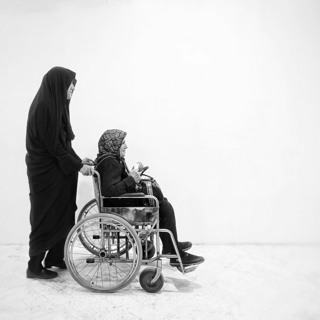
Civilian protection has a dependency-chain problem

Civilian protection has a dependency-chain problem

Civilian protection is often assessed by whether a person has been warned, evacuated, registered, sheltered or reached with relief. For many persons with disabilities, each measure depends on a wider ...

20 Aug 21min

The machines must not choose who dies: a humanitarian case for disarming AI

The machines must not choose who dies: a humanitarian case for disarming AI

As states race to develop autonomous weapons systems, the effort to agree binding international rules on machine decisions over life and death has reached a critical moment. In this post, Eberechukwu...

13 Aug 18min
Memorializing IHL violations in the age of AI: opportunities and risks for transitional justice

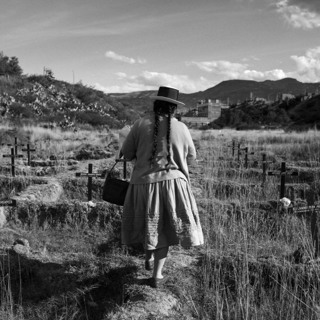
Memorializing IHL violations in the age of AI: opportunities and risks for transitional justice

Memorialization, one of the five pillars of transitional justice, plays a vital role in preserving the memory of international humanitarian law (IHL) violations and gross human rights violations, supp...

23 Juli 17min
“A number that learned how not to scream”: the case for community-led metrics on protection

“A number that learned how not to scream”: the case for community-led metrics on protection

The international humanitarian system has built a sophisticated architecture for the protection of civilians, namely political resolutions, cluster coordination mechanisms, reporting frameworks, and a...

7 Juli 15min

Amplifying Pacific voices: the region’s crucial role in advancing IHL

Amplifying Pacific voices: the region’s crucial role in advancing IHL

Pacific Island states have long demonstrated leadership in promoting peace, disarmament, and humanitarian values. From traditional customs that reflect principles contained in contemporary internation...

2 Juli 15min
The shelter that shone in the distance | Written and Performed by Mamuch Bey

The shelter that shone in the distance | Written and Performed by Mamuch Bey

For the world's more than 120 million forcibly displaced people, the idea of refuge is not an abstraction – it is a horizon, an act of imagination, and sometimes the only thing that keeps hope alive. ...

18 Juni 4min
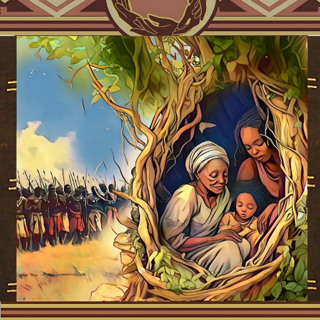
African traditions and the protection of children in armed conflict

African traditions and the protection of children in armed conflict

Across Africa, norms regulating the conduct of hostilities long predate the codification of modern international humanitarian law (IHL). The ICRC Tool on African traditions and the preservation of hum...

16 Juni 12min
We helped individuals while harming persons: what conflict-affected communities deserve beyond beneficiary status

We helped individuals while harming persons: what conflict-affected communities deserve beyond beneficiary status

Conflict and displacement do more than destroy homes, livelihoods, and infrastructure. They also fracture the social relationships through which people sustain dignity, identity, and collective life. ...

11 Juni 14min
Populärt inom Politik & nyheter

aftonbladet-krim
p3-krim
aftonbladet-daily
rss-expressen-dok
flashback-forever
en-runda-till
svenska-fall
rss-vad-fan-hande
politiken
rss-krimreportrarna
motiv
svd-ledarredaktionen
rss-krimstad
rss-sanning-konsekvens
rss-frandfors-horna
spar
rss-flodet
fordomspodden
krimmagasinet
olyckan-inifran