The Next Frontier in Astronomical Text Mining: Parsing GCN Circulars with LLMs.

The Next Frontier in Astronomical Text Mining: Parsing GCN Circulars with LLMs.

This episode dives into how astronomers are leveraging cutting-edge AI to make sense of decades of critical astronomical observations, focusing on the General Coordinates Network (GCN).


The GCN, NASA’s time-domain and multi-messenger alert system, distributes over 40,500 human-generated "Circulars" which report high-energy and multi-messenger astronomical transients. Because these Circulars are flexible and unstructured, extracting key observational information, such as **redshift** or observed wavebands, has historically been a challenging manual task.


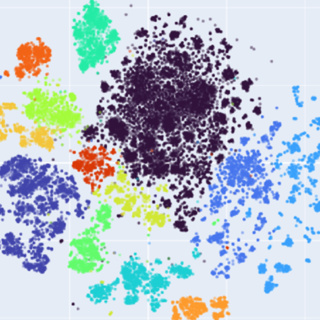
Researchers employed **Large Language Models (LLMs)** to automate this process. They developed a neural topic modeling pipeline using tools like BERTopic to automatically cluster and summarize astrophysical themes, classify circulars based on observation wavebands (including high-energy, optical, radio, Gravitational Wave (GW), and neutrino observations), and separate GW event clusters and their electromagnetic (EM) counterparts. They also used **contrastive fine-tuning** to significantly improve the classification accuracy of these observational clusters.


A key achievement was the successful implementation of a zero-shot system using the **open-source Mistral model** to automatically extract Gamma-Ray Burst (GRB) redshift information. By utilizing prompt-tuning and **Retrieval Augmented Generation (RAG)**, this simple system achieved an impressive **97.2% accuracy** when extracting redshifts from Circulars that contained this information.


The study demonstrates the immense potential of LLMs to **automate and enhance astronomical text mining**, providing a foundation for real-time analysis systems that could greatly streamline the work of the global transient alert follow-up community.


***

**Reference to the Article:**


Vidushi Sharma, Ronit Agarwala, Judith L. Racusin, et al. (2025). **Large Language Model Driven Analysis of General Coordinates Network (GCN) Circulars.** *Draft version November 20, 2025.*. (Preprint: 2511.14858v1.pdf).


Acknowledements: Podcast prepared with Google/NotebookLM. Illustration credits: arXiv:2511.14858v1

Tämä jakso on lisätty Podme-palveluun avoimen RSS-syötteen kautta eikä se ole Podmen omaa tuotantoa. Siksi jakso saattaa sisältää mainontaa.

Jaksot(112)

Peering Through the Ice: The Milky Way’s High-Energy Neutrino Signal

Peering Through the Ice: The Milky Way’s High-Energy Neutrino Signal

Peering Through the Ice: The Milky Way’s High-Energy Neutrino Signal Episode Summary: In this episode, we explore a major breakthrough in astrophysics: the IceCube Neutrino Observatory has established...

31 Heinä 20min

The Schmidt Observatory System unlocking the Transient Universe

The Schmidt Observatory System unlocking the Transient Universe

In this episode, we dive into the Eric and Wendy Schmidt Observatory System, a groundbreaking initiative designed to pioneer a new paradigm for astronomical research through rapid development, modular...

27 Heinä 21min

GUANO, NITRATES, and GLIMPSE: The Pipelines Powering Multi-Messenger Astronomy

GUANO, NITRATES, and GLIMPSE: The Pipelines Powering Multi-Messenger Astronomy

In this episode, we dive into the cutting-edge of time-domain and multi-messenger astrophysics with a deep look at BAT-GLIMPSE, a revolutionary new open-source pipeline developed for the Neil Gehrels ...

20 Heinä 20min

The Dynamic Radio Sky: Unveiling Transients with the SKAO

The Dynamic Radio Sky: Unveiling Transients with the SKAO

Welcome to a deep dive into the fast-paced, explosive universe of time-domain astronomy! In this episode, we explore how the upcoming Square Kilometre Array Observatory (SKAO) will revolutionize our u...

13 Heinä 19min

X-Raying the Earth: Neutrino Tomography at the South Pole

X-Raying the Earth: Neutrino Tomography at the South Pole

Welcome back to the podcast! Today, we are exploring a groundbreaking new way scientists are looking deep inside our planet. For a century, our understanding of the Earth's interior has relied almost ...

8 Heinä 23min

SVOM's First Year: From Gamma-Ray Bursts to Blazars

SVOM's First Year: From Gamma-Ray Bursts to Blazars

In this episode, we dive into the exciting early results from the SVOM (Space-based multi-band astronomical Variable Objects Monitor) mission, which launched in June 2024. Originally designed to hunt ...

6 Heinä 20min

SN 2024jlc: Bridging the Gap Between Supernova Classes

SN 2024jlc: Bridging the Gap Between Supernova Classes

In this episode, we dive into the fascinating discovery of SN 2024jlc, one of the closest and least luminous super-luminous supernovae (SLSNe) ever found. We explore how this extraordinary event is ch...

3 Heinä 20min

Cosmic Accelerators: Unlocking the Secrets of Microquasar GRS 1915+105

Cosmic Accelerators: Unlocking the Secrets of Microquasar GRS 1915+105

In this episode, we dive into the extreme and fascinating world of microquasars—binary systems where a compact object, like a black hole, feeds off a companion star and launches powerful, relativistic...

26 Kesä 20min

Suosittua kategoriassa Tiede

rss-poliisin-mieli
tiedekulma-podcast
rss-mita-tulisi-tietaa
rss-tiedetta-vai-tarinaa
docemilia
rss-duodecim-lehti
utelias-mieli
rss-kasvikutsut
rss-astetta-parempi-elama-podcast
radio-antro
rss-hereilla
rss-ammamafia
rss-tervetta-skeptisyytta
hippokrateen-vastaanotolla
rss-ranskaa-raakana
rss-radplus
filocast-filosofian-perusteet
mielipaivakirja
rss-bios-podcast
rss-ylistys-elaimille