
The Eavesdropper Economy: How Surveillance Built AI (E186)
El Podcast18 Helmi

The Eavesdropper Economy: How Surveillance Built AI (E186)

A lively tour from Cold War “The Thing” to today’s surveillance capitalism—showing how audio capture, too much data, and automation pressures helped turn listening into AI.

Guest bios:
  • Dr. Toby Heys — Professor at the School of Digital Arts (SODA), Manchester Metropolitan University; co-founder of the AUDINT sonic research unit; co-author of Listening In
  • Dr. David Jackson — Senior Lecturer in Digital Visualisation at SODA, Manchester Metropolitan University; researches AI’s cultural impact; founded the Storytellers + Machines conference (2023); co-author of Listening In.
  • Marsha Courneya — Canadian writer/editor; teaches Digital Dramaturgy at the International Film School of Cologne; doctoral researcher in Digital Culture and Communication at Birkbeck, University of London; co-author of Listening In.
Topics discussed:
  • “The Thing” (1945): passive bugging, resonance, why it went undetected
  • Cold War escalation: normalization of listening, Five Eyes, PRISM/Snowden
  • Stasi data glut: informants, dossiers, “collecting as mania,” behavior change
  • Language under surveillance: cryptolects, slang, coded speech, hip-hop as evasion
  • Surveillance capitalism: smart homes, smart toys, wearables, “data promiscuity”
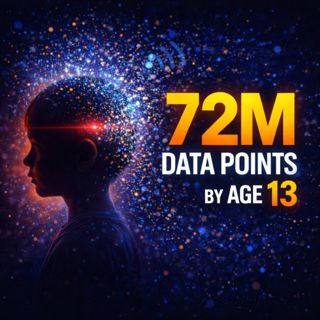
  • Kids + data: baby monitors/crib cams, school biometrics, “data twins” before birth
  • AI training + intimate life: accidental recordings, human review, terms-of-service reality
  • Future tensions: convenience vs autonomy, regulation lag, ownership erosion (“enshittification”)
Main points:
  • Audio surveillance scales into an “automation problem.” Once you can record everything, the bottleneck becomes listening fast enough, pushing intelligence services toward automated analysis.
  • Surveillance changes behavior—even when nobody is actively listening. The possibility of being overheard bends speech, jokes, and self-presentation (Stasi dynamics → modern smart devices).
  • “Too much data” doesn’t make it harmless. The danger isn’t only what’s heard today, but the creation of a searchable “permanent record” that can be reinterpreted later.
  • The home becomes the most valuable capture zone. People drop the public mask at home; that intimacy makes in-home audio uniquely revealing and therefore lucrative/powerful.
  • Children are captured early—often via “safety” and parental anxiety. Baby tech, smart toys, school systems, and medical records create a data trail before kids can consent or understand it.
  • Snowden shocked—but didn’t trigger lasting mass refusal. The episode argues leaks often lead to resignation/memeification (“the intel officer listening”) rather than sustained backlash.
  • AI + ownership is the next front. Beyond privacy, the guests worry about erosion of ownership (you can’t fully “own” digital goods or refuse totalizing platforms as easily).
Top 3 quotes:
  • Toby:There was nothing to detect.
  • Marsha:It ruptures language completely.
  • David:data isn’t secure and safe.

🎙 The Pod is hosted by Jesse Wright
💬 For guest suggestions, questions, or media inquiries, reach out at https://elpodcast.media/
📬 Never miss an episode – subscribe and follow wherever you get your podcasts.
⭐️ If you enjoyed this episode, please rate and review the show. It helps others find us.

Thanks for listening!

Jaksot(194)

Society Is Being Feminized: Here’s What That Means (E195)

Society Is Being Feminized: Here’s What That Means (E195)

Dr. Cory J. Clark breaks down how the rise of women in academia may be reshaping institutions—shifting priorities from merit and competition toward equity, harm avoidance, and social dynamics. Guest B...

21 Huhti 1h 15min

Immigration: Does It Make Countries Richer or Poorer? (E194)

Immigration: Does It Make Countries Richer or Poorer? (E194)

A deep dive with Dr. Garrett Jones on how immigration, culture, and intelligence shape long-run economic outcomes—and why economists sharply disagree on the issue. Guest Bio Garett Jones is a professo...

14 Huhti 49min

Peak TV or Content Overload? A TV Critic Explains the Streaming Era (E193)

Peak TV or Content Overload? A TV Critic Explains the Streaming Era (E193)

A wide-ranging discussion on whether we’re truly in a “golden age” of television—or just drowning in content—with sharp critiques of streaming economics, woke storytelling, and modern TV bloat. Guest ...

7 Huhti 1h 26min

Stop Overpaying for Life—Move to Vietnam (E192)

Stop Overpaying for Life—Move to Vietnam (E192)

A long-term expat breaks down the real economics, trade-offs, and lifestyle realities of retiring abroad—arguing Vietnam and Southeast Asia offer unmatched value if you fully commit. Guest Bio Evan Eh...

31 Maalis 1h 5min

I Got Canceled for Studying Bones… Here’s What Happened | Dr. Elizabeth Weiss (E191)

I Got Canceled for Studying Bones… Here’s What Happened | Dr. Elizabeth Weiss (E191)

Anthropologist Elizabeth Weiss argues that expanding repatriation policies and identity-driven academic trends are restricting access to skeletal collections and reshaping anthropology away from empir...

24 Maalis 1h 31min

The American Dream Isn’t Dead—You’re Just Being Lied To (E190)

The American Dream Isn’t Dead—You’re Just Being Lied To (E190)

An economist explains why the American Dream isn’t dead—and how policy, not just personal effort, shapes who gets ahead. 👤 Guest Bio  Dr. Justin Callais is Chief Economist at the Archbridge Institute...

17 Maalis 1h 34min

I Left Germany for Spain — Now I’m Leaving Europe (E189)

I Left Germany for Spain — Now I’m Leaving Europe (E189)

One-line summary: Chris Consultant joins Jesse to explain why he is leaving Germany, arguing that high taxes, bureaucracy, demographic decline, energy policy failures, and shrinking free speech have m...

10 Maalis 1h 31min

Do Patients Want “Diversity” or Competence? | Dr. Stephen Kershnar (E188)

Do Patients Want “Diversity” or Competence? | Dr. Stephen Kershnar (E188)

A philosophy professor/lawyer argues that med-school “holistic” + diversity-weighted admissions are less predictive than a numbers-based algorithm—and that the stakes show up downstream in physician q...

3 Maalis 1h 1min

Suosittua kategoriassa Liike-elämä ja talous

sijotuskasti
psykopodiaa-podcast
mimmit-sijoittaa
rss-rahapodi
ostan-asuntoja-podcast
rss-rahamania
hyva-paha-johtaminen
herrasmieshakkerit
rss-sami-miettinen-neuvottelija
rahapuhetta
rss-lahtijat
inderespodi
yrittaja
juristipodi
rss-sisalto-kuntoon
rss-seuraava-potilas
oppimisen-psykologia
rss-uskalla-yrittaa
rss-startup-ministerio
rss-inderes-femme