SN 2017egm : Fermi-LAT's Breakthrough Gamma-Ray Detection

SN 2017egm : Fermi-LAT's Breakthrough Gamma-Ray Detection

In today’s episode, we dive into the mystery of superluminous supernovae (SLSNe)—rare, extreme astronomical events that shine 10 to 100 times brighter than standard core-collapse supernovae. For years, astrophysicists have debated what powers these brilliant explosions, with the two leading theories being interaction with surrounding circumstellar medium (CSM) or energy injected by a "central engine," such as a rapidly spinning, highly magnetized neutron star known as a magnetar.


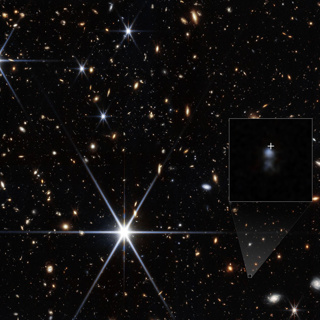
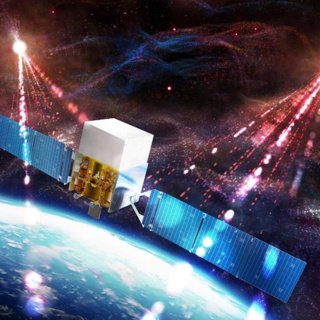
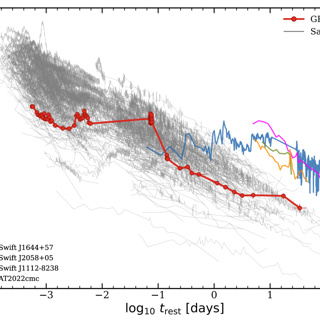
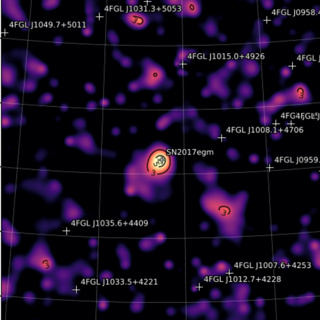
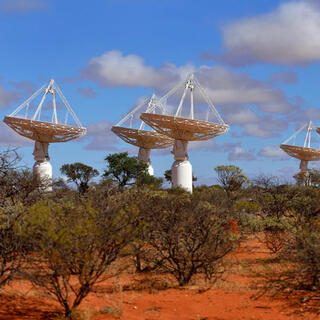
We discuss a recent breakthrough using 16 years of data from the Fermi Large Area Telescope (LAT). Researchers conducted a systematic search of nearby SLSNe and found significant giga-electronvolt (GeV) gamma-ray emission coming from one specific target: SN 2017egm. We explore why this delayed gamma-ray signal—appearing between 50 and 160 days after the initial explosion—strongly points to a magnetar driving the event. We also break down why the competing CSM interaction model falls short in explaining the timing and the ratio of gamma-ray to optical luminosity observed in this supernova. Finally, we look ahead at what future observatories, like the Cherenkov Telescope Array Observatory (CTAO), might reveal about these colossal cosmic engines.


Key Takeaways:

  • What superluminous supernovae are and why their massive energy output requires exceptional power sources.
  • The significance of SN 2017egm yielding the first confirmed gamma-ray signature for this class of transients.
  • How the timing and luminosity ratio of the gamma-ray emission strongly favor a central magnetar wind nebula over the CSM interaction model.
  • How future sub-tera-electronvolt observations could open a new window into understanding the core mechanisms of SLSNe.


Reference:

Acero, F., Acharyya, A., et al. "Gamma-ray signature of superluminous supernovae: Fermi-LAT GeV detection of SN 2017egm and evidence of a central engine." Astronomy & Astrophysics, 709, A229 (2026). DOI: 10.1051/0004-6361/202558547.


Acknowledements: Podcast prepared with Google/NotebookLM. Illustration credits: Astronomy & Astrophysics, 709, A229 (2026)

Tämä jakso on lisätty Podme-palveluun avoimen RSS-syötteen kautta eikä se ole Podmen omaa tuotantoa. Siksi jakso saattaa sisältää mainontaa.

Jaksot(99)

Supernovae on the RISE: Why Dead Stars Wake Up Decades Later

Supernovae on the RISE: Why Dead Stars Wake Up Decades Later

In this episode, we explore the fascinating phenomenon of core-collapse supernovae that refuse to fade away quietly. Years, or even decades, after their initial explosion, some of these stellar deaths...

20 Touko 17min

The SVOM Satellite: A New Era in Multi-Messenger Astronomy

The SVOM Satellite: A New Era in Multi-Messenger Astronomy

In this episode, we dive into the fascinating world of gamma-ray bursts (GRBs) and high-energy transients through the lens of the SVOM (Space-based Multi-band Variable Object Monitor) mission. Launche...

29 Huhti 24min

Chasing the Flash: Hunting Neutron Star Mergers with CTAO

Chasing the Flash: Hunting Neutron Star Mergers with CTAO

In this episode, we dive into the thrilling world of multi-messenger astronomy! Ever since the historic detection of GW170817, scientists have known that binary neutron star (BNS) mergers can produce ...

14 Huhti 19min

Tiling the Sky: A New Strategy for Finding Elusive GRBs

Tiling the Sky: A New Strategy for Finding Elusive GRBs

In this episode, we dive into the intense and fast-paced world of **Gamma-ray bursts (GRBs)—the most luminous and rapidly evolving transients in the Universe**. While space-based instruments like the ...

13 Huhti 19min

Fast Radio Bursts & Magnetar X-Rays: A Peculiar Discovery

Fast Radio Bursts & Magnetar X-Rays: A Peculiar Discovery

In this episode, we dive into the deep cosmos to explore a recent astronomical breakthrough linking Fast Radio Bursts (FRBs)—enigmatic, millisecond-long cosmic transients—to extreme stellar objects kn...

7 Huhti 22min

Starbursts and Seyferts: The Mystery of the Missing Gamma Rays

Starbursts and Seyferts: The Mystery of the Missing Gamma Rays

In this episode, we dive deep into the fascinating world of "composite" galaxies—cosmic beasts that host both an actively feeding supermassive black hole (a Seyfert nucleus) and regions of intense sta...

30 Maalis 22min

15 years hunting for GRBs with H.E.S.S.

15 years hunting for GRBs with H.E.S.S.

In this episode, we dive into the explosive world of Gamma-Ray Bursts (GRBs)—brief, intense pulses of sub-MeV gamma rays that are considered excellent laboratories for studying particle acceleration, ...

27 Maalis 22min

Suosittua kategoriassa Tiede

rss-mita-tulisi-tietaa
rss-poliisin-mieli
tiedekulma-podcast
rss-tiedetta-vai-tarinaa
rss-duodecim-lehti
rss-sosiopodi
utelias-mieli
docemilia
sotataidon-ytimessa
radio-antro
filocast-filosofian-perusteet
menologeja-tutkimusmatka-vaihdevuosiin
rss-ranskaa-raakana
rss-ammamafia
rss-duokkari-ekstra
rss-metsantuntijat-podcast
rss-ilmasto-kriisissa