
CHILD-EATING STATUE in Bern, Switzerland -and a Bear with a RED PENIS. The Kindlifresserbrunnen.

CHILD-EATING STATUE in Bern, Switzerland -and a Bear with a RED PENIS. The Kindlifresserbrunnen.

"The mystery isn't only why Bern built a statue of a man eating children. The mystery is why Bern put its own armed bears beneath him."

Why does Bern, Switzerland have a child-eating statue above an army of armed bears?

The Kindlifresserbrunnen, also known as the Child Eater Fountain, Ogre Fountain or Kindlifresser Fountain, is one of the strangest historic monuments in Bern's Old City, Switzerland. Created in 1545–1546 and associated with Renaissance sculptor Hans Gieng, the fountain depicts a terrifying figure eating a child while carrying other children in a sack. Directly beneath the Child Eater is an extraordinary detail that is often overlooked: a military procession of armed Bernese bears, complete with weapons, a captain and a banner.

Nearly 500 years later, the meaning of Bern's Kindlifresserbrunnen remains disputed.

This episode goes backward through the history of Bern to investigate what was happening long before the Child Eater appeared. The trail reaches back to 1144 and the William of Norwich ritual-murder accusation, the founding of Bern and Nydegg Castle around 1191, the documented presence of Jews in medieval Bern, and Bern's own 1293–1294 accusation that Jews had murdered a Christian child.

The investigation then moves into the 14th and 15th centuries, when Bern was becoming a major power in the Swiss Confederacy and repeatedly confronting the Habsburgs. During the early 1400s, Roma, historically called Gypsies in European records, also appear in Switzerland and surrounding European territories. Jews and Roma were therefore both part of the historical landscape long before the Child Eater Fountain was constructed.

The episode examines the major theories surrounding the mysterious Child Eater, including Cronus or Kronos devouring his children, the Roman Saturn, the medieval Kinderschreck or bogeyman, antisemitic interpretations, blood-libel imagery and Bernese folklore. But instead of looking only at the frightening figure at the top, the investigation asks why an army of Bern's bears is marching directly underneath him.

Following the bear backward opens another trail. Bern's bear symbolism leads into the city's medieval history, the Swiss Confederacy, the Reformation, Habsburg power and the political struggles of 16th-century Europe. It also reaches further back into the Celtic world and Artio, the ancient Celtic bear goddess, whose famous bronze sculpture was discovered at Muri near Bern.

In 1528, Bern adopted the Protestant Reformation and secularized monasteries and church property. Only fifteen years later, Hans Gieng's Justice Fountain of 1543 placed powerful earthly authorities, including the Pope and Emperor, beneath the figure of Justice. Then, in 1545–1546, the Child Eater appeared above Bern's armed bears.

The bears themselves raise another unusual question. Historical Bernese bear imagery can be strikingly anatomical, including the famous red penis displayed on the male bear in Bern's heraldic tradition. When did that feature appear, and what was happening politically when Bern increasingly presented the bear as the symbol of the city and its power?

Who is the Child Eater of Bern? Why is he eating children? Why are armed bears marching beneath him? What do Bern's medieval Jewish history, the arrival of Roma/Gypsies, the Habsburg conflicts, the Reformation, Cronus and Saturn, Artio and Bern's military bear symbolism have to do with the mystery?

Instead of separating those clues, this episode puts them back onto one historical timeline and examines the entire Kindlifresserbrunnen as a single monument.

The clues have been sitting in plain sight in the middle of Bern for nearly five centuries.

How hormones work to flip sexes: Hormones

Do you have a psychopath in your life? The best way to find out is read my book. BOOK *FREE* Download – Psychopath In Your Life4

Support is Appreciated: Support the Show – Psychopath In Your Life

Download Pods here: TOP PODS – Psychopath In Your Life

My old discussion forum with last 10 years of victim stories, is back online. Psychopath Victim Support Community | Forums powered by UBB.threads™

Google Maps My HOME Address: 309 E. Klug Avenue, Norfolk, NE 68701 SMART Meters & Timelines – Psychopath In Your Life

BERN TIMELINE — CASTLE, JEWS, GYPSIES, HABSBURGS AND THE CHILD-EATER

1144 — ENGLAND

William of Norwich dies. Jews are accused of ritually murdering a Christian child. This becomes the first famous medieval European ritual-murder accusation.

1191 — BERN IS FOUNDED / NYDEGG CASTLE

Berchtold V of Zähringen establishes Bern around this period. Nydegg Castle stands at the eastern end of the settlement.

This is only about 47 years after the 1144 accusation.

1218 — ZÄHRINGEN LINE ENDS

Berchtold V dies without an heir. Bern's political relationship with the Holy Roman Empire changes, beginning a long struggle over control and independence.

1259 — JEWS DOCUMENTED IN BERN

This is the earliest surviving documentary evidence for Jews living in Bern.

1268 — NYDEGG CASTLE DESTROYED

The old Zähringen castle is demolished.

1273 — RUDOLF I OF HABSBURG BECOMES KING

Rudolf I becomes King of the Romans. Habsburg power now enters the Bern story directly.

1288–1289 — HABSBURG CONFLICT WITH BERN

Rudolf I campaigns against Bern. The city is besieged during the struggle between Bern and Habsburg power.

1293–1294 — BERN'S OWN CHILD-MURDER ACCUSATION

A Christian boy named Rudolf, or Ruff, is alleged to have been murdered by Jews in Bern.

Jews are persecuted, some executed and others expelled. Property and financial claims are confiscated. The Jewish cemetery is destroyed, and gravestones are later reused as building material.

Bern therefore has its own child-murder accusation approximately 250 years before the Child-Eater Fountain.

1353 — BERN JOINS THE SWISS CONFEDERACY

Bern is becoming one of the major political and military powers of the region.

EARLY 1400s — ROMA/GYPSIES APPEAR IN SWITZERLAND

Roma groups are documented moving through western and central Europe during the early 15th century.

They are recorded in Switzerland during this period, commonly described in contemporary European records using names translated as Gypsies, Egyptians, or similar terms.

This means Roma were present in the Swiss world more than a century before the Child-Eater Fountain was constructed.

1400s — PRESSURE AGAINST ROMA/GYPSIES INCREASES

The initial reception of traveling Roma groups changes. European governments increasingly issue restrictions, expulsions and penalties against them.

Switzerland participates in this broader development.

1528 — BERN ADOPTS THE REFORMATION

Bern embraces the Protestant Reformation. Monasteries and church property are secularized.

Bern is now openly challenging the old Catholic order during the reign of the Habsburg emperor Charles V.

1543 — JUSTICE FOUNTAIN

Hans Gieng creates Bern's Justice Fountain.

Justice stands above earthly rulers, including the Pope and Emperor.

This demonstrates that Bern's fountains could carry messages concerning religion, government and political authority.

1545–1546 — CHILD-EATER FOUNTAIN

Hans Gieng creates the Kindlifresserbrunnen, the Child-Eater Fountain.

At the top is a figure eating a child and carrying additional children in a sack.

Underneath him is a procession of armed Bernese bears, including a captain, standard-bearer and soldiers.

1144: European ritual-child-murder accusation appears.

1191: Bern and Nydegg Castle.

1293–1294: Bern's own alleged ritual murder of a Christian child.

Early 1400s: Roma/Gypsies arrive in the Swiss region.

1528: Bern's Reformation.

1543: Pope and Emperor placed beneath Justice.

1545–1546: Child-Eater placed above Bern's armed bears.

Timeline — Bern's Bear and the Red Penis

1224 — The Bern bear appears
The earliest known Bern city seal depicts a bear. The bear is therefore established as Bern's symbol by the early 13th century.

1228 — The bear appears on Bernese coins
The bear is now being used publicly as an identifying symbol of Bern.

Late 1300s — The familiar coat of arms takes shape
Colored representations begin showing the recognizable Bern design: a black bear walking across a gold diagonal band against a red field.

1412 — Bern's coat of arms appears on the Town Hall
A surviving architectural representation of the Bernese arms dates from this period. The bear is becoming a permanent civic and governmental emblem.

1400s — The explicitly male bear is established
According to the Bern cantonal government's own historical account, the bear has been represented with its male sexual organ since the 15th century. Bern describes the tradition as at least 600 years old.

This is the critical point:

The penis is red.

The bear itself is black, while its tongue, claws and penis are highlighted in red.

1484–1485 — Diebold Schilling's Spiezer Chronik
The famous Bernese illustrated chronicle provides surviving imagery of Bern's heraldic bear during the late 15th century.

1492 — The developed Bern coat of arms appears on coinage
By the end of the century, the bear is firmly embedded in Bern's public political identity.

1500s — Bern becomes a major military and political power
The bear increasingly functions as more than a city mascot. Bernese imagery presents an aggressive, armed and unmistakably male bear representing the city and its power.

1520s–1530s — Reformation transforms Bern
Bern adopts the Reformation in 1528 and becomes one of the major Protestant powers in the Swiss Confederacy. The bear continues representing Bern through this enormous political and religious change.

1530s–1540s — Bern's great fountain-building period
The elaborate public fountains we have been studying appear throughout Bern. Bears are incorporated repeatedly into the city's public imagery.

1542–1543 — Kindlifresserbrunnen reconstructed
Hans Gieng creates the Child-Eater fountain in essentially the form we recognize today. Beneath the Child-Eater is the procession of armed Bernese bears.

So by the time the Child-Eater fountain appears, the male Bern bear is already an old political symbol.

1600s–1700s — The male bear survives
The explicitly sexed bear continues appearing in Bernese heraldry. Its anatomy is part of the heraldic animal rather than a temporary artistic joke.

1800s — Some versions become sanitized
During the more prudish 19th century, artists sometimes omit the genitalia from heraldic animals. This helps explain why the Bern-derived bear used by New Bern, North Carolina, lacks the conspicuous red penis.

1900s — Bern keeps the original tradition
Bern does not permanently sanitize its official bear. The male attribute remains part of the heraldic specification.

2016 — It is still officially specified
Bernese heraldic regulations describe the bear as "gezotet" — heraldic terminology indicating the male genitalia.

2026 — Somebody finally challenges it
Bern cantonal parliamentarian Thomas Brönnimann raises the question of whether the sexual attribute should be removed from the coat of arms.

The Bern government responds that the bear has been represented this way since the 15th century, noting the roughly 600-year tradition.

Bern decides to keep it.

The word "Bohemian" has traveled an extraordinary distance. Today it can describe an interior-design style, clothing, artists, musicians, hippies, or an unconventional way of life. But the word did not begin as an artistic concept. It began with an actual place in Central Europe: Bohemia.

Understanding that history helps separate several things that eventually became tangled together: Bohemia, the Roma, the Habsburgs, artists and performers, the Beat generation, and finally the 1960s counterculture represented by musicians such as Donovan.

Ancient Origins: Bohemia Was a Place Before It Was a Lifestyle

The name Bohemia ultimately derives from the Boii, a Celtic people who inhabited parts of Central Europe. The ancient name Boiohaemum essentially meant the home of the Boii.

Bohemia developed into one of the major political territories of Central Europe, with Prague eventually becoming its principal city. For centuries it was associated with the Kingdom of Bohemia and the Holy Roman Empire.

Long before anyone called an artist a "Bohemian," therefore, Bohemia meant a geographical and political territory.

Early 1400s: Roma Appear in Central Europe

Roma groups are documented moving through Central and Western Europe by the early fifteenth century.

Some Roma made their living through mobile occupations including music, dance, entertainment, metalworking, animal trading and other specialized trades. Music in particular became strongly associated with Roma communities in several parts of Central and Eastern Europe.

Their migration would eventually play an unexpected role in changing the meaning of the word Bohemian.

1400s: France Begins Calling Roma "Bohemians"

When Roma groups appeared in France during the fifteenth century, the French used the word bohémien, derived directly from Bohême — Bohemia.

The explanation traditionally given is that Europeans believed these travelers had originated in, or had arrived through, Bohemia.

That belief about their ultimate origin was incorrect. Roma ancestry traces much farther east, ultimately to the Indian subcontinent.

But the name stuck.

This creates the first major transformation:

Bohemia was originally a place. "Bohemian" then became a European name applied to wandering Roma populations believed to have come through that place.

1526: Bohemia Comes Under Habsburg Rule

A major political change occurred in 1526.

After King Louis II of Hungary and Bohemia died at the Battle of Mohács, Ferdinand I of Habsburg acquired the crowns of Bohemia and Hungary.

Bohemia therefore became part of the expanding Habsburg dynastic world.

This also meant that Roma populations were living and traveling through territories that were increasingly under Habsburg rule, including portions of Bohemia, Hungary, Croatia and other Central European lands.

The three subjects therefore genuinely intersect historically:

Bohemia. The Habsburgs. The Roma.

That intersection does not by itself establish a connection to Bern, but it places all three within the Central European landscape of the sixteenth century.

1543: The Kindlifresserbrunnen Appears in Bern

Only seventeen years after the Habsburg acquisition of Bohemia and Hungary, the famous Kindlifresserbrunnen was erected in Bern.

The fountain dates to approximately 1543, with the present figure generally attributed to Hans Gieng.

Bern was not under Habsburg control at this point. Its conflicts with the Habsburgs belonged to an earlier chapter of Swiss history.

Nevertheless, the dates provide useful historical context. The fountain was created during the same sixteenth-century Central European world in which the Habsburg dynasty was expanding dramatically and Bohemia had just entered Habsburg rule.

There is currently no evidence demonstrating that Roma or Bohemia supplied the meaning of the Kindlifresserbrunnen. That would require another historical link.

But chronologically, these events belong to the same period.

1600s–1700s: "Bohemian" Begins Escaping Its Geographic Meaning

Over time, the European meaning of Bohemian began changing.

Because the term had become associated with people perceived as wandering outside conventional settled society, it gradually acquired broader associations with an unconventional or itinerant existence.

The word was moving farther away from its original geographical meaning.

A person increasingly could be described as Bohemian without actually coming from Bohemia.

1800s: Artists Become the New "Bohemians"

The next transformation occurred particularly strongly in nineteenth-century France.

Poor writers, painters, musicians, actors and other creative people living outside respectable bourgeois society increasingly became known as Bohemians.

The association made cultural sense at the time. Artists living irregular lives in cheap quarters, gathering in cafés and rejecting conventional careers were compared with the romanticized European image of wandering "Bohemians."

By this point the word had undergone a remarkable transformation:

A geographical identity had become a social identity.

Henri Murger helped permanently establish this meaning with his nineteenth-century work Scènes de la vie de bohème, depicting impoverished young artists living in Paris.

The story later provided the basis for Giacomo Puccini's famous opera La Bohème.

"Bohemia" was now firmly associated with the world of artists, writers, musicians and performers.

Early 1900s: Bohemian Becomes an Artistic Identity

During the early twentieth century, Bohemian culture continued to represent people living outside conventional middle-class expectations.

The word became associated with artists' colonies, writers, cafés, unconventional dress, experimental art, political radicals and alternative lifestyles.

Its connection to the actual territory of Bohemia became increasingly distant.

But the name remained.

1940s–1950s: The Beats Inherit the Bohemian Tradition

The American Beat generation became a modern continuation of this much older idea.

Writers and artists including Jack Kerouac, Allen Ginsberg and others cultivated lifestyles deliberately separated from conventional postwar American expectations.

Once again the familiar elements appeared: poetry, music, cafés, unconventional relationships, travel, experimentation and rejection of mainstream respectability.

The old Bohemian identity had found another generation.

1958: "Boho" Appears

The shortened word "boho" is recorded by Merriam-Webster from 1958.

That is significant because it occurs immediately before the explosion of the 1960s counterculture.

Bohemia had now traveled from an ancient Central European territory to a convenient modern word describing unconventional artistic culture.

1960s: Beatniks Become the Counterculture

The Beats helped provide part of the cultural foundation for the 1960s counterculture.

Music became enormously important to that transition.

Artists who previously would have existed on the cultural margins suddenly became internationally famous. The unconventional appearance, music and lifestyles associated with the underground were increasingly absorbed into popular culture itself.

That is the world in which Donovan wrote "Season of the Witch" in 1966.

One of its most revealing lines is:

"Beatniks are out to make it rich."

The outsider was entering the marketplace.

1966: Donovan's "Bohemia"

Donovan later described what was happening during this period as "bohemia infiltrating the popular culture."

His other comments indicate that he was primarily using Bohemia in its cultural sense — the artistic and Beat world moving into mainstream society.

But the word he inherited had an extraordinarily long history behind it.

When Donovan said Bohemia, he was using a cultural concept that had traveled through centuries:

Bohemia the Central European territory became associated with Roma travelers; "Bohemian" became associated with unconventional wandering; that image became attached to artists and performers; nineteenth-century artistic Bohemianism developed from it; the Beats inherited that tradition; and the 1960s counterculture inherited it from the Beats.

1970s to Today: Bohemian Becomes a Design Style

The transformation continued.

Bohemian clothing and décor increasingly incorporated an eclectic mixture of textiles, patterns, handcrafted objects, unconventional combinations and influences borrowed from numerous cultures.

Eventually the design industry shortened the concept to "boho" and "boho chic."

Periodically fashion and interior-design magazines announce that Bohemian style is back.

But underneath that modern marketing term sits a word with hundreds of years of accumulated history.

The Historical Thread

What makes this useful in examining the Bern fountain is not that Donovan proves anything about the Kindlifresserbrunnen. He does not.

The importance is that following the word backward unexpectedly returns to the same Central European landscape.

The modern word Bohemian did not appear from nowhere.

It begins with Bohemia — an actual Central European kingdom.

Roma populations appeared in Central Europe during the fifteenth century and became associated in France with the name of Bohemia.

In 1526, Bohemia passed to the Habsburgs.

In 1543, the Kindlifresserbrunnen appeared in Bern.

Centuries later, the geographical word became a cultural term for artists and outsiders.

The Beats inherited that identity.

And in 1966, Donovan could sing about beatniks and later describe what he was witnessing as "Bohemia infiltrating the popular culture."

That does not establish a hidden Bohemian meaning behind the Bern statue. But it does establish something useful for the investigation:

Bohemia, Roma history, and the Habsburg world really do intersect. The modern artistic meaning of "Bohemian" is the distant descendant of that much older Central European history.

Then there is the Bohemian Club in San Francisco, founded in 1872. The name made sense because it originally presented itself as a gathering of journalists, writers, artists, actors and musicians—precisely the people nineteenth-century society had come to call "Bohemians." It later evolved into the extremely wealthy and powerful membership associated with Bohemian Grove, which makes the transformation of the word itself rather striking: a term associated with outsiders and impoverished artists eventually became the name of an exclusive establishment club.

The Kindlifresserbrunnen: Was Bern's Child-Eater Fountain a Political Warning?

In the Old City of Bern, Switzerland, stands one of Europe's strangest public monuments.

The Kindlifresserbrunnen, commonly translated as the Child-Eater Fountain, was created by sculptor Hans Gieng around 1545–1546. The central figure is a large man consuming a child while carrying other captured children.

No surviving document conclusively explains what Gieng intended the figure to represent.

For centuries, people have attempted to solve the mystery.

Some believe the figure was simply a Kinderschreck, a bogeyman intended to frighten children into behaving. Others have connected it with Carnival traditions or Krampus. Another legend claims that it represents the supposedly insane older brother of Bern's founder, who became jealous of his brother and began eating children.

There is also an antisemitic interpretation involving the medieval blood-libel accusation. The pointed hat worn by the figure has been compared with the Judenhut historically associated with Jews in medieval Europe. However, the City of Bern notes that this interpretation of the fountain appears only in the nineteenth century, hundreds of years after the monument was constructed.

There is another theory.

The Child-Eater may represent Kronos, known to the Romans as Saturn.

Kronos and the Struggle for Power

Kronos was one of the Titans of Greek mythology. He overthrew his father, Uranus, and became ruler, only to learn that one of his own children was destined to overthrow him in turn.

Kronos attempted to prevent that prophecy from being fulfilled by swallowing his children as they were born. His wife, Rhea, eventually deceived him. She hid their son Zeus and instead gave Kronos a stone wrapped to resemble a baby. Kronos swallowed the stone, Zeus survived, and when he grew up he defeated his father and became ruler of a new generation of gods.

Seen in that context, the story is about considerably more than a frightening figure devouring children. At its center is a struggle over power and succession: an old ruler attempting to destroy the generation destined to replace him.

That matters when considering Bern's Kindlifresserbrunnen, because the Kronos interpretation was not invented in modern times simply to provide an explanation for an uncomfortable old monument.

The image of Kronos—or his Roman counterpart, Saturn—as a child-devouring figure was already established in European art before the Bern fountain was constructed. German Renaissance artist Georg Pencz depicted Saturn as a child-devouring figure shortly before Hans Gieng created the Bern fountain. Other early representations of Saturn also provide interesting parallels with the unusual headgear worn by Bern's Child-Eater.

Today, the City of Bern itself includes Kronos/Saturn among the possible interpretations of the Kindlifresser.

That does not establish that the figure is Kronos. The identity of the Child-Eater remains disputed. But it establishes something important: the Kronos/Saturn interpretation has a historical foundation that predates the fountain itself.

And yet there is another part of this monument that may be even more important.

The bears beneath him.

The Armed Bears Beneath the Child-Eater

The Child-Eater does not stand alone. Beneath him is something that can easily be overlooked when attention is focused on the horrifying figure above: a procession of armed bears representing Bern.

These are not simply decorative bears. The procession includes a captain, a standard-bearer, pikemen and musketeers. In other words, directly underneath the mysterious child-devouring figure, Bern is represented as an armed military force.

That creates a problem for some of the familiar explanations of the fountain.

If the figure is simply a bogeyman intended to frighten children, what are Bern's armed bears doing underneath him? If he represents Krampus, why the military procession? If the fountain commemorates a legendary madman who ate children, why place Bern's soldiers directly beneath that figure?

Even the later blood-libel interpretation does not readily explain why an armed representation of Bern forms such a prominent part of the monument.

The Kronos interpretation becomes considerably more interesting when the entire monument is considered rather than the Child-Eater in isolation. Kronos is not merely a figure associated with devouring children. His story concerns rulers, succession, the overthrow of an older order and the violent struggle to prevent a new generation from taking power.

To understand why that could have mattered in Bern, the fountain has to be placed back into the political world in which it was created: 1545.

The Habsburgs Began in Switzerland

The connection between the Habsburg dynasty and Switzerland reaches back centuries before the Kindlifresserbrunnen was constructed.

Around 1020–1030, Habsburg Castle was built in what is now the Swiss canton of Aargau. The castle eventually gave the Habsburg dynasty its name, and from this relatively small territorial base the family accumulated lands and influence until it became one of the great ruling houses of Europe.

A major turning point came in 1273, when Rudolf I of Habsburg was elected King of the Romans. Habsburg power increasingly shifted eastward toward Austria, while the developing Swiss Confederacy repeatedly came into conflict with Habsburg authority.

The Swiss defeated Habsburg forces at Morgarten in 1315 and again at Sempach in 1386. Then, in 1415, came an extraordinary reversal: the Swiss Confederates conquered Aargau, including the territory containing the original Habsburg Castle.

The symbolism of that reversal is difficult to miss. The dynasty that had taken its name from a Swiss castle was becoming one of Europe's most powerful ruling families at the same time that the Swiss had taken control of its ancestral homeland.

By the sixteenth century, the center of Habsburg power was no longer Switzerland.

But the history remained.

Charles V and the Protestant Reformation

The Habsburg ruler dominating European politics when the Kindlifresserbrunnen appeared was Charles V. He became King of Spain in 1516 and was elected Holy Roman Emperor in 1519, ultimately ruling territories that stretched across enormous portions of Europe and into the expanding Spanish overseas empire.

At the same time, the Protestant Reformation was breaking apart the religious unity of Western Europe, and Bern became directly involved in that struggle.

In 1528, Bern convened its major Reformation disputation to determine the religious direction of the city. Charles V opposed the proceedings, but Bern went forward. The result fundamentally transformed religious life in the city: Bern adopted the Reformation, abolished the Mass, secularized monasteries and removed religious images from its churches.

Bern had therefore asserted its own religious course in opposition to the Catholic imperial order represented by the Habsburg emperor.

That confrontation occurred only seventeen years before the Kindlifresserbrunnen was created.

Hans Gieng's Other Fountain

There is another important piece of the historical setting, and it comes from the same sculptor.

The Kindlifresserbrunnen was not Hans Gieng's only monumental fountain in Bern. In 1543, approximately two years before the Child-Eater appeared, Gieng created Bern's Justice Fountain.

The figure of Justice towers above representatives of earthly authority. Among the figures positioned beneath her are the Pope and the Emperor.

That imagery was displayed publicly in Protestant Bern only fifteen years after the city had embraced the Reformation.

Whatever interpretation is ultimately placed on the Kindlifresserbrunnen, the Justice Fountain establishes an important point about both the artist and the political environment in which he was working. Hans Gieng and the authorities of Bern were willing to place imagery involving religious and imperial power prominently in the city's public fountains.

That makes it difficult to dismiss the political context surrounding the Child-Eater as irrelevant. When Gieng created the Kindlifresserbrunnen two years later, he was working in a city whose fountains could carry meanings extending far beyond simple decoration.

Then Comes 1545

The timing of the Child-Eater Fountain is remarkable.

Around 1545–1546, Gieng created the Kindlifresserbrunnen.

In December 1545, the Council of Trent opened as the Catholic Church formally confronted the challenges created by the Protestant Reformation.

In 1546, Charles V went to war against the Protestant Schmalkaldic League.

Men from Protestant Swiss cantons, including Bern, participated with the Protestant forces fighting against Charles V.

The Kindlifresserbrunnen therefore appeared essentially on the eve of open warfare between Protestant resistance and the Habsburg emperor.

Was the Child-Eater a Political Message?

There is no surviving document proving that Hans Gieng intended the Kindlifresserbrunnen as a political warning directed at Charles V or the Habsburgs. There is no smoking gun, and that needs to be stated clearly.

What does survive, however, is a substantial collection of historical and iconographic evidence that deserves consideration when the fountain is viewed in the context of the world in which it was created.

Kronos—or Saturn in the Roman tradition—was already being depicted as a child-devouring figure before Gieng created the Bern fountain. The mythology behind that image was fundamentally concerned with power and succession. Kronos was the old ruler who attempted, through violence, to prevent the generation destined to replace him from ever coming to power.

That imagery appeared in a city with its own long history of conflict with the Habsburgs. Bern had fought Habsburg power for centuries, participated in the conquest of the dynasty's ancestral territory in Aargau, and then openly pursued the Protestant Reformation despite opposition from the Habsburg emperor Charles V.

There is also Hans Gieng's own work to consider. Only about two years before creating the Kindlifresserbrunnen, Gieng created Bern's Justice Fountain, placing representatives of both papal and imperial authority beneath the figure of Justice. Political and religious authority were therefore already present in the monumental public imagery associated with his Bern fountains.

Then, in 1545–1546, Gieng created the extraordinary figure that survives today: a man devouring children while an unmistakable procession of armed Bernese bears marches beneath him.

The timing is difficult to ignore. The fountain appeared just as Charles V's confrontation with the Protestant princes and cities of the Holy Roman Empire was escalating toward the Schmalkaldic War.

None of this proves the meaning of the Kindlifresserbrunnen. But taken together, it permits another possible reading of the monument.

The figure above may represent Kronos/Saturn—the old ruler attempting through violence to prevent the new order from replacing him—while beneath him stands armed Bern.

If that interpretation is correct, the fountain was communicating something considerably more consequential than a warning to Bern's children to behave.

It was a statement about power, resistance, succession and an old order struggling against the forces that threatened to replace it.

What Bern Says Today

Interestingly, the City of Bern no longer claims to know definitively what the Child-Eater represents.

In 2024, Bern changed the official information accompanying the fountain. The previous explanation had presented the figure as a Kinderschreck—essentially a frightening character intended to teach children obedience and proper behavior. The newer interpretation is deliberately more cautious.

The city now acknowledges that numerous theories have developed around the Kindlifresserbrunnen and that none can be conclusively proved or disproved. Among the possibilities specifically recognized is Kronos/Saturn devouring his children.

That leaves the mystery open. But perhaps one of the most important clues has been sitting underneath the Child-Eater all along.

The bears are armed, and they represent Bern.

Once those bears are included in the interpretation, the fountain begins to look very different.

There is no surviving letter from Hans Gieng explaining what he intended. Nearly five centuries later, there may never be a smoking gun. But when the monument is placed back into the historical world in which it was created, a remarkably coherent possibility emerges.

Bern had rejected the old religious order and pursued the Protestant Reformation despite opposition from Charles V. The Habsburg emperor's confrontation with Protestant resistance was moving toward military conflict. Hans Gieng had already created a public fountain in which the Emperor and Pope appeared beneath Justice.

Then, in 1545, Gieng placed a violent, child-devouring figure above a procession of the armed bears of Bern.

If that figure was deliberately intended as Kronos or Saturn, the symbolism would have been extraordinarily appropriate. The old ruler attempts to destroy the generation destined to replace him. He resorts to violence to preserve the old order. He fails, and the new order comes anyway.

I cannot prove that this was Hans Gieng's message.

But unlike many of the theories that have accumulated around the Kindlifresserbrunnen, this interpretation attempts to account for the entire monument—the Child-Eater, the armed bears beneath him, the artist who created them, and the extraordinary political and religious moment in which they appeared.

The smoking gun may be gone.

The clues are still standing in the middle of Bern.

References

City of Bern. "Kindlifresserbrunnen erhält eine neue Beschriftung." Stadt Bern, May 11, 2023. https://www.bern.ch/mediencenter/medienmitteilungen/aktuell_ptk/kindlifresserbrunnen-erhaelt-eine-neue-beschriftung.

City of Bern. Kindlifresserbrunnen: Neue Beschriftung. Bern: City of Bern, 2023. https://www.bern.ch/mediencenter/medienmitteilungen/aktuell_ptk/kindlifresserbrunnen-erhaelt-eine-neue-beschriftung/dokument/beilage-beschriftung-kindlifresser.pdf/download.

Encyclopaedia Britannica. "Cronus." Encyclopaedia Britannica. Accessed August 14, 2026. https://www.britannica.com/topic/Cronus.

Encyclopaedia Britannica. "Saturn." Encyclopaedia Britannica. Accessed August 14, 2026. https://www.britannica.com/topic/Saturn-god.

Switzerland Tourism. "Bern." MySwitzerland.com. Accessed August 14, 2026. https://www.myswitzerland.com/en-us/destinations/bern/.

Tämä jakso on lisätty Podme-palveluun avoimen RSS-syötteen kautta eikä se ole Podmen omaa tuotantoa. Siksi jakso saattaa sisältää mainontaa.

Jaksot(580)

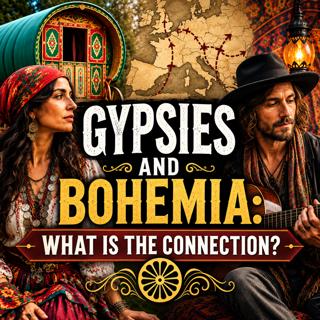
The Gypsies, The Bohemians and The Habsburgs - A Connection Hidden in Plain Sight

The Gypsies, The Bohemians and The Habsburgs - A Connection Hidden in Plain Sight

"Before Bohemian meant artists hippies and boho it was a name attached to people traveling Europe under the protection of kings." The history of Jews, Gypsies, Roma, Bohemia and European royal familie...

5 Syys 1h 17min

NEPAL Flooding: Same Land. Same People. Since 2015, Disaster After Disaster - LAND THEFT on STEROIDS

NEPAL Flooding: Same Land. Same People. Since 2015, Disaster After Disaster - LAND THEFT on STEROIDS

When the people can no longer live on the land, the question becomes: who gets it? Nepal has endured a remarkable sequence of disasters involving earthquakes, floods, landslides, dams, hydropower proj...

31 Elo 50min

Who Designed the Human Body? A CREATOR -or an APE? Darwin Said Your Organs Were Useless. He Was Wrong.

Who Designed the Human Body? A CREATOR -or an APE? Darwin Said Your Organs Were Useless. He Was Wrong.

"Man is descended from a hairy, tailed quadruped, probably arboreal in its habits." — Charles Darwin, The Descent of Man   Darwin, Evolution, and the Human Body Did a Creator design the human body, or...

29 Elo 2h 3min

EBOLA in Congo: The Same Global-Health Network That Ran the Ivermectin Campaign Is Now Fighting Ebola. WTH

EBOLA in Congo: The Same Global-Health Network That Ran the Ivermectin Campaign Is Now Fighting Ebola. WTH

"Trust must be earned, it cannot be assumed. We have not always done things correctly." — WHO Director-General Tedros Adhanom Ghebreyesus, message to the people of the Democratic Republic of the Congo...

25 Elo 1h 28min

Eugenics and Silicon Valley: The Gates Family, Stanford University and William Shockley, Father of Silicon Valley, PROMOTED Eugenics.

Eugenics and Silicon Valley: The Gates Family, Stanford University and William Shockley, Father of Silicon Valley, PROMOTED Eugenics.

"Before you trust someone with the future, look at what they did with the power they already had." - Dianne Emerson   Eugenics and Silicon Valley: The Gates Family, Stanford University and William Sho...

22 Elo 1h 41min

Walter Rodney Exposed How America and Europe Looted Africa. Then He Was Murdered by a Car Bomb.

Walter Rodney Exposed How America and Europe Looted Africa. Then He Was Murdered by a Car Bomb.

"The question as to who and what is responsible for African underdevelopment can be answered at two levels. First, the operation of the imperialist system bears major responsibility for African econom...

13 Elo 35min

Is Ivermectin a BioWeapon from Unit 731? Hundreds of Millions of People. 38 Years in Africa. Over 5 billion Treatments. Merck USA's Largest Drug Donation Program.

Is Ivermectin a BioWeapon from Unit 731? Hundreds of Millions of People. 38 Years in Africa. Over 5 billion Treatments. Merck USA's Largest Drug Donation Program.

"Are we allowing the entire world to become a kill box—where governments can identify, track, and strike people anywhere with little public oversight?"  Ivermectin: 38 Years in Africa. Over 5 Billion ...

7 Elo 4h 2min

Suosittua kategoriassa Koulutus

rss-murhan-anatomia
aamukahvilla
psykopodiaa-podcast
voi-hyvin-meditaatiot-2
rss-luonnollinen-synnytys-podcast
adhd-podi
rss-rahamania
rss-liian-kuuma-peruna
ihminen-tavattavissa-tommy-hellsten-instituutti
psykologia
rss-arkea-ja-aurinkoa-podcast-espanjasta
koulu-podcast-2
kesken
rss-uskonto-on-tylsaa
rss-niinku-asia-on
rss-duodecim-lehti
rss-spessu
rss-valo-minussa-2
rss-psykalab
taytta-tavaraa