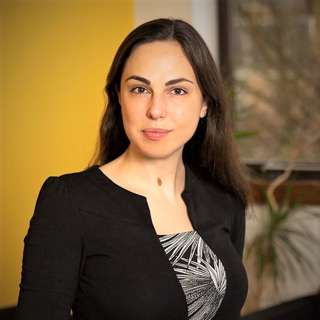
#70 - Dr Cassidy Nelson on the 12 best ways to stop the next pandemic (and limit nCoV)

#70 - Dr Cassidy Nelson on the 12 best ways to stop the next pandemic (and limit nCoV)

nCoV is alarming governments and citizens around the world. It has killed more than 1,000 people, brought the Chinese economy to a standstill, and continues to show up in more and more places. But bad though it is, it's much closer to a warning shot than a worst case scenario. The next emerging infectious disease could easily be more contagious, more fatal, or both.

Despite improvements in the last few decades, humanity is still not nearly prepared enough to contain new diseases. We identify them too slowly. We can't do enough to reduce their spread. And we lack vaccines or drugs treatments for at least a year, if they ever arrive at all.

Links to learn more, summary and full transcript.

This is a precarious situation, especially with advances in biotechnology increasing our ability to modify viruses and bacteria as we like.

In today's episode, Cassidy Nelson, a medical doctor and research scholar at Oxford University's Future of Humanity Institute, explains 12 things her research group think urgently need to happen if we're to keep the risk at acceptable levels. The ideas are:

Science

1. Roll out genetic sequencing tests that lets you test someone for all known and unknown pathogens in one go.
2. Fund research into faster ‘platform’ methods for going from pathogen to vaccine, perhaps using innovation prizes.
3. Fund R&D into broad-spectrum drugs, especially antivirals, similar to how we have generic antibiotics against multiple types of bacteria.

Response

4. Develop a national plan for responding to a severe pandemic, regardless of the cause. Have a backup plan for when things are so bad the normal processes have stopped working entirely.
5. Rigorously evaluate in what situations travel bans are warranted. (They're more often counterproductive.)
6. Coax countries into more rapidly sharing their medical data, so that during an outbreak the disease can be understood and countermeasures deployed as quickly as possible.
7. Set up genetic surveillance in hospitals, public transport and elsewhere, to detect new pathogens before an outbreak — or even before patients develop symptoms.
8. Run regular tabletop exercises within governments to simulate how a pandemic response would play out.

Oversight

9. Mandate disclosure of accidents in the biosafety labs which handle the most dangerous pathogens.
10. Figure out how to govern DNA synthesis businesses, to make it harder to mail order the DNA of a dangerous pathogen.
11. Require full cost-benefit analysis of 'dual-use' research projects that can generate global risks.

12. And finally, to maintain momentum, it's necessary to clearly assign responsibility for the above to particular individuals and organisations.

These advances can be pursued by politicians and public servants, as well as academics, entrepreneurs and doctors, opening the door for many listeners to pitch in to help solve this incredibly pressing problem.

In the episode Rob and Cassidy also talk about:

• How Cassidy went from clinical medicine to a PhD studying novel pathogens with pandemic potential.
• The pros, and significant cons, of travel restrictions.
• Whether the same policies work for natural and anthropogenic pandemics.
• Ways listeners can pursue a career in biosecurity.
• Where we stand with nCoV as of today.

Chapters:

  • Rob’s intro (00:00:00)
  • The interview begins (00:03:27)
  • Where we stand with nCov today (00:07:24)
  • Policy idea 1: A drastic change to diagnostic testing (00:34:58)
  • Policy idea 2: Vaccine platforms (00:47:08)
  • Policy idea 3: Broad-spectrum therapeutics (00:54:48)
  • Policy idea 4: Develop a national plan for responding to a severe pandemic, regardless of the cause (01:02:15)
  • Policy idea 5: A different approach to travel bans (01:15:59)
  • Policy idea 6: Data sharing (01:16:48)
  • Policy idea 7: Prevention (01:24:45)
  • Policy idea 8: transparency around lab accidents (01:33:58)
  • Policy idea 9: DNA synthesis screening (01:39:22)
  • Policy idea 10: Dual Use Research oversight (01:48:47)
  • Policy idea 11: Pandemic tabletop exercises (02:00:00)
  • Policy idea 12: Coordination (02:12:20)


Get this episode by subscribing: type 80,000 Hours into your podcasting app. Or read the linked transcript.

Producer: Keiran Harris.
Transcriptions: Zakee Ulhaq.

Jaksot(324)

Rob Wiblin on the art/science of a high impact career

Rob Wiblin on the art/science of a high impact career

Today's episode is a cross-post of an interview I did with The Jolly Swagmen Podcast which came out this week. I recommend regular listeners skip to 24 minutes in to avoid hearing things they already ...

8 Kesä 20181h 31min
#34 - We use the worst voting system that exists. Here's how Aaron Hamlin is going to fix it.

#34 - We use the worst voting system that exists. Here's how Aaron Hamlin is going to fix it.

In 1991 Edwin Edwards won the Louisiana gubernatorial election. In 2001, he was found guilty of racketeering and received a 10 year invitation to Federal prison. The strange thing about that election?...

1 Kesä 20182h 18min
#33 - Anders Sandberg on what if we ended ageing, solar flares & the annual risk of nuclear war

#33 - Anders Sandberg on what if we ended ageing, solar flares & the annual risk of nuclear war

Joseph Stalin had a life-extension program dedicated to making himself immortal. What if he had succeeded?  According to our last guest, Bryan Caplan, there’s an 80% chance that Stalin would still be ...

29 Touko 20181h 24min
#32 - Bryan Caplan on whether his Case Against Education holds up, totalitarianism, & open borders

#32 - Bryan Caplan on whether his Case Against Education holds up, totalitarianism, & open borders

Bryan Caplan’s claim in *The Case Against Education* is striking: education doesn’t teach people much, we use little of what we learn, and college is mostly about trying to seem smarter than other peo...

22 Touko 20182h 25min
#31 - Allan Dafoe on defusing the political & economic risks posed by existing AI capabilities

#31 - Allan Dafoe on defusing the political & economic risks posed by existing AI capabilities

The debate around the impacts of artificial intelligence often centres on ‘superintelligence’ - a general intellect that is much smarter than the best humans, in practically every field. But according...

18 Touko 201848min
#30 - Eva Vivalt on how little social science findings generalize from one study to another

#30 - Eva Vivalt on how little social science findings generalize from one study to another

If we have a study on the impact of a social program in a particular place and time, how confident can we be that we’ll get a similar result if we study the same program again somewhere else? Dr Eva V...

15 Touko 20182h 1min
#29 - Anders Sandberg on 3 new resolutions for the Fermi paradox & how to colonise the universe

#29 - Anders Sandberg on 3 new resolutions for the Fermi paradox & how to colonise the universe

Part 2 out now: #33 - Dr Anders Sandberg on what if we ended ageing, solar flares & the annual risk of nuclear war The universe is so vast, yet we don’t see any alien civilizations. If they exist, whe...

8 Touko 20181h 21min

#28 - Owen Cotton-Barratt on why scientists should need insurance, PhD strategy & fast AI progresses

#28 - Owen Cotton-Barratt on why scientists should need insurance, PhD strategy & fast AI progresses

A researcher is working on creating a new virus – one more dangerous than any that exist naturally. They believe they’re being as careful as possible. After all, if things go wrong, their own life and...

27 Huhti 20181h 3min

Suosittua kategoriassa Koulutus

rss-murhan-anatomia
voi-hyvin-meditaatiot-2
rss-narsisti
psykopodiaa-podcast
adhd-podi
rss-vapaudu-voimaasi
rss-niinku-asia-on
psykologia
rss-duodecim-lehti
rss-valo-minussa-2
aamukahvilla
rss-uskonto-on-tylsaa
kesken
koulu-podcast-2
rss-liian-kuuma-peruna
rahapuhetta
jari-sarasvuo-podcast
filocast-filosofian-perusteet
rss-turun-yliopisto
rss-opi-espanjaa