
#169 – Paul Niehaus on whether cash transfers cause economic growth, and keeping theft to acceptable levels

#169 – Paul Niehaus on whether cash transfers cause economic growth, and keeping theft to acceptable levels

"One of our earliest supporters and a dear friend of mine, Mark Lampert, once said to me, “The way I think about it is, imagine that this money were already in the hands of people living in poverty. If I could, would I want to tax it and then use it to finance other projects that I think would benefit them?”

I think that's an interesting thought experiment -- and a good one -- to say, “Are there cases in which I think that's justifiable?” — Paul Niehaus

In today’s episode, host Luisa Rodriguez interviews Paul Niehaus — co-founder of GiveDirectly — on the case for giving unconditional cash to the world's poorest households.

Links to learn more, summary and full transcript.

They cover:

  • The empirical evidence on whether giving cash directly can drive meaningful economic growth
  • How the impacts of GiveDirectly compare to USAID employment programmes
  • GiveDirectly vs GiveWell’s top-recommended charities
  • How long-term guaranteed income affects people's risk-taking and investments
  • Whether recipients prefer getting lump sums or monthly instalments
  • How GiveDirectly tackles cases of fraud and theft
  • The case for universal basic income, and GiveDirectly’s UBI studies in Kenya, Malawi, and Liberia
  • The political viability of UBI
  • Plenty more

Chapters:

  • Cold open (00:00:00)
  • Luisa’s intro (00:00:58)
  • The basic case for giving cash directly to the poor (00:03:28)
  • Comparing GiveDirectly to USAID programmes (00:15:42)
  • GiveDirectly vs GiveWell’s top-recommended charities (00:35:16)
  • Cash might be able to drive economic growth (00:41:59)
  • Fraud and theft of GiveDirectly funds (01:09:48)
  • Universal basic income studies (01:22:33)
  • Skyjo (01:44:43)


Producer and editor: Keiran Harris
Audio Engineering Lead: Ben Cordell
Technical editing: Dominic Armstrong and Milo McGuire
Additional content editing: Luisa Rodriguez and Katy Moore
Transcriptions: Katy Moore

Jaksot(324)

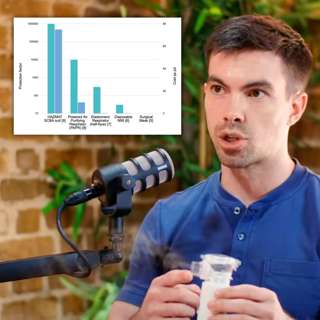
#224 – There's a cheap and low-tech way to save humanity from any engineered disease | Andrew Snyder-Beattie

#224 – There's a cheap and low-tech way to save humanity from any engineered disease | Andrew Snyder-Beattie

Conventional wisdom is that safeguarding humanity from the worst biological risks — microbes optimised to kill as many as possible — is difficult bordering on impossible, making bioweapons humanity’s ...

2 Loka 20252h 31min
Inside the Biden admin’s AI policy approach | Jake Sullivan, Biden’s NSA | via The Cognitive Revolution

Inside the Biden admin’s AI policy approach | Jake Sullivan, Biden’s NSA | via The Cognitive Revolution

Jake Sullivan was the US National Security Advisor from 2021-2025. He joined our friends on The Cognitive Revolution podcast in August to discuss AI as a critical national security issue. We thought i...

26 Syys 20251h 5min
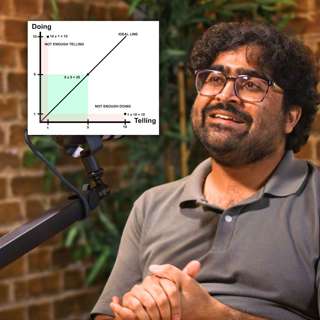
#223 – Neel Nanda on leading a Google DeepMind team at 26 – and advice if you want to work at an AI company (part 2)

#223 – Neel Nanda on leading a Google DeepMind team at 26 – and advice if you want to work at an AI company (part 2)

At 26, Neel Nanda leads an AI safety team at Google DeepMind, has published dozens of influential papers, and mentored 50 junior researchers — seven of whom now work at major AI companies. His secret?...

15 Syys 20251h 46min
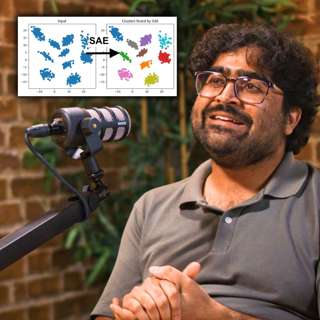
#222 – Can we tell if an AI is loyal by reading its mind? DeepMind's Neel Nanda (part 1)

#222 – Can we tell if an AI is loyal by reading its mind? DeepMind's Neel Nanda (part 1)

We don’t know how AIs think or why they do what they do. Or at least, we don’t know much. That fact is only becoming more troubling as AIs grow more capable and appear on track to wield enormous cultu...

8 Syys 20253h 1min

#221 – Kyle Fish on the most bizarre findings from 5 AI welfare experiments

#221 – Kyle Fish on the most bizarre findings from 5 AI welfare experiments

What happens when you lock two AI systems in a room together and tell them they can discuss anything they want?According to experiments run by Kyle Fish — Anthropic’s first AI welfare researcher — som...

28 Elo 20252h 28min

How not to lose your job to AI (article by Benjamin Todd)

How not to lose your job to AI (article by Benjamin Todd)

About half of people are worried they’ll lose their job to AI. They’re right to be concerned: AI can now complete real-world coding tasks on GitHub, generate photorealistic video, drive a taxi more sa...

31 Heinä 202551min

Rebuilding after apocalypse: What 13 experts say about bouncing back

Rebuilding after apocalypse: What 13 experts say about bouncing back

What happens when civilisation faces its greatest tests?This compilation brings together insights from researchers, defence experts, philosophers, and policymakers on humanity’s ability to survive and...

15 Heinä 20254h 26min

#220 – Ryan Greenblatt on the 4 most likely ways for AI to take over, and the case for and against AGI in <8 years

#220 – Ryan Greenblatt on the 4 most likely ways for AI to take over, and the case for and against AGI in <8 years

Ryan Greenblatt — lead author on the explosive paper “Alignment faking in large language models” and chief scientist at Redwood Research — thinks there’s a 25% chance that within four years, AI will b...

8 Heinä 20252h 50min

Suosittua kategoriassa Koulutus

rss-murhan-anatomia
voi-hyvin-meditaatiot-2
rss-narsisti
psykopodiaa-podcast
adhd-podi
rss-vapaudu-voimaasi
rss-niinku-asia-on
psykologia
rss-duodecim-lehti
rss-valo-minussa-2
aamukahvilla
rss-uskonto-on-tylsaa
kesken
koulu-podcast-2
rss-liian-kuuma-peruna
rahapuhetta
jari-sarasvuo-podcast
filocast-filosofian-perusteet
rss-turun-yliopisto
rss-opi-espanjaa