#112 Classic episode – Carl Shulman on the common-sense case for existential risk work and its practical implications

#112 Classic episode – Carl Shulman on the common-sense case for existential risk work and its practical implications

Preventing the apocalypse may sound like an idiosyncratic activity, and it sometimes is justified on exotic grounds, such as the potential for humanity to become a galaxy-spanning civilisation.

But the policy of US government agencies is already to spend up to $4 million to save the life of a citizen, making the death of all Americans a $1,300,000,000,000,000 disaster.

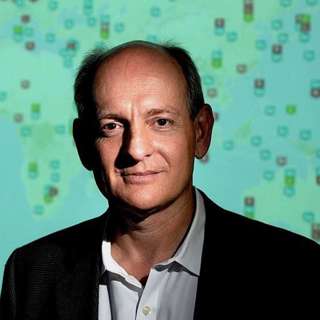
According to Carl Shulman, research associate at Oxford University’s Future of Humanity Institute, that means you don’t need any fancy philosophical arguments about the value or size of the future to justify working to reduce existential risk — it passes a mundane cost-benefit analysis whether or not you place any value on the long-term future.

Rebroadcast: this episode was originally released in October 2021.

Links to learn more, summary, and full transcript.

The key reason to make it a top priority is factual, not philosophical. That is, the risk of a disaster that kills billions of people alive today is alarmingly high, and it can be reduced at a reasonable cost. A back-of-the-envelope version of the argument runs:

  • The US government is willing to pay up to $4 million (depending on the agency) to save the life of an American.
  • So saving all US citizens at any given point in time would be worth $1,300 trillion.
  • If you believe that the risk of human extinction over the next century is something like one in six (as Toby Ord suggests is a reasonable figure in his book The Precipice), then it would be worth the US government spending up to $2.2 trillion to reduce that risk by just 1%, in terms of American lives saved alone.
  • Carl thinks it would cost a lot less than that to achieve a 1% risk reduction if the money were spent intelligently. So it easily passes a government cost-benefit test, with a very big benefit-to-cost ratio — likely over 1000:1 today.

This argument helped NASA get funding to scan the sky for any asteroids that might be on a collision course with Earth, and it was directly promoted by famous economists like Richard Posner, Larry Summers, and Cass Sunstein.

If the case is clear enough, why hasn’t it already motivated a lot more spending or regulations to limit existential risks — enough to drive down what any additional efforts would achieve?

Carl thinks that one key barrier is that infrequent disasters are rarely politically salient. Research indicates that extra money is spent on flood defences in the years immediately following a massive flood — but as memories fade, that spending quickly dries up. Of course the annual probability of a disaster was the same the whole time; all that changed is what voters had on their minds.

Carl suspects another reason is that it’s difficult for the average voter to estimate and understand how large these respective risks are, and what responses would be appropriate rather than self-serving. If the public doesn’t know what good performance looks like, politicians can’t be given incentives to do the right thing.

It’s reasonable to assume that if we found out a giant asteroid were going to crash into the Earth one year from now, most of our resources would be quickly diverted into figuring out how to avert catastrophe.

But even in the case of COVID-19, an event that massively disrupted the lives of everyone on Earth, we’ve still seen a substantial lack of investment in vaccine manufacturing capacity and other ways of controlling the spread of the virus, relative to what economists recommended.

Carl expects that all the reasons we didn’t adequately prepare for or respond to COVID-19 — with excess mortality over 15 million and costs well over $10 trillion — bite even harder when it comes to threats we’ve never faced before, such as engineered pandemics, risks from advanced artificial intelligence, and so on.

Today’s episode is in part our way of trying to improve this situation. In today’s wide-ranging conversation, Carl and Rob also cover:

  • A few reasons Carl isn’t excited by ‘strong longtermism’
  • How x-risk reduction compares to GiveWell recommendations
  • Solutions for asteroids, comets, supervolcanoes, nuclear war, pandemics, and climate change
  • The history of bioweapons
  • Whether gain-of-function research is justifiable
  • Successes and failures around COVID-19
  • The history of existential risk
  • And much more

Producer: Keiran Harris
Audio mastering: Ben Cordell
Transcriptions: Katy Moore

Jaksot(325)

#85 - Mark Lynas on climate change, societal collapse & nuclear energy

#85 - Mark Lynas on climate change, societal collapse & nuclear energy

A golf-ball sized lump of uranium can deliver more than enough power to cover all of your lifetime energy use. To get the same energy from coal, you’d need 3,200 tonnes of black rock — a mass equivale...

20 Elo 20202h 8min

#84 – Shruti Rajagopalan on what India did to stop COVID-19 and how well it worked

#84 – Shruti Rajagopalan on what India did to stop COVID-19 and how well it worked

When COVID-19 struck the US, everyone was told that hand sanitizer needed to be saved for healthcare professionals, so they should just wash their hands instead. But in India, many homes lack reliable...

13 Elo 20202h 58min
#83 - Jennifer Doleac on preventing crime without police and prisons

#83 - Jennifer Doleac on preventing crime without police and prisons

The killing of George Floyd has prompted a great deal of debate over whether the US should reduce the size of its police departments. The research literature suggests that the presence of police offic...

31 Heinä 20202h 23min
#82 – James Forman Jr on reducing the cruelty of the US criminal legal system

#82 – James Forman Jr on reducing the cruelty of the US criminal legal system

No democracy has ever incarcerated as many people as the United States. To get its incarceration rate down to the global average, the US would have to release 3 in 4 people in its prisons today.  The ...

27 Heinä 20201h 28min

#81 - Ben Garfinkel on scrutinising classic AI risk arguments

#81 - Ben Garfinkel on scrutinising classic AI risk arguments

80,000 Hours, along with many other members of the effective altruism movement, has argued that helping to positively shape the development of artificial intelligence may be one of the best ways to ha...

9 Heinä 20202h 38min

Advice on how to read our advice (Article)

Advice on how to read our advice (Article)

This is the fourth release in our new series of audio articles. If you want to read the original article or check out the links within it, you can find them here. "We’ve found that readers sometimes...

29 Kesä 202015min
#80 – Stuart Russell on why our approach to AI is broken and how to fix it

#80 – Stuart Russell on why our approach to AI is broken and how to fix it

Stuart Russell, Professor at UC Berkeley and co-author of the most popular AI textbook, thinks the way we approach machine learning today is fundamentally flawed. In his new book, Human Compatible, he...

22 Kesä 20202h 13min

What anonymous contributors think about important life and career questions (Article)

What anonymous contributors think about important life and career questions (Article)

Today we’re launching the final entry of our ‘anonymous answers' series on the website. It features answers to 23 different questions including “How have you seen talented people fail in their work?...

5 Kesä 202037min

Suosittua kategoriassa Koulutus

rss-murhan-anatomia
rss-narsisti
voi-hyvin-meditaatiot-2
psykopodiaa-podcast
adhd-podi
rss-niinku-asia-on
rss-valo-minussa-2
rss-rahamania
rss-vapaudu-voimaasi
mielipaivakirja
aamukahvilla
rahapuhetta
kesken
psykologia
rss-koira-haudattuna
ilona-rauhala
nakokulmia-rikollisuudesta-irrottautumiseen
rss-keskeneraiset-aidit
rss-tietoinen-yhteys-podcast-2
rss-arkea-ja-aurinkoa-podcast-espanjasta