
#212 – Allan Dafoe on why technology is unstoppable & how to shape AI development anyway

#212 – Allan Dafoe on why technology is unstoppable & how to shape AI development anyway

Technology doesn’t force us to do anything — it merely opens doors. But military and economic competition pushes us through.

That’s how today’s guest Allan Dafoe — director of frontier safety and governance at Google DeepMind — explains one of the deepest patterns in technological history: once a powerful new capability becomes available, societies that adopt it tend to outcompete those that don’t. Those who resist too much can find themselves taken over or rendered irrelevant.

Links to learn more, highlights, video, and full transcript.

This dynamic played out dramatically in 1853 when US Commodore Perry sailed into Tokyo Bay with steam-powered warships that seemed magical to the Japanese, who had spent centuries deliberately limiting their technological development. With far greater military power, the US was able to force Japan to open itself to trade. Within 15 years, Japan had undergone the Meiji Restoration and transformed itself in a desperate scramble to catch up.

Today we see hints of similar pressure around artificial intelligence. Even companies, countries, and researchers deeply concerned about where AI could take us feel compelled to push ahead — worried that if they don’t, less careful actors will develop transformative AI capabilities at around the same time anyway.

But Allan argues this technological determinism isn’t absolute. While broad patterns may be inevitable, history shows we do have some ability to steer how technologies are developed, by who, and what they’re used for first.

As part of that approach, Allan has been promoting efforts to make AI more capable of sophisticated cooperation, and improving the tests Google uses to measure how well its models could do things like mislead people, hack and take control of their own servers, or spread autonomously in the wild.

As of mid-2024 they didn’t seem dangerous at all, but we’ve learned that our ability to measure these capabilities is good, but imperfect. If we don’t find the right way to ‘elicit’ an ability we can miss that it’s there.

Subsequent research from Anthropic and Redwood Research suggests there’s even a risk that future models may play dumb to avoid their goals being altered.

That has led DeepMind to a “defence in depth” approach: carefully staged deployment starting with internal testing, then trusted external testers, then limited release, then watching how models are used in the real world. By not releasing model weights, DeepMind is able to back up and add additional safeguards if experience shows they’re necessary.

But with much more powerful and general models on the way, individual company policies won’t be sufficient by themselves. Drawing on his academic research into how societies handle transformative technologies, Allan argues we need coordinated international governance that balances safety with our desire to get the massive potential benefits of AI in areas like healthcare and education as quickly as possible.

Host Rob and Allan also cover:

  • The most exciting beneficial applications of AI
  • Whether and how we can influence the development of technology
  • What DeepMind is doing to evaluate and mitigate risks from frontier AI systems
  • Why cooperative AI may be as important as aligned AI
  • The role of democratic input in AI governance
  • What kinds of experts are most needed in AI safety and governance
  • And much more

Chapters:

  • Cold open (00:00:00)
  • Who's Allan Dafoe? (00:00:48)
  • Allan's role at DeepMind (00:01:27)
  • Why join DeepMind over everyone else? (00:04:27)
  • Do humans control technological change? (00:09:17)
  • Arguments for technological determinism (00:20:24)
  • The synthesis of agency with tech determinism (00:26:29)
  • Competition took away Japan's choice (00:37:13)
  • Can speeding up one tech redirect history? (00:42:09)
  • Structural pushback against alignment efforts (00:47:55)
  • Do AIs need to be 'cooperatively skilled'? (00:52:25)
  • How AI could boost cooperation between people and states (01:01:59)
  • The super-cooperative AGI hypothesis and backdoor risks (01:06:58)
  • Aren’t today’s models already very cooperative? (01:13:22)
  • How would we make AIs cooperative anyway? (01:16:22)
  • Ways making AI more cooperative could backfire (01:22:24)
  • AGI is an essential idea we should define well (01:30:16)
  • It matters what AGI learns first vs last (01:41:01)
  • How Google tests for dangerous capabilities (01:45:39)
  • Evals 'in the wild' (01:57:46)
  • What to do given no single approach works that well (02:01:44)
  • We don't, but could, forecast AI capabilities (02:05:34)
  • DeepMind's strategy for ensuring its frontier models don't cause harm (02:11:25)
  • How 'structural risks' can force everyone into a worse world (02:15:01)
  • Is AI being built democratically? Should it? (02:19:35)
  • How much do AI companies really want external regulation? (02:24:34)
  • Social science can contribute a lot here (02:33:21)
  • How AI could make life way better: self-driving cars, medicine, education, and sustainability (02:35:55)

Video editing: Simon Monsour
Audio engineering: Ben Cordell, Milo McGuire, Simon Monsour, and Dominic Armstrong
Camera operator: Jeremy Chevillotte
Transcriptions: Katy Moore

Jaksot(332)

#131 – Lewis Dartnell on getting humanity to bounce back faster in a post-apocalyptic world

#131 – Lewis Dartnell on getting humanity to bounce back faster in a post-apocalyptic world

“We’re leaving these 16 contestants on an island with nothing but what they can scavenge from an abandoned factory and apartment block. Over the next 365 days, they’ll try to rebuild as much of civili...

3 Kesä 20221h 5min

#130 – Will MacAskill on balancing frugality with ambition, whether you need longtermism, & mental health under pressure

#130 – Will MacAskill on balancing frugality with ambition, whether you need longtermism, & mental health under pressure

Imagine you lead a nonprofit that operates on a shoestring budget. Staff are paid minimum wage, lunch is bread and hummus, and you're all bunched up on a few tables in a basement office. But over a fe...

23 Touko 20222h 16min
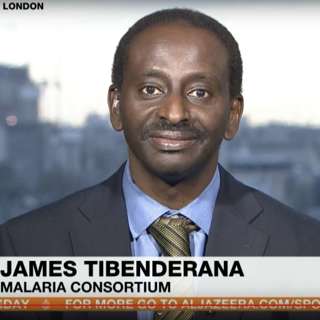
#129 – James Tibenderana on the state of the art in malaria control and elimination

#129 – James Tibenderana on the state of the art in malaria control and elimination

The good news is deaths from malaria have been cut by a third since 2005. The bad news is it still causes 250 million cases and 600,000 deaths a year, mostly among young children in sub-Saharan Africa...

9 Touko 20223h 19min
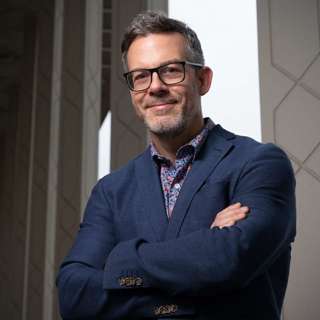
#128 – Chris Blattman on the five reasons wars happen

#128 – Chris Blattman on the five reasons wars happen

In nature, animals roar and bare their teeth to intimidate adversaries — but one side usually backs down, and real fights are rare. The wisdom of evolution is that the risk of violence is just too gre...

28 Huhti 20222h 46min

#127 – Sam Bankman-Fried on taking a high-risk approach to crypto and doing good

#127 – Sam Bankman-Fried on taking a high-risk approach to crypto and doing good

On this episode of the show, host Rob Wiblin interviews Sam Bankman-Fried. This interview was recorded in February 2022, and released in April 2022. But on November 11 2022, Sam Bankman-Fried's co...

14 Huhti 20223h 20min

#126 – Bryan Caplan on whether lazy parenting is OK, what really helps workers, and betting on beliefs

#126 – Bryan Caplan on whether lazy parenting is OK, what really helps workers, and betting on beliefs

Everybody knows that good parenting has a big impact on how kids turn out. Except that maybe they don't, because it doesn't.Incredible though it might seem, according to today's guest — economist Brya...

5 Huhti 20222h 15min

#125 – Joan Rohlfing on how to avoid catastrophic nuclear blunders

#125 – Joan Rohlfing on how to avoid catastrophic nuclear blunders

Since the Soviet Union split into different countries in 1991, the pervasive fear of catastrophe that people lived with for decades has gradually faded from memory, and nuclear warhead stockpiles have...

29 Maalis 20222h 13min

#124 – Karen Levy on fads and misaligned incentives in global development, and scaling deworming to reach hundreds of millions

#124 – Karen Levy on fads and misaligned incentives in global development, and scaling deworming to reach hundreds of millions

If someone said a global health and development programme was sustainable, participatory, and holistic, you'd have to guess that they were saying something positive. But according to today's guest Kar...

21 Maalis 20223h 9min

Suosittua kategoriassa Koulutus

rss-murhan-anatomia
psykopodiaa-podcast
voi-hyvin-meditaatiot-2
psykologia
adhd-podi
rss-rahamania
rss-liian-kuuma-peruna
rss-valo-minussa-2
rss-tietoinen-yhteys-podcast-2
kesken
rss-arkea-ja-aurinkoa-podcast-espanjasta
rahapuhetta
rss-niinku-asia-on
rss-narsisti
dear-ladies
rss-duodecim-lehti
rss-eron-alkemiaa
rss-vapaudu-voimaasi
koodikahvit
leikitaanko-laakaria