Cosmic Messengers: Exploring the Origins of KM3-230213A

Cosmic Messengers: Exploring the Origins of KM3-230213A

**Introduction:**

* A recent ultra-high-energy neutrino event, named KM3-230213A, was detected by the KM3NeT/ARCA detector.

* This event has sparked interest in the scientific community, as its origin is still unclear.

* The neutrino's high energy suggests it may have come from a very powerful cosmic source.

* The event was detected on February 13, 2023.

* The podcast explores two potential origins for this neutrino event: galactic sources and cosmogenic neutrinos.


**Galactic Origin:**

* The study investigates potential galactic sources such as supernova remnants (SNRs), X-ray binaries, and microquasars.

* **No nearby sources from HAWC or LHAASO were found, imposing stringent constraints on potential astrophysical sources**.

* The study also looks at known gamma-ray sources from catalogs such as 4FGL-DR4, 3HWC, and 1LHAASO.

* Researchers explored the possibility of the neutrino originating from blazars, which are active galactic nuclei (AGN) with jets pointed towards Earth.

* **Seventeen blazar candidates were identified within the 99% confidence region of the neutrino event**.

* The study examined multiwavelength data, including radio, X-ray, and gamma-ray observations, to characterize these blazars.

* **A major radio flare from blazar PMN J0606-0724 was found to be coincident with the neutrino event, with a time difference of five days**, which is considered statistically uncommon.

* The chance probability of this coincidence is estimated to be 0.26%, which suggests a possible association, but is not conclusive.

* Other blazars, such as MRC0614-083, also showed flaring activity in the X-ray band around the time of the neutrino detection.

* **It is not possible to conclusively associate the neutrino with a specific blazar due to the size of the neutrino direction uncertainty region, encompassing seventeen blazar candidates**.


**Cosmogenic Origin:**

* The study explores the possibility that the neutrino is cosmogenic, produced by the interaction of ultra-high-energy cosmic rays (UHECRs) with the cosmic microwave background (CMB) or the extragalactic background light (EBL).

* Cosmogenic neutrinos are expected from the interactions of cosmic rays with photons.

* The paper examines how the expected cosmogenic neutrino flux can be enhanced, starting from a minimal scenario.

* The study considers the effects of different models for the EBL and the photo-disintegration cross section, and concludes that these uncertainties do not significantly impact the results.

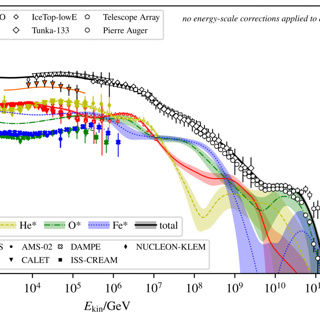
* **The study compares the spectra of neutrinos produced in the nearby and far-away Universe**.


**Conclusion:**

* The origin of KM3-230213A remains an open question.

* While a specific source cannot be pinpointed, the study provides valuable insights into potential galactic and cosmogenic origins of such high-energy neutrino events.

* Further studies and observations are needed to determine the precise origin of this neutrino.


**Reference:**

* The information presented is based on the following three articles:

* "On the Potential Galactic Origin of the Ultra-High-Energy Event KM3-230213A"

* "Characterising Candidate Blazar Counterparts of the Ultra-High-Energy Event KM3-230213A"

* "On the potential cosmogenic origin of the ultra-high-energy event KM3-230213A"


Acknowledements: Podcast prepared with Google/NotebookLM. Illustration credits: KM3NeT

Tämä jakso on lisätty Podme-palveluun avoimen RSS-syötteen kautta eikä se ole Podmen omaa tuotantoa. Siksi jakso saattaa sisältää mainontaa.

Jaksot(112)

Peering Through the Ice: The Milky Way’s High-Energy Neutrino Signal

Peering Through the Ice: The Milky Way’s High-Energy Neutrino Signal

Peering Through the Ice: The Milky Way’s High-Energy Neutrino Signal Episode Summary: In this episode, we explore a major breakthrough in astrophysics: the IceCube Neutrino Observatory has established...

31 Heinä 20min

The Schmidt Observatory System unlocking the Transient Universe

The Schmidt Observatory System unlocking the Transient Universe

In this episode, we dive into the Eric and Wendy Schmidt Observatory System, a groundbreaking initiative designed to pioneer a new paradigm for astronomical research through rapid development, modular...

27 Heinä 21min

GUANO, NITRATES, and GLIMPSE: The Pipelines Powering Multi-Messenger Astronomy

GUANO, NITRATES, and GLIMPSE: The Pipelines Powering Multi-Messenger Astronomy

In this episode, we dive into the cutting-edge of time-domain and multi-messenger astrophysics with a deep look at BAT-GLIMPSE, a revolutionary new open-source pipeline developed for the Neil Gehrels ...

20 Heinä 20min

The Dynamic Radio Sky: Unveiling Transients with the SKAO

The Dynamic Radio Sky: Unveiling Transients with the SKAO

Welcome to a deep dive into the fast-paced, explosive universe of time-domain astronomy! In this episode, we explore how the upcoming Square Kilometre Array Observatory (SKAO) will revolutionize our u...

13 Heinä 19min

X-Raying the Earth: Neutrino Tomography at the South Pole

X-Raying the Earth: Neutrino Tomography at the South Pole

Welcome back to the podcast! Today, we are exploring a groundbreaking new way scientists are looking deep inside our planet. For a century, our understanding of the Earth's interior has relied almost ...

8 Heinä 23min

SVOM's First Year: From Gamma-Ray Bursts to Blazars

SVOM's First Year: From Gamma-Ray Bursts to Blazars

In this episode, we dive into the exciting early results from the SVOM (Space-based multi-band astronomical Variable Objects Monitor) mission, which launched in June 2024. Originally designed to hunt ...

6 Heinä 20min

SN 2024jlc: Bridging the Gap Between Supernova Classes

SN 2024jlc: Bridging the Gap Between Supernova Classes

In this episode, we dive into the fascinating discovery of SN 2024jlc, one of the closest and least luminous super-luminous supernovae (SLSNe) ever found. We explore how this extraordinary event is ch...

3 Heinä 20min

Cosmic Accelerators: Unlocking the Secrets of Microquasar GRS 1915+105

Cosmic Accelerators: Unlocking the Secrets of Microquasar GRS 1915+105

In this episode, we dive into the extreme and fascinating world of microquasars—binary systems where a compact object, like a black hole, feeds off a companion star and launches powerful, relativistic...

26 Kesä 20min

Suosittua kategoriassa Tiede

rss-poliisin-mieli
tiedekulma-podcast
rss-mita-tulisi-tietaa
rss-tiedetta-vai-tarinaa
utelias-mieli
rss-kasvikutsut
filocast-filosofian-perusteet
rss-ranskaa-raakana
rss-ylistys-elaimille
rss-ammamafia
rss-astetta-parempi-elama-podcast
mielipaivakirja
hippokrateen-vastaanotolla
rss-duodecim-lehti
rss-tervetta-skeptisyytta
rss-radplus