A Glimpse into the Early Universe with FRB 20240304B

A Glimpse into the Early Universe with FRB 20240304B

Join us as we explore the groundbreaking discovery of FRB 20240304B, the most distant Fast Radio Burst (FRB) ever detected, offering unprecedented insights into the early universe.


In this episode, we discuss:

• What are Fast Radio Bursts (FRBs)? These enigmatic, millisecond-duration radio signals provide unique information about the plasma permeating our universe, revealing details about magnetic fields and gas distributions.

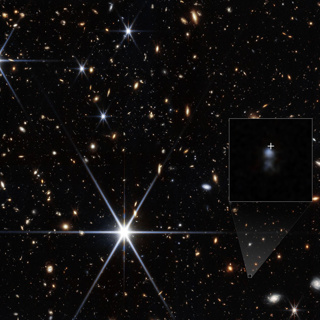
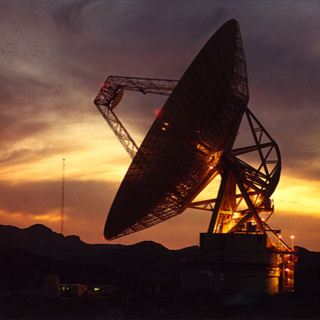
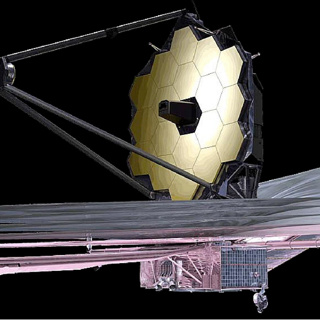
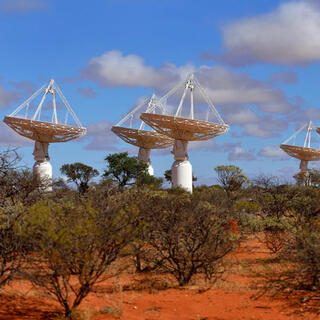
• The Record-Breaking Discovery: FRB 20240304B was detected by the MeerKAT radio telescope and precisely localized to a host galaxy using the James Webb Space Telescope (JWST).

• A Journey Back in Time: This FRB originates at a redshift of 2.148 ± 0.001, meaning it occurred just 3 billion years after the Big Bang. This discovery doubles the redshift reach of localized FRBs and marks the first FRB detected at "cosmic noon," a peak era of galaxy formation.

• The Host Galaxy's Secrets: FRB 20240304B was traced to a low-mass, clumpy, star-forming galaxy with low metallicity, estimated to be very young with a stellar formation timescale of around 51.7 million years. This makes it atypical compared to previously observed FRB host galaxies.

• Unveiling the Progenitor: The host galaxy's properties – its low stellar mass, active star formation, and low metallicity – strongly favor short-delay time progenitor models, such as those involving young magnetars born in supernovae. This supports the idea that FRB birth rates could trace the cosmic star-formation history.

• Probing the Cosmic Web: The sightline of FRB 20240304B intersects cosmic structures like the Virgo Cluster and a foreground galaxy group, revealing complex magnetic field environments over vast scales. These structures contribute significantly to the FRB's dispersion measure (DM).

• A Critical Milestone: This detection highlights the power of FRBs as cosmological probes, allowing astronomers to trace the distribution of ionized matter and gain insights into galaxy evolution during the universe's most active era. MeerKAT's unique sensitivity was crucial, demonstrating its capability to explore the z > 2 universe.


Reference: Caleb, M., Nanayakkara, T., Stappers, B., et al. (2024). A fast radio burst from the first 3 billion years of the Universe. Excerpts from "2508.01648v1_FRB20240304B.pdf".


Acknowledements: Podcast prepared with Google/NotebookLM. Illustration credits: Danielle Futselaar for MeerTRAP

Tämä jakso on lisätty Podme-palveluun avoimen RSS-syötteen kautta eikä se ole Podmen omaa tuotantoa. Siksi jakso saattaa sisältää mainontaa.

Jaksot(101)

Record-Breaker: Catching Gamma Rays from the Distant Quasar OP 313

Record-Breaker: Catching Gamma Rays from the Distant Quasar OP 313

In this episode, we dive into a groundbreaking astronomical discovery: the detection of very-high-energy (VHE) gamma rays from the quasar OP 313. Located at a redshift of $z = 0.997$, OP 313 has shatt...

1 Kesä 20min

Ripples in Spacetime: Unpacking the GWTC-5.0 Catalog

Ripples in Spacetime: Unpacking the GWTC-5.0 Catalog

In this episode, we dive into the monumental release of the Gravitational-Wave Transient Catalog version 5.0 (GWTC-5.0) and the open data from the second part of the fourth observing run (O4b) by the ...

29 Touko 21min

SN 2017egm : Fermi-LAT's Breakthrough Gamma-Ray Detection

SN 2017egm : Fermi-LAT's Breakthrough Gamma-Ray Detection

In today’s episode, we dive into the mystery of superluminous supernovae (SLSNe)—rare, extreme astronomical events that shine 10 to 100 times brighter than standard core-collapse supernovae. For years...

22 Touko 23min

Supernovae on the RISE: Why Dead Stars Wake Up Decades Later

Supernovae on the RISE: Why Dead Stars Wake Up Decades Later

In this episode, we explore the fascinating phenomenon of core-collapse supernovae that refuse to fade away quietly. Years, or even decades, after their initial explosion, some of these stellar deaths...

20 Touko 17min

The SVOM Satellite: A New Era in Multi-Messenger Astronomy

The SVOM Satellite: A New Era in Multi-Messenger Astronomy

In this episode, we dive into the fascinating world of gamma-ray bursts (GRBs) and high-energy transients through the lens of the SVOM (Space-based Multi-band Variable Object Monitor) mission. Launche...

29 Huhti 24min

Chasing the Flash: Hunting Neutron Star Mergers with CTAO

Chasing the Flash: Hunting Neutron Star Mergers with CTAO

In this episode, we dive into the thrilling world of multi-messenger astronomy! Ever since the historic detection of GW170817, scientists have known that binary neutron star (BNS) mergers can produce ...

14 Huhti 19min

Tiling the Sky: A New Strategy for Finding Elusive GRBs

Tiling the Sky: A New Strategy for Finding Elusive GRBs

In this episode, we dive into the intense and fast-paced world of **Gamma-ray bursts (GRBs)—the most luminous and rapidly evolving transients in the Universe**. While space-based instruments like the ...

13 Huhti 19min

Fast Radio Bursts & Magnetar X-Rays: A Peculiar Discovery

Fast Radio Bursts & Magnetar X-Rays: A Peculiar Discovery

In this episode, we dive into the deep cosmos to explore a recent astronomical breakthrough linking Fast Radio Bursts (FRBs)—enigmatic, millisecond-long cosmic transients—to extreme stellar objects kn...

7 Huhti 22min

Suosittua kategoriassa Tiede

rss-mita-tulisi-tietaa
rss-hereilla
utelias-mieli
rss-duodecim-lehti
rss-totuuden-liepeilla
tiedekulma-podcast
rss-radplus
docemilia
filocast-filosofian-perusteet
rss-laakaripodi
rss-tiedetta-vai-tarinaa
university-of-eastern-finland
sotataidon-ytimessa
radio-antro
rss-bios-podcast
rss-poliisin-mieli
rss-ilmasto-kriisissa
rss-ylistys-elaimille
rss-kasvikutsut