
15 Years Under the Sea: ANTARES’ Final Search for Galactic Neutrinos

15 Years Under the Sea: ANTARES’ Final Search for Galactic Neutrinos

The Search for Galactic Neutrinos


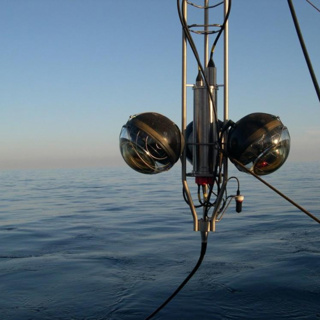
This episode explores the final results from the ANTARES neutrino telescope, which operated in the Mediterranean Sea off the coast of Toulon, France. Researchers analyzed the full, 15-year dataset (2007–2022) to search for diffuse Galactic neutrinos. These neutrinos are produced when cosmic rays (CRs) interact with interstellar matter (gas and radiation fields) in the Milky Way. Understanding this diffuse flux is key to deciphering cosmic ray transport mechanisms.


Testing Theoretical Models

The study utilized an unbinned maximum likelihood analysis to test several phenomenological models of neutrino emission, including KRA$\gamma$ models, DiffUSE, CRINGE, and Fermi-LAT $\pi^0$. These models incorporate different assumptions about CR diffusion and source distribution. ANTARES used three data samples—one track-like and two shower-like—and its location and use of water provided superior angular resolution compared to other detectors, making it well-suited for observing the central Milky Way. Furthermore, the shower-like events extended the analysis down to the hundreds of GeV energy range.


Results: Constraints and Clues

While the ANTARES low statistics dataset did not allow for a significant discovery, the analysis placed **upper limits** on the diffuse neutrino flux that are compatible with results obtained by other experiments.

  • Model Constraints: The results did not yield stringent constraints on the tested models. The highest observed significance was a small hint of 1.28$\sigma$ for the KRA5PeV$\gamma$ model.
  • The Galactic Ridge Hint: Importantly, a model-independent analysis of the Galactic Ridge (|$\ell$| < 30$^\circ$ and |$b$| < 2$^\circ$) confirms a hint of a Galactic signal at 1.9$\sigma$**. This result confirms a finding from a previous ANTARES analysis.


This analysis methodology, which carefully preserves the spatial-energy correlation of the templates and convolves them with detector response, is promising for testing Galactic diffuse emission models with larger future datasets, such as those from KM3NeT.


Article Reference

Search for Diffuse Galactic Neutrinos with the Full ANTARES Telescope Dataset, ANTARES Collaboration et al. (A. Albert, S. Alves, M. André, et al.); preprint, 2511.01687


Acknowledements: Podcast prepared with Google/NotebookLM. Illustration credits: CEA/Irfu

Tämä jakso on lisätty Podme-palveluun avoimen RSS-syötteen kautta eikä se ole Podmen omaa tuotantoa. Siksi jakso saattaa sisältää mainontaa.

Jaksot(123)

Supernovae, TDEs, and Scintillation: How ASKAP and Rubin Are Mapping the Variable Universe

Supernovae, TDEs, and Scintillation: How ASKAP and Rubin Are Mapping the Variable Universe

In this episode, we dive into how astronomers are combining the power of the Australian Square Kilometre Array Pathfinder (ASKAP) and the Vera C. Rubin Observatory to capture the dynamic, ever-changin...

16 Loka 20min

JWST and MeerKAT Team Up: Uncovering the Most Distant Fast Radio Burst Yet

JWST and MeerKAT Team Up: Uncovering the Most Distant Fast Radio Burst Yet

Fast Radio Bursts (FRBs) are millisecond-duration radio signals originating from deep space. In this episode, we explore the groundbreaking discovery of FRB 20240304B, detected by the MeerKAT radio te...

12 Loka 20min

GRB 221009A: Measuring Relativistic Jets using Radio Interferometry

GRB 221009A: Measuring Relativistic Jets using Radio Interferometry

In this episode, we explore high-precision Very Long Baseline Interferometry (VLBI) radio observations of GRB 221009A, the brightest gamma-ray burst ever detected. Using the Global-VLBI network at 5 G...

8 Loka 21min

Unveiling GRB 240825A: Cosmic Dust, JWST, and a Supernova in Hiding

Unveiling GRB 240825A: Cosmic Dust, JWST, and a Supernova in Hiding

In this episode, we explore the cosmic mystery of GRB 240825A, a gamma-ray burst detected at redshift z = 0.659. Its short rest-frame duration and hard prompt emission initially pointed toward a compa...

5 Loka 14min

From GeV to EeV: A Data-Driven View of Cosmic Rays

From GeV to EeV: A Data-Driven View of Cosmic Rays

How do high-energy particles traveling across the universe reach Earth, and what are they made of? In this episode, we explore the Global Spline Fit (GSF), a comprehensive framework that unifies cosmi...

2 Loka 24min

From Blazars to Supernovae: Fermi’s Deepest High-Energy Sky Survey

From Blazars to Supernovae: Fermi’s Deepest High-Energy Sky Survey

In this episode, we dive into the release of the Fourth Catalog of Hard Fermi-LAT Sources (4FHL). Utilizing 16 years of continuous data from NASA's Fermi Gamma-ray Space Telescope, this catalog provid...

29 Syys 23min

GRB 220706A: The Longest-Lived Gamma-Ray Burst Engine Ever Seen

GRB 220706A: The Longest-Lived Gamma-Ray Burst Engine Ever Seen

In this episode, we explore the extraordinary discovery of GRB 220706A, a record-shattering cosmic explosion at redshift z = 0.8577. While most gamma-ray burst engines die down within minutes, X-ray f...

24 Syys 19min

Chasing Kilonovae: How LIGO-India Multiplies Multimessenger Discoveries

Chasing Kilonovae: How LIGO-India Multiplies Multimessenger Discoveries

In this episode, we explore the future of multimessenger astronomy as neutron star–black hole (NSBH) mergers take center stage. While binary neutron star collisions have delivered iconic multimessenge...

18 Syys 21min

Suosittua kategoriassa Tiede

tiedekulma-podcast
utelias-mieli
rss-mita-tulisi-tietaa
rss-duodecim-lehti
rss-hereilla
docemilia
rss-kasvikutsut
rss-vaasan-yliopiston-podcastit
rss-poliisin-mieli
rss-kasvatuspsykologiaa-kaikille