Why Eating Disorders in Black Women Are Missed: What "The Pitt" Shows About ER Care & Medical Weight Bias

Why Eating Disorders in Black Women Are Missed: What "The Pitt" Shows About ER Care & Medical Weight Bias

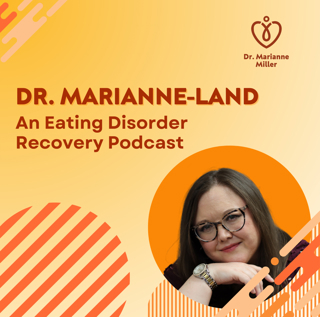
In this solo episode, Dr. Marianne Miller explores how the Emmy-winning and Golden Globe–winning medical drama The Pitt portrays eating disorders, emergency medicine, and bias in ways that feel both culturally meaningful and clinically relevant. She reflects on how the show separates two critical themes across seasons: the medical system’s tendency to miss eating disorders in Black women, and the role of weight bias in emergency department diagnosis and care.

Drawing from years of clinical experience, Dr. Miller discusses how many clients first encounter medical crisis in emergency rooms, often because of dangerously low heart rates, dizziness, fainting, or other complications linked to disordered eating. She explains how ER responses vary widely, and how bias, time pressure, and assumptions about body size or race can shape whether clinicians recognize eating disorder symptoms.

The episode highlights a season two storyline in which a Black woman presents to the ER without classic eating disorder signs, making diagnosis more complex. Dr. Marianne examines why missing textbook symptoms often leads clinicians to overlook bulimia and other eating disorders, especially in populations that medicine historically underdiagnoses. She also reflects on how the show names this reality directly and why that representation matters for visibility, validation, and future care.

Dr. Marianne then turns to season one’s depiction of a physician challenging a resident’s assumption that body weight predicts health. She explores how medical weight bias affects diagnosis, delays treatment, and reinforces stigma in emergency medicine. She also shares the change she wishes the episode had made, noting that many people with bulimia live in bodies that are not thin, and that anti-fat bias and racial bias together create additional barriers for Black women seeking care.

Throughout the episode, Dr. Marianne centers a liberation-informed lens that honors intersectionality, context, nervous system safety, and autonomy in eating disorder recovery. She invites listeners to consider how accurate media representation can shift clinical awareness and expand who medicine recognizes as deserving care.

You can watch The Pitt on HBO and HBO Max.

Topics Covered in This Episode

Eating disorders in Black women Missed diagnosis in emergency medicine Low heart rate and medical risk in eating disorders Bulimia without classic symptoms Medical weight bias in ER care Race, stigma, and underdiagnosis Media representation and clinical awareness Liberation-informed eating disorder therapy

Related Episodes

Boundaries, Therapy While Black, & Eating Disorders with Kaela Farrise, LMFT on Apple and Spotify.

Avoidance, Body Image Standards, & the Notion of the Strong, Black Woman with Jasmine Jacquess, MA, PLPC on Apple and Spotify.

Recommended Books -Not All Black Girls Know How to Eat: A Story of Bulimia, by Stephanie Covington-Armstrong

-The Body Is Not An Apology, 2nd ed., by Sonya Renee Taylor

-Fearing the Black Body: The Racial Origins of Fat Phobia, by Dr. Sabrina Strings

Resources and Support

If you are looking for eating disorder therapy that centers intersectionality, lived context, and liberation-informed care, you can learn more about working with Dr. Marianne Miller through therapy or consultation on her website, drmariannemiller.com. Her approach honors autonomy, neurodivergence, trauma history, body diversity, and systemic realities that shape recovery.

You deserve care that sees the full picture of your life, not just symptoms on a chart.

Denne episoden er hentet fra en åpen RSS-feed og er ikke publisert av Podme. Den kan derfor inneholde annonser.

Episoder(351)

Have a Chronic Eating Disorder? Why Late-Diagnosed ADHD May Have Been the Issue All Along

Have a Chronic Eating Disorder? Why Late-Diagnosed ADHD May Have Been the Issue All Along

ADHD and eating disorders often overlap in ways that treatment misses. For adults with late-diagnosed ADHD, chronic restriction, binge eating, bulimia, ARFID, food inconsistency, and repeated eating d...

23 Sep 20min

Eating Disorders in Midlife: Rebuilding Trust With Food & Your Body With Amber Caudle

Eating Disorders in Midlife: Rebuilding Trust With Food & Your Body With Amber Caudle

Binge eating recovery requires more than changing what or how you eat. Chef, eating psychology coach, and author Amber Caudle joins Dr. Marianne to discuss her 30-year struggle with binge eating, rest...

21 Sep 33min

ARFID & PDA: Why Eating Can Feel Like a Demand Even When No One Is Pressuring You

ARFID & PDA: Why Eating Can Feel Like a Demand Even When No One Is Pressuring You

ARFID and PDA can make eating feel difficult even when no one is telling you what, when, or how much to eat. For autistic and neurodivergent people with Avoidant/Restrictive Food Intake Disorder (ARFI...

18 Sep 15min

Tradwives, Disordered Eating, & the Thin Ideal: Why Young Women Are Being Told to Shrink Again

Tradwives, Disordered Eating, & the Thin Ideal: Why Young Women Are Being Told to Shrink Again

Tradwife culture is having a moment, but what happens when traditional femininity, purity culture, the thin ideal, and disordered eating begin to overlap? In this SOLO episode, Dr. Marianne Miller exa...

16 Sep 20min

Is Eating Disorder Recovery a Form of Neurodivergence? Diet Culture, Hunger, & Body Trust With Shira Collings, LPC

Is Eating Disorder Recovery a Form of Neurodivergence? Diet Culture, Hunger, & Body Trust With Shira Collings, LPC

Eating disorder recovery often requires developing a relationship with food, hunger, movement, and body size that differs sharply from what society considers “normal.” In this conversation, Dr. Marian...

14 Sep 27min

Autism, Food Rigidity, & Eating Disorders: How Autistic Traits Can Help & Hinder Recovery

Autism, Food Rigidity, & Eating Disorders: How Autistic Traits Can Help & Hinder Recovery

Autism and eating disorders can create a complicated relationship with food rigidity, routines, sensory needs, and predictability. For autistic people recovering from anorexia, ARFID, bulimia, or othe...

11 Sep 19min

Why Is Eating Disorder Recovery So Scary? Understanding Fear, Safety, & Letting Go

Why Is Eating Disorder Recovery So Scary? Understanding Fear, Safety, & Letting Go

Eating disorder recovery can feel surprisingly scary, even when you genuinely want to get better. Letting go of restriction, binge eating, purging, compulsive exercise, food rules, or body checking ca...

9 Sep 15min

How to Help Your Child With an Eating Disorder: Replacing Control With Connection With Dr. Tom Wooldridge

How to Help Your Child With an Eating Disorder: Replacing Control With Connection With Dr. Tom Wooldridge

Supporting a child or teen with an eating disorder can leave parents caught between the urgency to help them eat and the fear that increasing control will create more conflict around food. In this epi...

7 Sep 32min

Populært innen Helse

fastlegen
rss-gukild-johaug
psykodrama
hvordan-har-du-det-mann
relasjonspodden-med-dora-thorhallsdottir-kjersti-idem
leger-om-livet
rss-skravla-gar
foreldreradet
g-punktet
morten-ramm-lar-kakla-ga-til-du-sovner
rss-loping-for-nybegynnere
klimaks
bak-fasaden-en-reise-i-livet-med-sykepleier-ine
rss-dagen-for-dagen
treningsprat
rss-lopedrommen
hjernesterk
kjed-deg-i-sovn-verdens-kjedeligste-podcast
rss-kunsten-a-leve
helsetipspodden