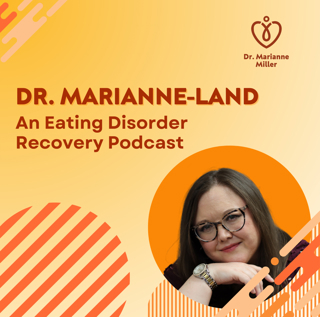
Mechanical Eating in Lifelong Eating Disorder Recovery: Benefits, Limits, & Who It Helps Most

Mechanical Eating in Lifelong Eating Disorder Recovery: Benefits, Limits, & Who It Helps Most

Mechanical eating refers to eating on a consistent schedule, usually every three to four hours, regardless of hunger cues. It is commonly introduced in early eating disorder treatment to stabilize nourishment and interrupt restriction or binge cycles.

In this episode, Dr. Marianne explains how mechanical eating creates physiological rhythm in a body that has experienced disruption. Eating disorders affect digestion, blood sugar, hormones, and nervous system regulation. Mechanical eating restores predictability and reduces biological chaos.

Lifelong recovery invites a deeper question. Is structure still serving you years into recovery, or has it become rigid?

How Mechanical Eating Supports Your GI System, Blood Sugar, and Mood

Mechanical eating is not just about timing. It directly supports digestive health, metabolic stability, and emotional regulation.

Regular nourishment helps the gastrointestinal system relearn movement and tolerance after restriction. It can reduce bloating, reflux, constipation, nausea, and abdominal pain that often occur when eating patterns have been irregular.

Mechanical eating also stabilizes blood sugar levels. Long gaps without food can lead to shakiness, irritability, brain fog, dizziness, and intense urgency to eat. Consistent intake smooths those fluctuations and supports steady energy throughout the day.

Because the brain depends on adequate fuel, mechanical eating also improves mood regulation. Anxiety, irritability, and low mood often intensify when nourishment is inconsistent. Stabilizing blood sugar reduces these physiological stress responses and creates a more regulated emotional baseline.

For many people, these benefits make mechanical eating a powerful and supportive tool.

When Mechanical Eating May Stop Fitting

Lifelong eating disorder recovery requires flexibility. A strategy that was essential in early recovery may need to evolve over time.

Mechanical eating can become rigid if the clock replaces internal cues entirely. Some people experience anxiety if eating times shift. Others notice that hunger cues remain muted even after years of structure. For neurodivergent individuals, strict schedules may conflict with executive functioning variability, sensory sensitivities, or fluctuating energy.

This episode explores how to recognize when mechanical eating is supportive and when it may need to be adapted. Recovery is not about perfect adherence. It is about building a sustainable, compassionate relationship with food and body over time.

Who Mechanical Eating Helps Most in Long-Term Recovery

Mechanical eating often benefits people who need predictable physiological regulation, reduced decision fatigue, and steady nourishment despite unreliable hunger signals. It can be especially helpful during stress, illness, life transitions, or periods of emotional overwhelm.

Rather than seeing mechanical eating as a permanent rule, Dr. Marianne reframes it as a flexible tool that can be used when needed and modified when necessary.

Lifelong recovery allows room for adaptation.

ARFID, Selective Eating, and Mechanical Eating

For individuals with ARFID or selective eating, mechanical eating alone is often not enough. Sensory sensitivity, fear of aversive consequences, and low appetite require neurodivergent-affirming and sensory-attuned approaches.

Dr. Marianne’s ARFID and Selective Eating Course provides structured, trauma-informed, and liberation-centered support for people who need more than traditional eating disorder recovery tools. In the course, she addresses nervous system regulation, sensory safety, and realistic long-term change.

Learn more about the ARFID course and therapy options at drmariannemiller.com.

Related Episodes

Intuitive vs. Mechanical Eating: Can They Coexist? on Apple & Spotify.

Orthorexia, Quasi-Recovery, & Lifelong Eating Disorder Struggles with Dr. Lara Zibarras @drlarazib on Apple & Spotify.

The Truth About "High-Functioning" People With Lifelong Eating Disorders on Apple & Spotify.

Understanding Harm Reduction: Why "Full Recovery" May Not Be the Goal for Lifelong Eating Disorders on Apple & Spotify.

Key Topics Covered in This Episode

Mechanical eating in lifelong eating disorder recovery Chronic eating disorders and long-term recovery GI system healing and digestive regulation Blood sugar stabilization and binge-restrict cycles Mood regulation and nervous system safety Neurodivergent-affirming eating disorder treatment ARFID and selective eating support

If this episode resonated with you, consider sharing it with someone navigating long-term eating disorder recovery. And if you are looking for therapy or structured support grounded in liberation, sensory attunement, and autonomy, visit drmariannemiller.com to learn more about working with Dr. Marianne Miller.

Take gentle care of yourself.

Denne episoden er hentet fra en åpen RSS-feed og er ikke publisert av Podme. Den kan derfor inneholde annonser.

Episoder(351)

Have a Chronic Eating Disorder? Why Late-Diagnosed ADHD May Have Been the Issue All Along

Have a Chronic Eating Disorder? Why Late-Diagnosed ADHD May Have Been the Issue All Along

ADHD and eating disorders often overlap in ways that treatment misses. For adults with late-diagnosed ADHD, chronic restriction, binge eating, bulimia, ARFID, food inconsistency, and repeated eating d...

23 Sep 20min

Eating Disorders in Midlife: Rebuilding Trust With Food & Your Body With Amber Caudle

Eating Disorders in Midlife: Rebuilding Trust With Food & Your Body With Amber Caudle

Binge eating recovery requires more than changing what or how you eat. Chef, eating psychology coach, and author Amber Caudle joins Dr. Marianne to discuss her 30-year struggle with binge eating, rest...

21 Sep 33min

ARFID & PDA: Why Eating Can Feel Like a Demand Even When No One Is Pressuring You

ARFID & PDA: Why Eating Can Feel Like a Demand Even When No One Is Pressuring You

ARFID and PDA can make eating feel difficult even when no one is telling you what, when, or how much to eat. For autistic and neurodivergent people with Avoidant/Restrictive Food Intake Disorder (ARFI...

18 Sep 15min

Tradwives, Disordered Eating, & the Thin Ideal: Why Young Women Are Being Told to Shrink Again

Tradwives, Disordered Eating, & the Thin Ideal: Why Young Women Are Being Told to Shrink Again

Tradwife culture is having a moment, but what happens when traditional femininity, purity culture, the thin ideal, and disordered eating begin to overlap? In this SOLO episode, Dr. Marianne Miller exa...

16 Sep 20min

Is Eating Disorder Recovery a Form of Neurodivergence? Diet Culture, Hunger, & Body Trust With Shira Collings, LPC

Is Eating Disorder Recovery a Form of Neurodivergence? Diet Culture, Hunger, & Body Trust With Shira Collings, LPC

Eating disorder recovery often requires developing a relationship with food, hunger, movement, and body size that differs sharply from what society considers “normal.” In this conversation, Dr. Marian...

14 Sep 27min

Autism, Food Rigidity, & Eating Disorders: How Autistic Traits Can Help & Hinder Recovery

Autism, Food Rigidity, & Eating Disorders: How Autistic Traits Can Help & Hinder Recovery

Autism and eating disorders can create a complicated relationship with food rigidity, routines, sensory needs, and predictability. For autistic people recovering from anorexia, ARFID, bulimia, or othe...

11 Sep 19min

Why Is Eating Disorder Recovery So Scary? Understanding Fear, Safety, & Letting Go

Why Is Eating Disorder Recovery So Scary? Understanding Fear, Safety, & Letting Go

Eating disorder recovery can feel surprisingly scary, even when you genuinely want to get better. Letting go of restriction, binge eating, purging, compulsive exercise, food rules, or body checking ca...

9 Sep 15min

How to Help Your Child With an Eating Disorder: Replacing Control With Connection With Dr. Tom Wooldridge

How to Help Your Child With an Eating Disorder: Replacing Control With Connection With Dr. Tom Wooldridge

Supporting a child or teen with an eating disorder can leave parents caught between the urgency to help them eat and the fear that increasing control will create more conflict around food. In this epi...

7 Sep 32min

Populært innen Helse

fastlegen
rss-gukild-johaug
psykodrama
hvordan-har-du-det-mann
relasjonspodden-med-dora-thorhallsdottir-kjersti-idem
leger-om-livet
rss-skravla-gar
foreldreradet
g-punktet
morten-ramm-lar-kakla-ga-til-du-sovner
rss-loping-for-nybegynnere
klimaks
bak-fasaden-en-reise-i-livet-med-sykepleier-ine
rss-dagen-for-dagen
treningsprat
rss-lopedrommen
hjernesterk
kjed-deg-i-sovn-verdens-kjedeligste-podcast
rss-kunsten-a-leve
helsetipspodden